Home Blog Page 99

Cypress College, UCI and CSUF to share $1.5 million grant

The National Science Foundations (NSF) has awarded Cypress College; University of California, Irvine (UCI); and California State University, Fullerton (CSUF) a $1.5 million partnership grant over three years. The grant will be used at the three campuses to encourage underrepresented students to consider studying data science and prepare them for careers in STEM fields.

The collaboration between Cypress College, UCI, and CSUF will fund the creation of the CADET program (California Data Science Experience Transformation Program), which will help better prepare students for careers in math, statistics, and computer science to be able to handle data-intensive problems. The CADET program began at Cypress College with the selection of the first cohort of six students in fall 2021.

Those selected will attend a variety of seminars and workshops in the spring and attend a boot camp at UCI in the summer for training, followed by a paid internship with industry partners. Once the students complete the internship portion of the program, they will receive $5,000. It will also fund the creation of two new courses at Cypress College that will be transferable to UCI and CSUF.

Cypress College Mathematics Professor Alma Castro, the principal investigator for the NSF grant at the two-year institution, said participating in the CADET project will equip students to be more competitive in their careers when they enter the workforce.

“By incorporating data science into preexisting STEM curricula, CADET students are going to emerge from college with the tools to glean insights, skills that will make them perhaps more attractive for a job over another candidate,” said Castro. “I am very excited to bring this opportunity to Cypress College students that will allow them to participate in this newly emerging field, open a path to a new career, and place them in a job right after college.”
CADET aims to develop and implement modern data science curricula at UCI, CSUF, and Cypress College; create a gateway to diverse career opportunities; and increase data science opportunities for underrepresented science, technology, engineering, and math majors.

The colleges will facilitate data science training via curriculum development, hands-on experiences, and close interactions with academic and non-academic organizations. More than 120 CADET student scholars will participate in a host of activities, including a summer boot camp, team science training, weekly seminars, and a collaborative research project, all of which will lead to presentations at symposiums and conferences.

Ultimately, through implementing new curricula and student and faculty training, the CADET project will establish a data science culture across STEM disciplines that extend beyond the lifetime of this award.

Castro said the Cypress College, UCI, and CSUF teams met regularly during the planning process to discuss details and create a reasonable and realistic plan that NSF could feel confident in funding.

“By demonstrating to NSF that our three institutions can work together and serve many of the very same students, we were able to make a convincing case that we could partner together and effectively execute this grant,” said Cypress College Interim Dean of Science, Engineering, and Mathematics David Vakil.

Of the 573 students that transferred to four-year institutions in the 2018-19 academic year, more than 480 of them transferred to a CSU or UC, with CSUF and UCI being the preferred universities.

Case in point: Castro is a former student of Dr. Sam Behseta, the lead principal investigator for the grant at CSUF. Before joining Cypress as a full-time professor, Castro taught as an adjunct at CSUF. Behseta previously collaborated on research efforts with Dr. Babak Shahbaba, the lead principal investigator at UCI.

“This is a project that correlates with the missions of the three institutions of higher education and puts a great value on the importance of community colleges in preparing knowledgeable and skilled students who are planning to enter the workforce shortly,” Castro said.

Cypress Police Department takes to the field against Centurion girls softball team

There was a rather unusual police chase in Cypress last Thursday.

Rough and tumble patrol officers from the Cypress Police Department, alongside their chief, spent the afternoon chasing foul balls and base hits as their colleagues kept the city safe.
First year Police Chief Mark Lauderback said he knew this was going to be a tough game, but the hardest part, he said, was picking the officers to play against the Cypress Varsity girls softball team.

“Almost everybody in the department wanted to play,” said Lauderback, “and unfortunately everybody can’t because somebody has to go out there and answer the calls for service. So even the people that are working today wanted to be here.”

Coach Kevin Dull, who coaches the girls’ varsity softball team, said he jumped at the chance to play the department, realizing what a great opportunity this was for both the police and the school.

Courtesy photo

“Cypress is a great community,” said Dull, adding that the “work they [Cypress Police] do every day is awesome and makes our community a great place to live. Playing a tribute game is a great way to show thanks,” he said.

“They [CPD] are the true heroes so it makes it so rewarding. And fun.”

Dull said Lauderback is a close friend of head football coach Rick Feldman (the OC Register Coach of the Year), and together they came up with the idea.

Dull said Lauderback is “a big softball fan” and comes to a lot of the girls’ games and supports us.”Feldman not only attended the game, but he asked the entire high school Cypress football team to attend. “I just asked them, and they didn’t have to come, but almost every one of them came to show support,” he said.

So, while the game was underway, the stands were filled with the football team, parents, well-wishers and others doing “waves” and other cheers as they participated in the fun.

Make no mistake, however, these Cypress softball girls meant business when they took the field. Although the PD had an obvious strength advantage, let’s just say the girls may have edged them out when it came to ball handling, style and finesse.

Nevertheless, regarding the score, the men and women of the CPD built up an early lead with a few back-to-back home runs with Coach Dull on the mound pitching the girls.

The officers did demonstrate some hitting prowess even if they were sometimes a step behind the speedy girls in the field.

Courtesy photo

“Hey Greg, that’s the fastest I ever saw you move,” came a cry, then a laugh, from the police dugout as first baseman, Patrol Officer Greg Blaum ended up flat on his back attempting to tag out one of the girls at first base.

The police department’s early lead suddenly started disappearing, however, when star pitcher Alexa Meraz took the mound to replace her coach.

Meraz, a senior, is a standout pitcher who has signed a scholarship to play softball at the University of Bridgeport in Connecticut.

Suddenly, the yellow softballs whizzed by the police in what seemed like a blur as the police department’s hit parade became a mere trickle.

The sudden change of pitching, as you might expect, prompted a loud acceleration of the ‘humorous’ comments coming from the police department’s dugout as the fun continued.
The Cypress officers did manage a few additional hits, including a single by Lauderback followed by a home run by Blaum as they scored just enough to edge the Cypress girls 10-8.

For the officers, and the girls, however, it was a game in which the experience had meant way more than the score.

Blaum (for the police) and Meraz (for Cypress softball) were named the game’s MVP’s in a very unscientific sample after the game.

“The thing I’m most excited about is that some of our officers were able to get a few hits off the girl’s pitching,” said Chief Lauderback. “But then again, it’s nice that everybody had a good time, even though it was good to see a few balls go over fence.”

“You know, it’s all about relationships,” said newly installed Lauderback, “and building the relationships and trust within the community and the police department.”

“Especially in these crazy times that we’re coming out of right now,” said Lauderback, “where we’re, you know, law enforcement wasn’t really put in a positive light.”

Moreover, he said coming out to play softball illustrates how much the department cares about the community they police, and that it’s not an ‘us against them’ mentality as some people want to think it is. We’re actually all in this together,” the police chief said.

Lauderback, even while still Chief in Westminster, began experimenting with public perception of police and realized it is critical for any community to be properly introduced to the organization responsible for enforcing its laws.

“I think it shows that there’s a picture that is painted one way of somebody, but when you actually get to meet them, you get to see what they’re all about, you get to form your own opinion, and you don’t base that on the opinion of others,” said Lauderback.

“What a great opportunity to just show that we’re regular people,” he said. “We like to come out and have fun. We have a job to do, and unfortunately that job sometimes is ugly,” the Chief said.

“Even the people that are working today, they wanted to be here,” said Lauderback, “but they knew they couldn’t. Some officers drove in from as far away as Chino and the Inland empire to play softball with the girls.”

“That just speaks volumes for the people who work for this community and put on that badge and that uniform every day to protect anyone that comes within the boundaries of this city,” he said.

“But at the end of the day, we’re all human. We’re all the same people and we all just enjoy getting together and having a good time. It’s about the relationship building, which is what this was.”

The experience was not lost on the team.

“I thought this was such a good idea, so much fun,” said Meraz after the game. “This is such a good opportunity to like, be in our community, to know everyone and it just shows Cypress for who we are.”

Meraz rates the police “way better” than the teachers whom they also play. “I think it was fair, even though they had such an advantage,” she said.

“We did really good. I think they had such an advantage, but we still ended up, like, almost tying the game,” said Meraz. “Some of these police officers were really good, I was like, ‘oh wow,’ but it was really fun.”

Meraz said she is looking forward to her college career but will remember this day, and even the pizza and fellowship the officers offered the team after the game.

For his part, Blaum, the police’s MVP, said it had indeed been a long time since he played ball in school. “I hadn’t swung a bat in years,” he said, “so it was interesting.”

“It was a lot of fun,” said Blaum, the police’s first baseman and star hitter. “This is a great time for us, we’re hanging out, blowing off steam and we’re in our own community.”

“People get to see us as normal people, not as cops,” he said.

Asked about the play where his teammates made a bit of fun and him moving as fast as they’d ever seen, yet ended up on the dirt, he sighed.

“Yes, that’s true,” Blaum laughed, “even though gravity had a lot to do with it.”

Los Al Unified Board meeting delayed by protest, moved to conference room

The Los Alamitos Unified School District Board of Education’s Jan. 25 meeting was delayed for around 40 minutes after one attendee refused to comply with the California Department of Public Health’s current indoor mask requirement, which is set to expire on Feb. 15.

The man, Ian Jameson, an activist from Los Angeles, refused to put on a mask and said he was engaging in an act of “civil disobedience.” Jameson said he did not have any children in the school district but that it was his intention to shut down the meeting to protest California’s current Covid-19 safety protocols which he said were unlawful.

There were around 20 people in the audience of the meeting and most were wearing face coverings.

After Jameson refused several times to comply or offer a reason for an exemption, the board took two recesses. Board President Diana Hill eventually announced that the public would have to clear the meeting room because of Jameson’s refusal to abide by the rules.

“We had hoped that this meeting would be conducted in a manner that allowed the public to participate and allowed the board to conduct necessary business,” Hill said. “However, because of willful defiance … by attendees… we believe the orderly conduct of this meeting has been rendered infeasible,” she added.

The meeting was moved into the board’s conference room where essential district administrators were allowed along with two members of the press.  Audio of the meeting was live streamed on YouTube. The five people who filled out a public comment card were able to address the board in-person in the conference room.

According to Los Alamitos USD Superintendent Dr. Andrew Pulver, the Los Alamitos Police Department was called only to make them aware of the situation. “We didn’t want to have a confrontation,” Pulver said in a phone interview a few days after the meeting. “This wasn’t a safety situation. There was no sense of giving him the attention that he wanted,” he added.

Officers did end up coming to the district headquarters, but everyone left the building without incident, according to Pulver.

Here’s what else happened at the meeting;

  • Deputy Superintendent Ondrea Reed gave an overview of the Universal Transitional Kindergarten (UTK) program which will be offered district wide next school year. Enrollment for UTK and kindergarten for the 2022-23 school year closes on Feb. 4 for district residents.
  • Board members heard a presentation on potential changes to the fees the district charges outside groups to use its facilities including sports fields and indoor venues.
  • Pulver shared that the district’s fifth grade students are attending Outdoor Science School at the Pali Institute near Lake Arrowhead during the end of January and early February. Dr. Pulver said that some Covid-19 relief money was used to offset costs to families associated with moving the OSS to a camp that offered more robust health and safety measures.

For more local education news, sign up for the weekly Spotlight Schools email newsletter at SpotlightSchools.com.


Los Al holds first public hearing on new districts

The city of Los Alamitos, just two years into electing members of the Council by elections in single member districts, began the process this week of redistricting the city as required by law.

The city held a special meeting Jan. 18 wherein they held the first of four proposed public hearings on the redistricting process.

Mayor Shelley Hasselbrink introduced Justin Levitt, Vice President of National Demographics Corporation (NDC), the firm that initially assisted the city when they voluntarily decided to create single member districts in 2019.

Voters in Los Alamitos voted in 2020 using single member districts and must already create new districts as required by the decennial U.S. Census, which was completed in 2020, said Levitt.

In order to routinely apportion voting power with demographic changes in the country’s population, the U.S. Constitution requires a Census of the population every ten years, the data from which can then be used to redraw voting districts as necessary.

Accordingly, Levitt told members of the Los Alamitos Council that already, District 3 in the city is overpopulated, while three other districts have become under populated which will require adjustments.

Levitt said federal laws have changed and there are certain tenets that must guide their process. For instance, he said the districts must be contiguous, meaning the boundaries must always touch each other and undivided neighborhoods and “communities of interest” must generally be kept together.

Also, Levitt said districts must have identifiable boundaries, partisan considerations and data are not allowed to inform the drawing of these boundaries, and districts should be as compact as possible.

The city has 16-18 identifiable neighborhoods, such as Apartment Row, Old Dutch Haven and Carrier Row that will factor in the division of the new districts, he added.

In addition, Levitt said the Census data suggests there is a significant Latino community in the west end of the city and a notable Asian-American community living in the northern end of a current District.

At the end of the process, Levitt said the city’s new districts must conform to the 2020 Census data, with no more than 10 percent deviation in any district. Among the list of changes in the new redistricting requirements he explained to the Council, Levitt mentioned a requirement for four public hearings.

Levitt said the new districts need to be approved by April so they will have the final public hearing in March, to give themselves time to make any final adjustments before the deadline for approval of the new districts.

Hasselbrink and Councilman Ron Bates wanted to know about how the new districts will accommodate future housing projects, which will, of course, bring new residents to the district.

“So, you talked about future neighborhoods,” Hasselbrink said to Levitt, “we have two new neighborhoods coming online, one is 50 townhomes and another 100 luxury living units. How would that work,” she asked?

Levitt, who is a native of Los Alamitos, said districts where they know housing projects are underway can be factored by a percent or two to “anticipate” the new residents.
Mayor Pro-tem Tanya Doby said currently, District 1 (the district she represents) is almost exclusively multi-family housing. She said less than 20 single family homes exist in her district.

The NDC executive also explained to residents where they can find online mapping tools and suggested future public hearings will give residents plenty input.

“We actually have a plan to hold two public hearings prior to draft maps being drawn. And three public hearings following the draft maps being released,” said Levitt.

“That should give us plenty of time over the next three months to really focus on the different options on the different maps prior to this April 17 deadline that the state has set for map adoption.”

Claborn named as Los Alamitos Police Chief to replace Nunez

Following an extensive six-month recruitment process, involving input and insights from the City Council, members of the Los Alamitos community, and area stakeholders, the City of Los Alamitos is pleased to announce the appointment of Michael Claborn as the City of Los Alamitos’ next Chief of Police, according to a press release issued by the city.

Upon the recommendation of City Manager Chet Simmons, the Los Alamitos City Council unanimously confirmed Chief Claborn’s appointment at its January 18 meeting. “The environment facing law enforcement agencies across the nation today is one of serious challenges, but also great opportunities,” stated Simmons following the appointment.
“In order for departments to be successful, leaders need to be engaged and work collaboratively with the communities that they serve.

Throughout the entire recruitment and selection process, Chief Claborn demonstrated not only a keen ability to effectively lead this department, but also an ingrained calling to service and a steadfast desire to continue to build upon the trust that exists between our residents and their police department.”

After honorably serving his country in the military, Chief Claborn started his law enforcement career with the Los Angeles Police Department in 1996. Following a transfer to the Santa Ana Police Department in 2000, Claborn quickly rose through the ranks, ultimately achieving the rank of Commander.

During the course of his career, Chief Claborn was instrumental in implementing the first full-time therapeutic canine program in Orange County. Utilizing grant funding, he was able to modernize an Emergency Operations Center, making it one of the most technologically innovative in the County. He has also authored multiple publications bringing awareness to the topic of officer wellness. He has also devoted years of service to community engagement, with a focus on youth programs.

“It is a great honor to be appointed as the Chief of Police for the City of Los Alamitos. As a resident of this wonderful city, I will work diligently to uphold the highest level of public safety. I look forward to working in partnership with the men and women of this organization, the residents of this City, and the business community to establish a foundation of collaboration, making Los Alamitos the preeminent place to live, work, and shop,” stated Chief Claborn.

Stepping into the role recently held by retiring Chief Eric Nunez, Chief Claborn joins the City’s highly touted Police Department as it continues evolving to meet the ever-changing needs of the community. His appointment is also part of a recent trend in Orange County law enforcement, for chiefs of police to live in the cities they serve. Claborn also holds a Bachelor’s and Master’s Degree in Criminal Justice from California State University Long Beach and serves as a board member with several service and law enforcement organizations throughout the County.

“Los Alamitos has always prided itself on being a safe community that provides an excellent quality of life for our residents,“ said Mayor Shelley Hasselbrink. “Spend any amount of time with Chief Claborn and you will be instantly struck by his intelligence and his passion for this community. We are confident that his experience and dedication to the profession of law enforcement will be immensely beneficial to the Los Alamitos Police Department and the City as a whole. I am excited about the leadership team that the City has put in place and look forward to seeing what they are able to accomplish for Los Alamitos.”

Why single member districts make sense for Cypress.

By David Burke

On September 17, 2021 attorney Kevin Shenkman sent a letter to the city of Cypress alleging that the city’s at-large elections violate the California Voting Rights Act of 2001 (CVRA). The crux of the allegation is that the at-large system results in minority vote dilution and that the lack of Asian representation in government for a city with 35.2% Asian residents is evidence of a CVRA violation.

Shenkman gave the city 45 days to voluntarily consider creating single-member districts. Yet, more than four months later Cypress is not substantially closer to drawing electoral districts than it was in September, which poses a significant risk for two reasons. First, it is extremely difficult for a city to prevail against an alleged CVRA violation of minority vote dilution. In fact, no city in California has successfully done so.

A plaintiff can prevail by showing “racially polarized voting” in which there is a difference in the choice of candidates that are preferred by voters in a protected class and the choices of the voters in the rest of the electorate. Such voting patterns are very common and the court can even look at the voting preferences of groups in county or state elections, and for ballot initiatives. So although the city of Cypress maintains that they have not found any merit to the allegation that they are violating the law, it is unlikely that a court would agree.

Second, the legal battle would be a drain on the city’s coffers. Santa Clara spent approximately $6 million, unsuccessfully, before agreeing to a voter-approved charter amendment requiring single member districts. Santa Monica has spent over $7 million in a battle that is still being waged in the courts. Given the long odds of success once a lawsuit is initiated—which Shenkman has said will happen by June of this year—it seems more prudent and fiscally responsible for Cypress to transition to districts voluntarily.

Thus far, the City Council has largely delayed that process. The city did recently hold the first of three public forums on January 19, 2022 to “learn more about and discuss several important topics surrounding municipal elections.” But with the specter of costly litigation looming, these forums should have occurred sooner. In the first forum, residents were divided over at-large versus district elections, with some expressing concerns that districts would cause division while others thought they would lead to more effective representation. To be fair, there are arguments on both sides.

Benefits of district elections include ensuring that there is a representative from every geographic area of the city and reducing the cost of political campaigns and candidates’ reliance on large donors. For residents, it can also be beneficial to know exactly who represents them if there is a problem in their neighborhood. On the other hand, some people fear that districts would distract representatives from issues that impact the city as a whole. And in cities with low populations and small districts, it may be difficult to find strong candidates who are interested in running.

In my view, the potential benefits of district elections in Cypress outweigh the costs. Cypress is large enough that there should be many qualified candidates from different parts of the city. Given that hundreds of cities and school boards in California already elect representatives by district, there is also ample evidence that local officials can collaborate on city-wide issues while paying special attention to the districts they represent. But regardless of the pros and cons of district elections, the law is on Shenkman’s side.

Just as Los Alamitos, Fullerton, Garden Grove, Stanton, and other cities did after facing a CVRA challenge, Cypress will likely transition to single member districts soon enough. When that happens, creating an independent redistricting commission is the best way to ensure that the process is motivated by the best interests of the community rather than by political self-interest.

The most effective redistricting processes follow a few core principles. Districts should be of equal population, compact, contiguous, and keep “communities of interest” together, meaning that neighborhoods that share social and economic interests should not be split apart. Unfortunately, when politicians draw district lines, those considerations often take a back seat to what is best for those politicians’ electoral prospects. Elected officials have an inherent conflict of interest when drawing district lines where they may subsequently run for office.

Even those who are termed out have a conflict because they may have a family member or political ally who plans to run. The end result is often bizarrely drawn district lines that put incumbents or their chosen successors into areas with favorable constituencies, or lines that split incumbents who live near each other into separate districts so they don’t have to run against each other.

An independent redistricting commission would prevent those problems because citizens—not elected officials—would be tasked with drawing the district lines. Typically, commission members are chosen via lottery out of a pool of qualified applicants, while making sure that members from different geographic areas of city are selected. Residents who don’t serve on the commission can still participate in public hearings, comment on draft maps, or even submit maps of their own for consideration.

More than twenty cities and counties throughout California including San Diego, Oakland, Long Beach, Sacramento, and Oakland have already put such commissions in place, which can serve as a useful template for Cypress to follow. And although such commissions are not immune from contentious arguments, they are often accompanied by praise from residents who are grateful for a more inclusive and transparent process than having elected officials draw lines behind closed doors.

By creating an independent redistricting commission in Cypress, the City Council would simultaneously put an end to Shenkman’s threatened litigation while giving more residents the chance to participate in the political process. The chance to save the city millions while engendering more responsive government is one the Council should not squander.

Editor’s note: David Burke is a Cypress resident and the founder of Citizens Take Action, a nonprofit focused on creating more responsive government and increasing civic engagement.

Winter storms bring hope for OC water resources

The 2021 winter storms that we experienced over the holidays and to close out the year were much appreciated as California enters its third consecutive year of drought.

The Department of Water Resources (DWR) conducted the first snow survey of the season at Phillips Station in the Sierra mountains on December 30, to measure the amount of water contained in the snowpack, which is a key component of DWR’s water supply forecast. December is the first of the three typically wettest months of California’s water year. Over the next couple of months as winter ends and spring sets in, the snowpack begins to melt and water that is not absorbed into the ground flows into mountain streams, which feed rivers and eventually aqueducts and reservoirs, where it can be stored for use during a drier season.

“We could not have asked for a better December in terms of Sierra snow and rain,” said DWR Director Karla Nemeth. “But Californians need to be aware that even these big storms may not refill our major reservoirs during the next few months. We need more storms and average temperatures this winter and spring, and we can’t be sure it’s coming.”

The rains were significant enough that DWR announced in January that it is increasing the State Water Project allocation from zero to 15 percent of requested supplies for 2022. Although DWR is making this allocation increase, it continues to plan for a third consecutive dry year because our wet December has been followed by a dry January.

As always, Orange County water agencies are prepared – whether we are blessed with a strong snowpack or not. The Orange County Water District (OCWD; the District), for example, manages a healthy groundwater basin, which provides 77% of the water supply to 2.5 million people in north and central Orange County. We implement a portfolio approach that utilizes multiple sources of water to ensure we are not solely relying on Mother Nature for our needs.

The basin holds billions of gallons of water from a variety of sources such as Santa Ana River flows, stormwater, imported water (from northern California and Colorado River), and recycled water from the Groundwater Replenishment System (GWRS). OCWD maintains one of the world’s most advanced aquifer recharge systems to replace the water that is pumped from wells belonging to 19 local cities and water agencies. As a direct result of our continued investments, the basin can provide water for two consecutive years at current pumping levels even if drought conditions persist.

And there is always room for more. As we experience recurring drought cycles, it is pertinent that Orange County water agencies continue to invest in locally-controlled, drought-proof water supplies to serve future generations. It’s our responsibility to evaluate all options to protect our water future, and rest assured, OCWD is leading the way. We are expanding water recycling at the GWRS, increasing stormwater capture at Prado Dam, exploring ocean water desalination, implementing new science and weather forecasting technologies, and also participating in multiple regional groundwater banking programs.
These investments safeguard our communities from the impacts of recurring drought and reduced supplies from northern California and the Colorado River, ensuring local and statewide water reliability for all.

This Orange County Water District article is provided by Tri Ta, mayor of Westminster and OCWD director of Division 4, serving Seal Beach, Los Alamitos and parts of Buena Park, Cypress, Garden Grove, Huntington Beach, Stanton, and Westminster. You can reach him at TT*@**wd.com.

Naval Weapons Station to take part in exercise

Local residents may see an increase in law enforcement activities in and around the Seal Beach Naval Weapons Station from January 31-February 11 as base personnel take part in an annual series of nationwide security exercises, according to a press release issued this week.

The exercises, collectively called Citadel Shield-Solid Curtain 2022, will be conducted simultaneously on Navy bases throughout the continental United States. At the naval weapons station, drills and training will be conducted on a wide range of potential security scenarios.

The exercises may cause increased traffic around the weapons station, delays in base access, and temporary gate closures. The station’s “Giant Voice” mass notification loudspeaker and alarm system may also be used. Civilian boat traffic through Anaheim Bay and the new public boating channel is unlikely to be affected.

The drills are not in response to any specific threat, but are part of a regularly scheduled annual exercise, developed to enhance the training and readiness of Navy security teams.
For more information about the exercise contact the Naval Weapons Station Seal Beach Public Affairs Office at (562) 626-7215. Live updates will also be posted on the station’s Facebook page (search under “Naval Weapons Station Seal Beach, Detachment Fallbrook, Detachment Norco”).

Cypress Chamber to host Tiffany Alva at Feb. networking breakfast

The Cypress Chamber of Commerce will host Tiffany Alva, Government Affairs Director for First 5 Orange County as our guest speaker at our February Networking Breakfast. Our breakfast event will be held Tuesday, February 8th at the Residence Inn by Marriott at 4931 Katella Avenue, Cypress/Los Alamitos starting at 7:30 a.m. and will follow all current protocols for attendee safety.
The theme of her program for the Chamber of Commerce is that “Orange County’s child care industry is the workforce behind the workforce.” Tiffany will share information about how important having readily available child care is to our local economy. She will explain how First 5 Orange County completed a study in 2021, uncovering how the lack of child care-related challenges impact the overall economy, families and employers here in Orange County.
Tiffany Alva serves as the Director of Partnerships and Government Affairs at First 5 Orange County. She focuses on partnerships, integration, and communication and also develops and nurtures relationships with cross-sector stakeholders, providing First 5 Orange County with a platform to help educate community leadership on the importance of investing in early childhood systems of care. Tiffany Alva holds a Bachelor of Science in Human Services from the University of Phoenix and a Career Technical Education (CTE) Teaching Credential in Early Learning.
Each attendee will also have an opportunity to stand and introduce themselves and share a
little about their business before the program begins.
Reservations are highly recommended to secure your spot for the monthly breakfasts and can be made here. Cost of the breakfast is $25.00. Early Bird Registration is $20.00. Attendees are also encouraged to bring door prizes to promote their product or service. The program will include time for networking, self-introductions, breakfast, our speaker’s presentation and a Q & A session if time permits.
The Chamber breakfasts, which are open to the public, are held on the second Tuesday of every month. Space will be limited. To assure your seat, pre-register on the chamber website: cypresschamber.org.

Fallen firefighter honored in Los Alamitos Church service

Fallen firefighter honored in Los Al. The pipes and drums of the 100 strong collective bandmembers of the Los Angeles and California Firefighters marching bands led the way out of the expansive Cottonwood Christian Church in Los Alamitos followed by family, friends and firefighters from fire authority jurisdictions across the state in an elaborate ceremony for recently fallen LA firefighter.
 
Jonathon Flagler who succumbed in the line of duty on January 6 fighting a house fire. Firefighters honor their own in such a manner not only to remember a fallen brother or sister, but to remind those left to grieve that there is a larger family that stands behind them, says LA fire Captain David Gillotte, who eulogized the fallen firefighter at the January 21 memorial.
 
Excerpts of this memorial have been captured by Los Al TV producer John Underwood and can be viewed on Los Al TV Channel 3, and also at losaltv.org.
 
Courtesy photos

Friends, family join retiring Chief Eric Nuñez on his Honor Walk

Los Alamitos Chief of Police Eric R. Nuñez officially retired Tuesday, Jan.18, 2022, after having served as the ninth Chief of Police for the City of Los Alamitos.

City officials, staff members, family and fellow police officers from surrounding cities joined the Chief as he walked along the corridor of City Hall to say goodbye to those he had worked with, shaking hands and hugging each individual.

He served as the Chief of Police in Los Alamitos from January 2016 to June of 2021, when he officially retired, but continued as Interim Chief until someone could be appointed to his position.

With nearly 25-years as Chief of Police for the neighboring City of La Palma, Chief Nuñez has served as a police officer and Chief of Police for 30-plus years.

During his many years of service, he has added many credits and degrees to his name, far too numerous to mention all of them here, but here are some of the highlights.

Nuñez is the Immediate Past President of the Executive Board for California Police Chiefs Association (CPCA) and previously served as its 55th President.

In Los Alamitos, he serves on the Board of Directors for the Casa Youth Shelter and the Sunburst Youth Academy Foundation. In 2017, Los Alamitos High School Varsity Football Head Coach Ray Fenton invited Nuñez to serve as an assistant coach for the team, where Nuñez said he learned leadership from a true master.

In a statement released by Chief Nuñez, he said, “I can never adequately express my gratitude for our highly effective and compassionate City Council and the wonderfully caring Community for their support of our police department.

“Having had the opportunity to work under the direct leadership of City Manager Chet Simmons, who has always led authentically and purposefully, has been a gift my last two years and the City Staff are truly the crème de la crème; they are some of the hardest working people I know in those roles.

Photo by Loreen Berlin Retiring Los Alamitos Chief of Police Eric Nuñez (center) is flanked from left to right with Ret. Buena Park Police Officer/PIO, who is the Chief’s cousin, Chris Nuñez, and the Chief’s brother, Rodney Nuñez, during the recent, “Walk of Honor” at City Hall on the Chief’s last official day after 30-plus years in law enforcement.

“I could never thank my two Captains or police management team enough for their leadership and solid work ethic. Everything we have accomplished in keeping the officers and professional staff focused on our mission of keeping our community safe and thriving, is because of their leadership and the frontline personnel going above and beyond the call of duty.”

Chief Nuñez went on to thank his previous and current assistants, Catherine Howard, and Veronica Wilson; “Catherine, who showed me the ropes in Los Alamitos and Veronica who kept me off of them by always being in my corner and being the heart and soul of our police department.”

He thanked the community for allowing him to serve as their Police Chief and for trusting the police personnel to always do the right thing and giving them the benefit of the doubt, “which gave us time to get better, be better and do better, in serving and protecting our community.”

Chief Nuñez and his wife, Molly, are parents to four children and have three grandchildren.
In retiring, Nuñez said he looks forward to establishing his private consulting and investigations company, as well as walking his daughter, Shelby, down the aisle at her upcoming wedding, attending his daughter, Hailey’s, college graduation, and his wife’s graduation, as she becomes Dr. Molly Nuñez.

RCSD gets annual report on Rossmoor’s urban forest

For everything Rossmoor offers its nearly 10,000 residents, among the community’s most unique amenity is a full-time arborist that literally manages the district’s more than 5,000 trees.

Mary Kingman, Rossmoor’s arborist, gave the district its required annual tree report this past week at the board’s Jan. 11 meeting.

She gave the Board of Directors an overview of the heath of trees throughout the district, reported specific metrics of limb failures and tree replacements and even conducted a very complex discussion with the board on the state of Rossmoor’s urban forest.

“In 2021, the district had eight trees planted,” said Kingman. “These trees replaced those removed for various reasons,” she said, including disease, age-related decay, high risk hazard rating, or root related failure.

She said three residents were awarded permits to remove trees “to accommodate driveway approach relocation.”

During the year, said Kingman, there were also three complete “tree failures” caused by high winds and cold weather.

There were 33 reported “limb failures,” said Kingman, with limbs being branches larger than 2 inches in diameter. She said 90 percent of the failures were caused by high winds and rain.

Kingman said the district lost a tree that fell in Rossmoor Park, the second tree to fall within the same area of the park. An examination of the tree led officials to believe root decay was the cause of the failure.

“It was determined [by a local lab] that soil fertility and suitably at the location likely caused the roots to fail,”

As a result, Kingman said she is working together with the district’s Park Superintendent “to correct soil and irrigation conditions at the park.”

Another tree failure, “which happened in calm weather in the middle of night,” struck a parked vehicle, she said, causing the vehicle to be a total loss.

Fortunately, she said, the district’s insurance carrier paid the claim for a replacement for the vehicle’s owner.

Residents within Rossmoor made 445 tree service requests in 2021, said Kingman. Most of those requests, she said, were for tree planting and trimming. Moreover, the district arborist said approximately 2,500 trees were pruned throughout the year.

Actually, said Kingman, “people pose one of the biggest threats to the trees,” saying threats can include unauthorized pruning, tree removal, lack of irrigation, putting artificial turf around trees, lawn mower and Weed-Wacker damage to the trunk, and those are just some of the issues we’re facing “trying to protect the district’s trees.”

“It’s a really important piece of who we are as a community,” said RCSD Board President Jeffrey Rips, who told Kingman “We appreciate your efforts.”

She said forty new trees will be planted in February, which will complete the current planting season.

Asked by Director Mark Nitikman about resident satisfaction with the requests for service, Kingman said she responds to all requests. Regarding their satisfaction, she said, it depends on the request.

“If someone is asking for a tree to be removed and I am not able to remove that tree under the current policy, they are usually not very pleased,” replied Kingman.

However, she said it is “refreshing” to see that most of the service requests are for tree planting, not removal.


Director Tony DeMarco commended the report and asked General Manager Joe Mendoza to consider putting a tab in the Director’s reports to keep closer tabs on the ongoing tree report.

Rips agreed that having that information available for comparison stats could be helpful to the board.

Director Nathan Searles asked about the incidences of turf encroachment or homeowners not watering trees and how a trend to artificial turf may be impacting Rossmoor’s urban forest.

“First of all,” said Kingman, “I’m not a fan of artificial turf. I don’t think its good for the environment. It’s really popular but not good for trees.”

Kingman said artificial turf kills anything below the surface, it changes soil conditions “for the worse.” Therefore, any time she sees artificial turf covering a tree trunk, the arborist said she “sends the resident a letter” asking them to correct the situation, moving the artificial turf at least three feet away from the trunk.

Regarding the drought, “that’s a little bit tough to determine,” she said, because of so many potential factors. “It’s hard to determine what trees died from drought,” said Kingman.

Once trees survive an extended drought, she said they can more easily fall prey to other threats. Kingman said a stressful drought can make trees “more susceptible” to disease and pest infestation.

While the planting season is already over for the year, Kingman said they are dedicated to maintaining the health of Rossmoor’s urban forest for the coming year.

La Palma Council gets briefing on AI in local schools

Students at Kennedy High School in La Palma are now at the forefront of the nation’s artificial intelligence technology revolution, its city council was told this week.

The assertion was made during a presentation made to La Palma city officials at their meeting Monday, as Mayor Michelle Steggell introduced Mike Matsuda, the superintendent of the Anaheim Union High School District.

“We are a major leader in the development of artificial intelligence,” he told the Council, adding that the AUHSD program has quickly become a leader across the USA.

Before becoming Superintendent of AUHSD in 2014, Matsuda said he was employed by the Jet Propulsion Laboratory, where he witnessed the early development of AI while working on the Mars Rover project.

Artificial intelligence evolved as scientists determined that the sheer distance between Earth and Mars would prevent effective radio communications between the Rover and flight command.

“At JPL, the scientists were explained to me that [Rover] has got to have their own intelligence because you can’t send radio, you can’t do it remotely because it takes too long,” said Matsuda. “By the time you send the message, it has already fallen into a hole, and you’ve lost it,” he said.

“I was blown away,” he said.

The experience was obviously not lost on the AUHSD superintendent because fast forward to 2022 and the school district he leads has become a leader in offering real-time, hands-on instruction on artificial intelligence.

Matsuda said he rekindled his interest after walking in on “this amazing teacher,” Jack Gupton, teaching robotics at Walker Junior High eight years ago.

Gupton, together with STEAM campus coordinator Paula Rosenberg, manages the program, said Matsuda, which is now coordinated between Walker Junior High and Kennedy.

Gupton said the AI program has now grown to include a growing list of technology partners in Orange County and four universities, including the local Cypress College.

Gupton said the program is a six-year program, starting as early as 7th grade, through 12th grade, as students not only learn coding and work with real data, but also can eventually earn college credit while still in the high school system.

Gupton said students now have multiple pathways to participate, including the traditional engineering path and now, also along a computer science path. Gupton said the engineering path has grown exponentially, from him being the only teacher seven years ago to now seven or eight teachers, “it’s hard to keep up with it.”

The program also offers dual enrollment so that as early as their freshman year, they can begin earning college credit, Gupton said. Actually, said Gupton, students can have “a good chunk of a computer science degree checked off” before ever enrolling in college.

“We’re most proud that this is a student-centered program,” said Gupton, noting that “the kids tell us what they want to do.” In the classroom, he said, “students can actually build almost anything they can imagine.”

“We are super proud of them” said Gupton.

Paola Rosenberg, the STEAM site coordinator at John F. Kennedy High School, said the AUHSD is “the first and only high school district in the United States that gets to offer Google technology certificates.”

She said the program is “wide and diverse,” offering everything from data analytics to biological sciences, cybersecurity with coding and IT support.

Rosenberg said students also have access to a speaker series that includes actual programmers, working coding engineers and other experts in the field. “Students can hear their stories and see themselves in the future,” she said.

“It is very exciting,” Rosenberg added.

“It is apparent that a lot of work and planning has gone into this and I think this is incredible,” said Council member Marshall Goodman.

In other action, the La Palma Council:
• Heard long-time resident Keith Nelson ask the city to step up their upkeep of city parks and public medians. Nelson said he’s lived in La Palma for three decades and that “fellow residents have maintained their property and showed pride in their homeownership.” While he lauded the Council for obtaining a federal grant, he said the city should not wait to begin staffing up and taking better care of the parks and medians.
• Voted to allow city manager Conal McNamara to move forward with a plan to study the feasibility of developing a ballot measure to raise the city’s transient occupancy tax to 12 percent, from its current level of 10 percent. The move came only after Mayor Pro-tem Debbie Baker asked the city manager to explain why he thought certain items, including a poll of local residents, would be necessary to putting the item on the ballot.
• Declared Jan. 13 as Korean American Day in the city to celebrate achievements and the city’s overall diversity.

Mental health initiatives among accomplishments for year says Davidson

After 25 years in the classroom teaching American History, Los Alamitos Unified School District Board Trustee Marlys Davidson said this week that she believes during her year as President, despite an ongoing pandemic and controversy, the board managed to achieve some major accomplishments.

By now, it is no secret that the end of Davidson’s 2021 term as President ended turbulently after a hot mic incident, nevertheless Davidson said this week she remains committed to the purposes she said that compelled her to seek the office.

“I could make excuses,” said Davidson after the incident, “but none of that really matters, because it doesn’t take one little bit of accountability off me.”

“Trust is built through actions over time. I know I have broken trust with many of you. For that, I am deeply sorry,” Davidson said to Lauren Roupoli, the parent involved, the public and to her fellow board members

Roupoli later told Davidson at a LAUSD board meeting that she accepted her apology.
“I’m a very strong person,” said Davidson, “and when I look back at being president, obviously the hot mic issue is a big one. But in my life, if you apologize and you mean it, people can take it or leave it, and you try to make change and you sincerely work to be different, or better than that, then it’s done,” she said.

“I care too much about this district and about the kids,” said Davidson, “and there are incredibly big issues we have to address. So that’s in the past as far as I’m concerned. And I’m not struggling with it. I’m not,” she said.

Davidson, a former teacher, said the mental health of students, admittedly caused by a variety of factors during the pandemic, is a huge issue that she will continue to address.
According to Davidson, factors like bullying and social media “have driven a lot of kids to feel disengaged and are causing them to withdraw.”

“I was very proud of the fact that the district opened two WellSpaces wellness centers during my year as President,” said Davidson, crediting Supt. Dr. Andrew Pulver with being an “extraordinarily leader” in making positive things happen for LAUSD.

“I’ve never seen a person like Andrew [Pulver]. He has a servant’s heart and jumps right in on any issue,” said Davidson. The superintendent “does all the research, he makes the connections, he makes the calls, he finds where you can get the best of the best for our kids and discovers how we can help programs and can have everything that needs to be done.”

Collaborating with LAEF and the Orange County Board of Education, LAUSD opened the WellSpaces at Oak and McAuliffe Middle Schools in 2021, offering students a safe harbor during the school day. Davidson said she would continue her focus on the mental health of students.

Davidson said, though LAUSD is making progress, she thinks the mental health issues are only growing more pronounced. “I think it’s gotten a lot worse, because of the pandemic, because of the isolation, because of the stress and feelings of lack of connection,” she added.

The board has also beefed up other mental health resources throughout the system with its renewed emphasis on the issue, Davidson said. “This is what our district leadership and our schools have done. I believe we’re doing a phenomenal job of trying to address mental health issues,” she said.

In addition to mental health, Davidson said she is proud that the board voted to approve an ethnic studies elective course at Los Alamitos High School.
“Last year, we were able to have our first ethnic studies class for 11th and 12th graders at the high school. And there was a lot of controversy or confusion about what was going to be taught,” said Davidson.
“I’ve spent time in the class observing that what goes on,” she said, “and I wish I could be a student in that class and be there every day. I think that it brings kids together that maybe didn’t understand each other’s perspectives before.”

“But even more than that, what I saw was that that class teaches kids incredible communication skills in that they learn to listen to each other. They learn to acknowledge a different perspective. They learn how to collaborate on research, studying and debating issues. They are learning how to respect someone who thinks differently,” said Davidson.
“I think this is phenomenal for a teacher doing this for the first time,” she added. Further, Davidson said “I’m hearing the students say that for incoming 11th graders and 12th graders next year, that’s the class they want to take.”

In addition, Davidson said the board worked hard to “save the arts” during the pandemic, finding a myriad of creative ways to keep the performative arts classes going. Even so, she said there are still some music programs that need attention.

“You know, these students are there to share their joy in spite of masks and even having to wear those special masks in order to blow a trumpet,” said Davidson. “They don’t care as long as they can play. We’ve saved the arts because we have teachers and administrators that fight for them and a community that does whatever it needs to support their existence.”

Overall, LAUSD “saved programs other districts have lost,” said Davidson by providing renewed emphasis on academics, and by keeping students in schools more than perhaps any other district in Orange County during the various pandemic phases.

Davidson also credited the “incredible” parents of the district for their ongoing collaboration with the board. She said district parents continue to provide so much effort to get the district through the changing challenges of the pandemic.

Looking forward, she said “learning loss” will present its own challenges, but she said the LAUSD teachers throughout the system are “brilliant,” board members are committed to lead and despite the pandemic, the new STEM building will open this fall.

“Our sense of community has been challenged in the last couple of years,” said Davidson. But she said the district enjoys “such a deep sense of community that always rallies around the purpose of putting the focus on our children and giving, giving, giving to provide the best means to educate them.”

“The district, including the board, it’s families, students and staff, which it’s made of, all work together to do some tremendous things that, in the best of times, would have been a wonderful year,” said Davidson.

“And through all the disruption and controversies, Zoom meetings and whatever, we were able to get some really important work done at a time when it was desperately needed. That’s what I really believe,” said Davidson.

Cypress forum on elections begins public discussion of districting

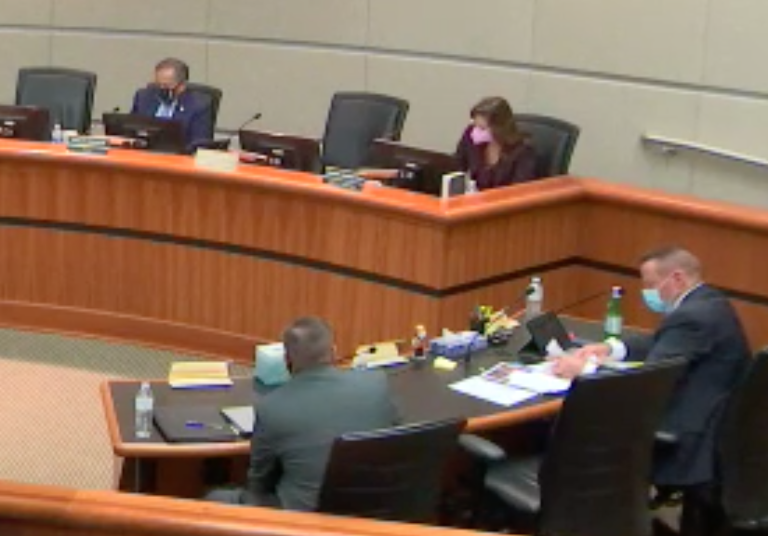
After several months of discussing strategy to combat an accusation of violating state law in closed sessions, the city of Cypress finally went public with the first of a series of forums that shed little light on the topic.

Mayor Paulo Morales and Arianna Barrios, a city council member in the City of Orange and who is a paid contractor by the City of Cypress for this project, answered questions posed by Cypress citizens attending a Zoom meeting to discuss the city’s strategy in defending allegations of violating the California Voting Rights Act.

Although the council members were introduced during the opening to the meeting, they were not allowed to answer questions or interject anything into the debate.

In a slide presentation, Barrios gave those attending the meeting a history of the Civil Rights movement and a primer on voting law development since the 1960’s.

In addition, she also traced the progress of the California Voting Rights Act, saying it “expands upon the Federal Voting Rights Act” in that it provides even more protection for California residents than does the federal legislation.

“The most significant thing [is] that the CVRA makes it easier for minority groups to prove their votes are being diluted like at large elections,” said Barrios.

“Since its passage in 2002, CVRA has promoted two decades of change in the California election process. In all, 216 school districts, 34 community college districts, 137 cities and 35 water and other special districts in all county boards of supervisors statewide are now elected representatives by district,” she said.

A Malibu law firm has charged the city with diluting its major Asian population by electing council members with at-large elections, rather than single member districts.

Attorney Kevin Shenkman has said that if Cypress does not have districts drawn by June, a lawsuit will be filed against the city. The law firm is representing the interest of the Southwest Voter Education Project seeking a change in the city from at-large elections to single member districts.

Nevertheless, in the first of three public forums, Cypress claims there is no basis for a CRVA violation and further, a demographic study, which has not been released, indicates that it would be difficult to carve out a district of Asian predominant influence.

“To date, the city has not found any merit that it is in violation of the law,” said a narrator during a prerecorded presentation.

And while some residents asked pointed questions, others did express their opposition to single member districts.

Barrios and Morales read the written responses and selected the questions to answer during the 90-minute forum.

Melissa Murray worried that single member districts could lead to a “loss of unity,” suggesting that council members would be more concerned with their own districts than “what’s best for the entire city.”

“Cypress is a small community and by dividing into districts will create division,” commented David Halamy.

Another resident, Edwin Kraemer, said “there is a growing concern by the citizens that the council is out of touch with the direction of the community.” He suggested several recent projects would have taken different paths had “connected leadership,” aka district-based voting been in place.

Kraemer suggested “there is too much power and influence centered around an arbitrary kernel of the city.” He said district-based elections would “intentionally distribute” this

“influence and representation throughout the city.”

Several residents expressed concern that the city has been meeting in private since receiving the demand letter rather than being more open with residents.

Morales said what the city is doing is “responding to this allegation that the city has violated the CRVA and we’re a long way, quite honestly, from that. It’s not an issue of meeting in private or meeting in secret,” Morales said, “when you’re faced with something this important, you don’t come right out and all of a sudden say this is what we’re going to do.”

Morales told viewers that the executive sessions since September have been to “understand what the challenges are before us, what we need to do…and if there is any substance to this alleged violation.”

Despite the protestations to the contrary, Sonni Waknin, the managing attorney for the UCLA Voting Rights Project maintains there is a way for Cypress to create single member districts that would be fair for the city and for the city’s majority Asian population (now 37 percent).

Two citizens who participaterd in the forum said latert that it appears as though the city is doing everything possible to delay the districting process until after the 2022 elections.

David Burke, the founder of Citizens Take Action, a nonprofit civic engagement organization located in Cypress, said while it is laudable that the city was attempting to get feedback from citizens, “why didn’t they do it last year when they got the letter [from Malibu attorney Kevin Shenkman].”

“It seems inevitable that Cypress will have to move to single member districts at some point,” he said, but for now, said Burke, “it seems the council is primarily trying to delay rather than do it, maybe before the next election. At least that was my impression.”
If and when districting happens, Burke has offered the city the assistance of his nonprofit to create fair districting boundaries.

Dr. Malini Nagpal, who was active in this week’s forum and was one of the applicants for the open council seat, said what the Council is trying to do “is present so many options that the public is confused, and then they can say that our citizens want us to fight it and if they go to court, that might be okay [for the Council] because then it would not be resolved until after the next election.”

Cypress approved spending recommendations
Courtesy photo

Trash into gold in Cypress?

By George Pardon

When Valley Vista submitted their bid proposal in 2014, the proposal boasted that Valley Vista Project Director George Briggeman has been intimately involved with the Boys and Girls Club, the Woman’s Club of Cypress, Chamber of Commerce, BRACE of Cypress, and Cypress College through his support. The proposal indicated that this support has continued for over 35 years and that he is familiar with their resources.

After a review of all the proposals submitted, Valley Vista was awarded a 10-year contract in September 2014 to start in July 2015. In 2015, the Fair Political Practices Commission fined George Briggeman from Valley Vista Services for his support of City Council candidates in 2012. Two of those individuals were candidates for the Cypress City Council: Rob Johnson and Mariellen Yarc. Should Council Members Johnson and Yarc have recused themselves from the vote to award the initial contract to Valley Vista? I think so.

Council Member Jon Peat was elected to the City Council in November 2014. Jon Peat has been on the Board of the Boys and Girls Club since 2013 now serving as 1st Vice Chair. As stated previously, George Briggeman acknowledged having been intimately involved with the Boys and Girls Club for over 35 years as of 2014 which would currently be over 40 years. Mayor Morales and Stacy Berry were also elected in 2014.

In 2017, Valley Vista, through George Briggeman, requested an extraordinary adjustment to their contract which included service reductions and a rate increase. The city hired a consultant to review the request.

The consultant’s conclusion was that there was no basis for the adjustments requested by Valley Vista but the City Council approved the changes anyway with Council Member Stacy Berry being the only No vote. Both Rob Johnson and Mariellen Yarc termed out in November 2020 with Anne Hertz-Mallari and Frances Marquez elected to replace them.

In 2020, Valley Vista came back to the City Council for additional concessions. They wanted to build a trash transfer station and a Compressed Natural Gas facility on the City Yard in order to reduce their costs further.

The proposed project was next to a residential area and there was substantial pushback from the residents, so the City Council backed off. A controversy did arise in 2021 during the consideration of a two-person subcommittee to review the Valley Vista request for a joint venture or another extraordinary rate adjustment. Then-Mayor Jon Peat proposed appointing himself and newly elected Council Member Anne Hertz-Mallari. Council Member Hertz-Mallari is a long time Director of the Boys and Girls Club of Cypress which is now the Boys and Girls Club of Greater Anaheim and Cypress.

At the time the subcommittee was proposed, Council Member Stacy Berry challenged the appointment of Council Member Anne Hertz-Mallari because of her long-time connection to George Briggeman. Responding to that challenge, Council Member Hertz-Mallari acknowledged that she and George Briggeman have known each other for 15 years and he’s donated to Boys and Girls Club events and given them free trash services for 15 years.

The effort to reward Valley Vista continues. The requirement by the State for cities to implement an organic waste disposal system has led to yet another review of the Valley Vista agreement. Rather than the proposed revision being limited to the organic waste program, the revisions also included an adjustment increasing the recycling cost because Valley Vista says they are losing money on it.

The changes also include a substantial increase to the cap on annual CPI increases and probably the most egregious change is an extension to the contract to 2037. The original contract was a 10-year contract with an allowance for a 2-year extension and 2 one-year extensions. With these new changes, this will end up being a 22-year contract without going out to bid. Neither Council Member Peat nor Hertz-Mallari recused themselves. Would you have recused yourself?

The City Council pushed through these proposed contract changes during Thanksgiving week. Starting this process during Thanksgiving week and expecting residents to focus on it during the holidays and a heightened COVID transmission period raises the serious question as to the transparency of these changes.

Probably the most glaring cause for concern is that Los Alamitos, which is an adjacent city to Cypress, went out to bid for the new state changes and saw their price go down with only a 7-year contract. In fact, if the changes proposed by the Cypress City Council are ultimately implemented, Cypress residents will pay $21.43 per month which is 54% more than Los Alamitos residents who will pay $13.90 per month. Westminster residents pay $14.75 per month.

Given the significant difference in the proposed rate for Cypress residents compared to Los Alamitos and Westminster residents, this contract should be bid out as soon as possible. Since the City Council extended the contract by 2 years in 2017, the current contract expires in 2027. This contract should not be extended to 2037 without a bid.

Given Mayor ProTem Hertz-Mallari’s position at the Boys and Girls Club of Greater Anaheim and Cypress and Council Member Peat’s position on the Board of Directors, they should both recuse themselves. Mayor ProTem Hertz-Mallari chose to recuse herself when the City Council allocated COVID funds to the Boys and Girls Club. Why shouldn’t she recuse herself when the City Council is considering substantial contract changes that benefit a company that provides free services and financially supports the organization she works for.

Similarly, since Council Member Jon Peat is on the Board of the Boys and Girls Club, he should have recused himself when the City Council allocated funds to the Boys and Girls Club and he should recuse himself from voting on these changes to the Valley Vista contract.

While there may be a legal path that allows them to avoid recusing themselves, the question is what should they do to avoid a perception of a financial conflict of interest?

Editors note: George Pardon is Director of the Citizens for Responsible Development of Cypress.

Tips of blocking blue light in a remote world

With persistent spread of the virus that causes COVID-19 in California and nationwide, some traditionally in-person activities – work, school and social interactions – will likely remain remote more often than usual for the foreseeable future.

As a result, the use of digital devices has surged significantly, with Americans logging an average of 13 hours per day watching screens. That compares to between seven and 10 hours per day before the COVID-19 pandemic started, with the increase in screen time likely contributing to more exposure to blue light.

While this low-wavelength, high-energy light offers some benefits, such as boosting alertness, too much of it may cause problems. Researchers continue to evaluate the potential short- and long-term health implications that may come from excessive exposure to blue light, including potential damage to retina cells, particularly in children and teens; increased incidences of age-related macular degeneration; disrupted sleep cycles; and digital eye strain.

In fact, nearly 60% of U.S. adults report symptoms of digital eye strain, which may result from extended computer and smartphone usage and can contribute to dry eyes, headaches and neck or shoulder pain. With that in mind, here are three tips to consider as the consistent use of digital devices remains a fact of life for most people:

Use the 20-20-20 rule or other rest tactics. It is important to give your eyes some rest during the day by breaking up long stretches of screen time. The 20-20-20 rule recommends that after 20 minutes of computer work, people take 20 seconds to look at something that’s approximately 20 feet away. Other strategies include keeping devices at least 30 inches from the eyes, as this separation can help reduce blue-light exposure; and switching to a task for which the eyes don’t have to focus on something up close, such as returning a call. Also, getting outside may reduce the risk of developing nearsightedness, which has become increasingly common in part due to the increased use of screens and today affects 41% of Americans – up from 25% in 1970.

Leverage blue-light-blocking technology. Many smartphones now include a “night mode” feature, which adjusts the screen’s setting to help filter out blue light. Likewise, specialized screen protectors can feature blue-light-filtering properties, while also helping prevent cracks or scratches. To help block blue light at the source, some computer manufacturers are embedding blue-light-filtering technology into the screens, helping ensure color clarity while reducing exposure to blue light. Another option is to get glasses with premium anti-reflective coating, which may help prevent harmful reflective glare and reduce the risk of digital eye strain.

Get a comprehensive eye exam. It’s a good idea for computer users to get an eye exam every year, according to the American Optometric Association. If you experience ongoing symptoms of digital eye strain, prescription lenses for computer viewing may be needed. Plus, a comprehensive eye exam may uncover other health conditions not usually associated with the eyes, including diabetes and some types of cancer. For children, remember that a school’s vision check is not a substitute for a comprehensive eye exam, as screenings usually focus on measuring acuity levels and might miss conditions such as poor eye alignment, focusing problems and farsightedness.

As we contend with the ongoing pandemic and transition to an increasingly virtual world, considering these tips can help people maintain or improve their eye health as part of an overall focus on whole-person well-being.

Dr. Scott Edmonds, chief eye care officer for UnitedHealthcare located in Cypress

Jewish Long Beach names Giser to head operations, development

Jewish Long Beach is proud to announce they have hired Kevin Giser as Chief Operating and Development Officer. The need for the position was identified through the integration of Jewish Long Beach with the Barbara and Ray Alpert Jewish Community Center (Alpert JCC) earlier this month.

Giser most recently served as the associate director of the Jewish Federation of the Desert, and for two years before that as the organization’s director of community impact. Giser worked with the CEO and Board of Directors to reimagine their strategic impact areas and development plan to adapt to COVID restrictions and update their development and grantmaking processes. Reinvigorating donor relationships by connecting the supporters to their impact both locally and in Israel. He successfully transitioned the group’s fundraising efforts to virtual platforms and through collaboration with partner agencies. Members were appreciated with visits from celebrities Mayim Bialik and Jason Alexander.

Working with multiple audiences, Giser strengthened communications and outreach overall, ensuring that the Jewish Federation of the Desert’s e-newsletter was senior-friendly, and combining local stories with Israeli innovation in their self-published Jewish Community Newspaper. His work includes creating and promoting the Center Against Hate and Intolerance housed in their building, focusing on Antisemitism with unique (live and virtual) opportunities with all three local school districts.

In many ways, this is a homecoming for the Long Beach native. Giser started out as a toddler in Alpert Jewish Community Center’s (AJCC) early childhood education program. He celebrated his Bar Mitzvah at Temple Israel, is a former camp counselor at AJCC’s Camp Komaroff, and a participant at Beach Hillel.

“I am grateful to step into this new role at Jewish Long Beach,” Giser said. “The COVID-19 Public Health Crisis has brought clarity to my professional career and a return to Long Beach is my priority.”

Giser holds a Bachelor of Arts degree in Global Studies from UC Riverside, and a Master of Business Administration in Nonprofit Management from Touro University Worldwide.
The Alpert JCC and Jewish Long Beach provide programming for all ages and stages of life. Known as “Your Center for Life,” The Alpert JCC provides a gathering space in which all are welcome to pursue early childhood education, after-school programs, fitness programs, aquatics activities, and summer camp, as well as to engage in Jewish life, culture, and education.

Los Al Rotary honors Vocational Education students

The Los Alamitos Rotary Club has continued a tradition of Honoring Vocational Education Students at the Los Alamitos High School (LAHS). “The betterment of our youth is a focus for our Rotary Club” noted Robert Dominquez, president. This month they recognized Alexander Cannizzaro from the AP Computer Science program, and Elizabeth Schmidt from the Tech. Theatre program. Nominated by their instructors, they were recognized at a club meeting and their parents were in attendance. In addition to a Certificate of Recognition, the honor includes a $200 donation which they can apply to their future endeavors. He was honored as the December student of the month.Cannizzaro was hailed for his efforts in

Computer Science and often becomes the “go-to person” from his fellow students when questions arise.

Ms. Schmidt, “Lizzy” has natural talents in managing theatrical programs. She recently took charge when her instructor became ill. She was recognized as the January student of the month.

In addition to these monthly recognitions, Rotary nominates two junior year students for the Rotary Youth Leadership Awards (RYLA) which is conducted in the Spring.
“We also have a major scholarship award, named in honor of a former club member, which is presented during grad awards just prior to graduation,” Dominguez added.

The Los Alamitos Rotary Club meets on the first and third Tuesdays each month, at noon, at the “On The Greens” restaurant and the US Navy Golf Course in Cypress. Those who may be interested in this International Service Organization are invited to join at the twice-a-month meetings.

Cypress Woman’s Club member selected to participate at state level

Courtesy photo
One of the Woman’s Club of Cypress members, Ginger Osman, was chosen as a LEADS (Leads Education and Development Seminar) candidate to represent our Orange District at the state level. GFWC LEADS helps up and coming leaders within the organization to gain the capabilities, confidence, and commitment necessary to pursue and achieve higher offices and serve with distinction. This is an honor for her, Congratulations Ginger. Pictured at left is Mary Sprague, CFWC Orange District President, center is Ginger Osman and right is Mariellen Yarc, Woman’s Club of Cypress.