Home Blog

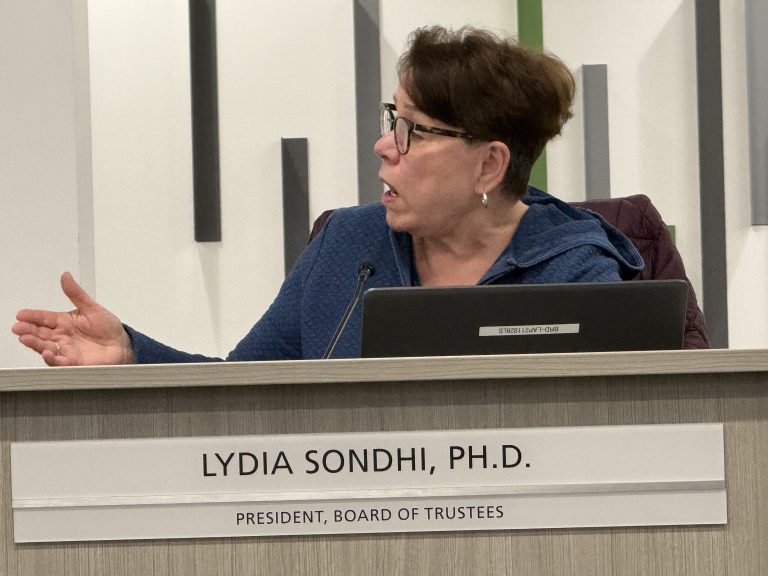
Cypress School Board facing hard choices

0

Not only is its current budget more than $3 million in arrears, but trustees of the Cypress Elementary School District also learned at its regular meeting Thursday that without hard decisions, the system faces even more red ink in the future.

“This isn’t just a Cypress thing,” said Interim Supt. Dr. Timothy McLellan, adding that “this is what a lot of California school districts are experiencing.”

While the financial picture was less than rosy during what turned into a five-hour marathon workshop that laid bare the district’s dwindling finances, the Board of Trustees did manage to get a detailed analysis of the system’s financial structure, including Fund 40.

Fund 40 is where the district’s investments into private apartment complexes are kept and spent, as the board spent nearly two hours hearing an explanation.

Cypress, like other districts, is experiencing declining enrollment. Two decades ago, the board apparently formed a committee to deal with underutilized sites, meaning sites that had been closed then for declining enrollment.

The district then had six surplus sites, which included MacKay Elementary, which had already been closed for years, and Dickerson Elementary, which had been closed in 2009.

The Board then agreed to sell both surplus school properties for more than $30 million, and they in turn, signed an “exchange” for the real estate.

The Cypress School District acquired two SoCal multifamily properties totaling 81 units in a deal valued at $26.7 mil, or about $330k/unit. The revenue from this investment was expected to support local educational programming for students of the Cypress School District.

One of the properties is Coast Apartments, a 65-unit multifamily property located at 400 Merrimac Way in Costa Mesa, which was acquired for $20.05 mil ($308k/unit). The other purchase was for Azure Apartments, a 16-unit building located at 2704 Vanderbilt Lane in Redondo Beach. That acquisition went for $6.65 mil ($416k/unit).

In the analysis requested by the board at the last meeting, Assistant Supt. for Business Affairs, Dr. Larry Ferchaw told the Trustees that the larger complex produced approximately $415,000 in profit last year for the system, while the smaller complex produced $261,000 in rents, etc.

He said Fund 40 has a balance of over $11 million and noted that the board was using transfers from the fund to “stay solvent.”

Ferchaw and Interim Supt. McLellan took the board through a masterclass in restricted vs unrestricted funding, reserves, etc. and noted that following the pandemic, “students’ needs have increased.”

The district, with a budget of more than $55 million, is running a deficit this year of more than $3 million. “The question,” asked Ferchaw, “is where did all the money go?”

“I think the answer is it went to provide services and support to students,” said Ferchaw. “Every dollar we spend goes toward staff,” he said, noting that the district “is in the business of educating students. It’s what we do, we employ people to provide services to students.”

In short, Ferchaw pointed out in one of the many charts shown to the board that since 2015, district staff has grown 29% (denoted by a red line) while, at the same time, the board has experienced a 21% (denoted by a blue line) decrease in students.

“So, the chart in red, is the thing we spend money on and the chart in blue is the thing that generates the funding. And they’re going in opposite directions and that’s going to lead to the challenge we are seeing today,” said Ferchaw.
“We cannot continue to increase or maintain this level of staffing,” he said.

Ferchaw introduced Greg Magnuson, a financial analyst provided to the district by the county education department to assist in helping the district better understand its financial situation.

Magnuson said most districts had staffed up because of the pandemic and are having similar problems. He said during the first year of COVID, “everybody was taking a hard hit and the state was trying to figure out how to make ends meet,” he said.

He explained the state’s funding formulas in detail and explained that the state has even gone to an “averaging” formula for daily attendance that allows school districts to reach back into years when attendance was higher to “average” out numbers to submit for funding.

School districts each get about $11,000 per student, although there are numerous exceptions and special formulas for special ed, etc. Nevertheless, Magnuson said as a result, Cypress School District was paid for 458 students in 21/22 “that were not in the district.”

Even with the averaging, he said Cypress is “losing 100 students a year you didn’t have.”
He said the state has been provided “one-time” funding to districts as they try to wean themselves from the COVID ramp up, coupled with dropping attendance.

Moreover, he said that if Cypress takes no action, they could end up with a $5 million structural deficit by the 28/29 school year.

The county education executive said it is understandable that “this squeeze hurts any school district that has an operating structure that, because we support kids, nobody wants to take away from it so there’s got to be some affirmative action to try and resize as this kind of phenomenon occurs.”

The Cypress School District demanded the full workshop on finance at their last regular meeting as they grapple with ways of dealing with the inevitable.

The board continues to circle the Fund 40 balance of $11 million, which could alleviate some pain this year.
Ferchaw explained the fund also provides for maintenance and other issues but said there is likely more Fund 40 can do to help.

“We’ve had a good discussion,” said Ferchaw.

“With Mr. Magnuson and the county’s continued support, looking at short and long-term ways of addressing the district’s deficit, continuing to look at utilization of Fund 40…we’ll come back with an identifiable, sustainable amount of funds from Fund 40 that we can use to prop up the general fund on an ongoing basis,” he promised the board.

In other action, the board approved a contract for McLellan, paying him a daily rate of $1118.45 per day, based on a 225-day year, until a new Superintendent is in place.

According to a schedule presented by McLellan to the board, given recruiting process and approvals from stakeholders involved, it could take until August or September to seat a new Superintenent for the system.

Also, on Thursday, the board voted 4-1 to censure Trustee Meghna Parikh for unspecified actions last year for which she took full accountability.

The action will not hinder her position nor affect her representation in any way, board officials said.
The Board praised the presentation of the Arnold Elementary Debate team, as Parikh, an attorney, said “my heart is filled with joy” watching them and suggested they consider a mock-trial as a next step.

Meatloaf, the gigantic sea turtle, recovering at Aquarium of the Pacific

Aquarium of the Pacific officials say a 250-pound sea turtle they have dubbed “Meatloaf” is now in the intensive care tank at the facility after the massive creature was found injured in the St. Gabriel River.

Meatloaf was found trapped in fishing line and rope and tethered to debris in the San Gabriel River, said Aquarium Vet Dr. Jerry Adams last week.

It was rescued by National Oceanic and Atmospheric Administration personnel and the U.S. Fish and Wildlife Service and then transferred to the aquarium for medical evaluation and care because of their “expertise in treating and releasing stranded and injured sea turtles.”

Adams said the Aquarium is part of a massive “sea turtle stranding network,” a network of organizations that work together to decide which provider gets alerted when a sea turtle is found in need of care along the California coast.

Meatloaf attracts crowds as she recuperates at the Aquarium. Photo by David N. Young

“They’ll call us and ask us to go out and evaluate and decide if it needs human care,” he said. Dr. Adams heads up the Aquarium’s Veterinary Services unit. Sea turtles found in Orange or L.A. counties are sent to the Aquarium of the Pacific.

Any injured sea turtle found further south is cared for by SeaWorld, he said.

“Meatloaf” has been attended to and is resting comfortably within a special area of the Aquarium.

She has suddenly become a prime attraction at the Aquarium, as visitors can walk up directly to the massive 4,000-gallon water tank that has become the sea turtle’s intensive care unit as vets continue to care for her and try to save her right flipper.

In an interview with ENE, Adams said, “The entangled line severely damaged a front flipper, cutting off its blood supply.”
“We have been doing all we can, including surgery, to try and save the flipper,” he said.

“We are treating it with antibiotics,” said Adams, and “It is showing some early promising signs of healing.”

In addition, Dr. Adams said Meatloaf the sea turtle receives medical treatment in ways not unlike a human. “We take X-Rays to check for pneumonia and collect blood samples for laboratory analysis to assess infection, organ function and hydration status,” he said.
Turtles are red-blooded like humans but are cold-blooded, he said.

“They are considered air breathers,” he said, “but they’re considered cold-blooded, they’re poikilotherms, meaning they are the same temperature as the environment around them. They don’t generate their own body heat, so if they want to get warm, they have to go to warmer water,” the Aquarium’s Chief Vet told ENE.

He said Aquarium staff regularly weigh the turtle, track its body condition, and monitor its nutrition and adjust its diet during rehabilitation.

Green sea turtles are herbivores, meaning they mostly eat plants and algae, “but I think they will eat whatever they can find,” he said.

While Meatloaf is a large turtle, he said most Green Sea Turtles in the area average closer to 100 pounds.

Dr. Adams said Meatloaf is healing nicely, and he thinks that when Meatloaf is released back into the Pacific, she could survive with only three flippers if necessary.

“Meatloaf’s overall progress has been great,” said Adams. “She’s going to do well while the prognosis is still questionable on the flipper. “Sea turtles primarily use their flippers for swimming so they can forage and migrate, then they use them to haul themselves out of the ocean to migrate and lay eggs,” said Adams.

“There are sea turtles that can live with one missing flipper,” he said, if necessary. “They adapt to missing limbs.”

Adams said he expects Meatloaf to go the way of “Porkchop,” the Aquarium’s most recent rescue, and to be returned to the Pacific within six or twelve months. Porkchop has been spotted reunited with other sea turtles, he added. “One rescue is never the last,” he added.

On its website, the Aquarium is asking for the public’s help to fund the specialized medical care needed for Meatloaf to recover and be deemed ready to be released back into the wild.Donations to the Sea Turtle Rehabilitation Program support expert care, critical surgeries, and rehabilitation for Meatloaf and future rescued turtles.

For more info, or to assist, visit aquariumofpacific.org.

Youth Center, Rotary Club of Los Al presents “A Night Among the Stars” April 24

By Alizabeth Martin

On April 24, The Youth Center and Rotary Club of Los Alamitos, Seal Beach and Cypress will host its 14th annual A Night Among the Stars (ANATS) ceremony, celebrating 20 outstanding youth nominees recognized for their dedication to service and community involvement. Adonis Cardenas, Danika Mei, and Kayla Teng are three of this year’s nominees who are especially committed to making a difference.

Adonis Cardenas

Adonis Cardenas is an 11-year-old sixth grader at Frank Vessels Elementary in the Cypress School District who has already made a meaningful impact across multiple communities through his dedication to service. Outside of his hobbies, including learning new sports, instruments, and recipes, Adonis is actively involved in the Leos Club and the Greek Orthodox Youth of America (GOYA). He continually looks for ways to support others and contribute to something larger than himself.

Adonis Cardenas, Courtesy photo

“I thought I could give back to the community and to the people who need it. I started helping, and my mom encouraged me to do more,” Adonis shared, explaining what inspired him to begin serving.

Through GOYA, Adonis participates in events that bring people together, including the Seal Beach Fish Fry, where he enjoyed helping and cooking. “It was a time to be happy and meet people you might not know,” he said.

In the Leo Club, part of Lions International’s youth branch, he helps pack backpacks with supplies and create blankets for those in need. He also supports FOCUS SoCal by packing food boxes and serving families facing hardship.

“It’s not just about me. It’s about how other people feel. I’ve learned to put others’ needs before my own,” Adonis said.

Adonis’ creativity shines through his work. He has built a bike, enjoys face painting at community events, and even won a T-shirt design competition at his school. He approaches everything he does with intention and pride.

He encourages other youth to “drop the cool act” and start helping out. “You get this warm, fuzzy feeling inside. Even if it’s hard work, the work is good,” he said.

For Adonis, being nominated for A Night Among the Stars (ANATS) means something truly special and motivates him to continue serving others.

Danika Mei

Danika Mei is a 17-year-old senior at Troy High School in the Fullerton Joint Union High School District with a strong passion for drone and aerospace technology.

“I like to fly drones, code with them, and work on unmanned aerial vehicle projects that have real-world applications to better people’s lives,” Danika explained.

Danika Mei, Courtesy photo

She is committed to sharing her passion for STEM with younger students.

“Exposing youth to aerospace early on can foster interest and create formative learning experiences they will want to continue pursuing,” she said.

When Danika joined her school’s Drones4Kids club, there were only five members. Determined to grow the program, she recruited peers and expanded participation to 30 members, including students from other high schools. The group has hosted more than 80 drone education events at libraries, schools, and STEM fairs.

Danika was especially motivated to encourage young girls in STEM after noticing gender disparities at events. This led her to found DronesByGirls, an initiative that creates opportunities for girls to explore aerospace in a supportive environment. She has partnered with organizations such as the Orange County Girl Scouts to host STEM-focused events.

“Being nominated means I’ve made a positive impact by giving children access to hands-on aerospace technology they might not otherwise experience,” Danika said.

Kayla Teng

Fifteen-year-old Kayla Teng serves as Vice President of Creative Engagement for The Youth Center Leadership Council, where she brings creativity and purpose to everything she does.

In her role, Kayla collaborates with her team to develop engaging program curricula and leads publicity efforts through social media. Her design work is inspired by platforms like Pinterest and Instagram, and she uses tools such as Canva and Adobe Illustrator to transform ideas into impactful visuals that enhance outreach.

Kaya Teng, Courtesy photo

For Kayla, leadership is rooted in communication and trust. “Leadership means delegating effectively and maintaining strong communication within the team and with executive leadership to achieve our goals,” she said.

Beyond her technical skills, Kayla is deeply committed to making a difference. She encourages others to get involved, highlighting the Leadership Council as a meaningful way for youth to engage with their community.

Being nominated for A Night Among the Stars (ANATS) is both an honor and a motivator. “I am incredibly grateful to be nominated. It is rewarding to have my work recognized, and it pushes me to continue serving and working hard,” Kayla said.

Alizabeth Martin is The Youth Center Marketing Intern

Segerstrom announces program to promote outreach as innovation flourishes at 40th Anniversary

Not far from where its founding family once grew lima beans, the president of the Segerstrom Center for the Arts in Costa Mesa announced a program last week that signals a new level of engagement for the complex in our rapidly evolving world.
“Orange County is one of the most vibrant and culturally diverse regions in the country,” said Segerstrom President Casey Ritz, where, he said, “the arts continue to play an important role.”

On March 30, Reitz gathered along with other Segerstrom officials on its growing campus to announce the new outreach program.

“We get together to share stories and celebrate our heritage,” said Reitz, “so today we’re very excited because we’re going to take the next step in that journey,” he said.

Reitz announced an “expanded commitment to Hispanic and Latino arts and culture. “

“This initiative will include performances, education programs, master classes, new commissions, and opportunities for artists and all agents who want to experience the incredible richness and diversity of Hispanic and Latino culture,” said Reitz.

His announcement comes at a time when entertainment venues across the country are repositioning themselves as the industry continues to evolve.

Moreover, Reitz seemed to channel Henry T. Segerstrom, the Center’s founder, who led a life of “imagining the future.”

Reitz said six-time Grammy® Award-winning composer and bandleader Auturo O’Farrill will enjoy the Center’s inaugural Artist in Residence program.

Grammy Award winner Arturo O’Farrill honored as Segerstrom’s first-ever Artist in Residence.
Courtesy photo

Not only to perform concerts and make appearances, said Reitz, but O’Farrill will be free to wander into and interface with various communities to build on Orange County’s long Latino history.

He said the AIR program is named “VIVA Spenuzza Series,” celebrating 257 Years of California’s Hispanic Heritage,” said Reitz.

Reitz thanked Segerstrom Board member Connie Spenuzza, and her family foundation, for funding the first year of the program.

O’Farrill is widely recognized as one of the industry’s most influential contemporary voices in Afro, Latin, and jazz music. His award-winning body of work effortlessly bridges the traditions of jazz improvisation, Afro-Cuban, and pan-Latin musical traditions.

“Segerstrom is doing something extraordinary,” said O’Farrill, noting that he “couldn’t be happier” about the groundbreaking residency.

“I want to be able to touch people’s lives,” he said, “regardless of who they are. Love is the only currency of value,” he said, adding that “it is the gravy that holds us all together.”

For Reitz, the surprise Artist in Residence announcement follows the release of a blockbuster lineup of 40th Anniversary Broadway shows to satisfy a wide swath of an increasingly diverse Orange County.

Four decades after its founding, the Segerstrom Center for the Arts is moving forward in ways not only to stay in touch with the times, but in many ways like the brainchild of the Center with which it shares a name.

The Costa Mesa cultural and entertainment complex was inspired and built by Henry T. Segerstrom, a visionary businessman remembered for always “imagining the future.”

According to a PBS documentary, Segerstrom was the grandson of C.J. Segerstrom, who emigrated to America from Sweden in 1882.After arriving, the family leased a tract of land where they kept dairy cows, grew alfalfa, and made their name and fortune in legumes (lima beans).

Young Henry Segerstrom came along in 1923, was named valedictorian of Santa Ana High School in 1939, enrolled at Stanford, interrupted his studies to serve in WWII, and, though severely wounded, earned a Purple Heart during the Battle of the Bulge.

Segerstrom returned to the family farm business and began “imagining the future.”

Segerstrom envisioned South Coast Plaza before there were sufficient roads to allow dusty OC residents to get there.

Moreover, he met with the most luxurious brands in Europe and convinced them to invest in a store there.

His vision brought immense prosperity to Henry and Renee Segerstrom. At one point, the South Coast Plaza was reportedly the highest-grossing shopping area per capita in the United States.

In 1972, when South Coast Repertory Theatre was seeking a location to build and expand. The Segerstrom family agreed to donate one acre of land adjacent to its current location with a $50,000 cash gift and parking arrangements. The South Coast Repertory Theatre opened in 1978.

In 1979, the Segerstrom family donated five acres across from the shopping center, along with $5 million to build the Orange County Performing Arts Center. That vision became reality when the Orange County Performing Arts Center opened on September 29, 1986 with a concert in its new opera house-style Segerstrom Hall.

At once, the Segerstrom Center for the Arts became one of the nation’s most innovative and technically advanced performing arts complexes.

The Segerstrom Center for the Arts quickly established an ambitious education department, dedicated to bringing young people to the campus for live professional performances and providing meaningful arts programs.

With six stunning venues nestled within a beautiful multi-disciplinary campus, the Center is home to the region’s most esteemed performing arts organizations, including the Pacific Symphony, Philharmonic Society of Orange County and Pacific Chorale as well as two independently acclaimed organizations: Tony Award®-winning South Coast Repertory and The Orange County Museum of Art. Segerstrom Center is also home to the American Ballet Theatre, William J. Gillespie School and Studio D: Arts School for All Abilities.

Now, in that spirit, Reitz is inspiring a reawakening of Segerstrom’s initial spirit, innovating the center’s operations, bringing to the Center more culturally diverse programming, launching a first Artist in Residence program, and from all indicattions, the SCFTA entertaiment overhaul is likely to continue.

What’s new for Sunset Beach Art Festival

By Chris MacDonald

If you’re looking for a fun way to celebrate Mother’s Day, the Sunset Beach Art Festival has some exciting, new features and things to do. Going in a new direction this year due to construction along the greenbelt, the event will be offering free shuttles to & from Peter’s Landing to access the festival that will be taking place from 12th to 19th Street.

Among the exciting attractions is a delicious mix of new cuisine flavors, plus a Kids Zone with Petting Zoo and crafts stations for making Mother’s Day cards. Guests can also enjoy shopping at 150 artisan vendor booths offering unique, hand-crafted art, jewelry, photography, and more!

According to Janet Parks, a festival co-chair: “This creates a vibrant walkable experience along the Coast where guests can shop, play and stay all day if they like.”

“At the Kids Zone budding artists can create their own works on canvas by designing Mother’s Day cards with markers and chalk. We also added a Petting Zoo, and the Iconic Wave is making an apperance at the show for your family photos,” Parks said.

Josey Dentzer, chair of the student arts contest wants everyone to see the festival gallery on 12th Street featuring Huntington Beach middle and high school students’ artwork. “In 2025 a ceramics class raised $1200 in sales to benefit high school art programs!”

Huntington Beach Mayor Casey McKeon applauds Las Damas for organizing the event and said: “It’s a 58-year tradition that is free and fun for the entire family! I hope everyone comes and enjoys the Sunset Beach Art Festival.”

Held Saturday May 9th from 9am to 6pm and Sunday May 10th from 9am to 5pm, the event takes place on Pacific Avenue between 12th & 19th Streets. Admission is free. Learn more on the free shuttle and event details at: http://www.sunsetbeachartfesitval.net . Questions call: (909) 373-5924.

Local citizens honored at Americana Awards

For the 51 years, the Cypress College Americana Awards have presented men and women of distinction with honors for their service to their communities while raising millions of dollars for scholarships and other educational needs.

On March 21, 2026, Cypress College Foundation held this year’s Americana Awards Gala. This event began in 1976 after the American Bicentennial.

Courtesy photo
(L-R) Dr. Scott Thayer, Cypress College President, Debbie Kent, Person of the Year from the city of Los Alamitos, Mayor Tanya Doby and Curtis Scheetz, Cypress College Foundation. Debbie Kent is Secretary (and docent) of the Los Alamitos Museum Board, she’s served on the Youth Center Board and is involved in other civic endeavors in Los Al.

Fifty-one years later, America is about to celebrate its 250th Anniversary and Cypress College continues a tradition that recognizes public service while raising funds to inspire the next generation.

Courtesy photo
(L-R) Dr. Scott Thayer, Cypress College President; Mayor Pro-tem Debbie Baker, Jan Jansen, who was honored as Person of the Year from the city of La Palma and Curtis Scheetz, Cypress College Foundation. Jan Jensen has served on the Traffic and Safety Commission for six years and is involved in a number of volunteer activities including the Kiwanis Club of La Palma, Los Coyotes Site Council and others.

Each year, Cypress College Foundation invites community members from eight cities to nominate candidates for Citizen of the Year. Candidates are nominated based on criteria such as community engagement, community impact and longevity in the community.
Here are the three winners from the communities served in our coverage area.

Water polo twins end collegiate sports career, graduate to their own separate ways

UC San Diego women’s water polo team saw their season come to an end on Friday, with a quarterfinal loss to UC Irvine in the Big West Conference. That moment also signaled the end of the collegiate athletic career for two players who had grown up playing together through youth leagues and at Los Alamitos High.

Twin sisters Sydney and Sophia Munatones wrapped up the athletic portion of their student-athlete lives with friends and family in attendance at the Big West tournament at Long Beach State’s Ken Lindgren Aquatics Center.

While the elimination from the tournament was a disappointment, the sisters were buoyed by their excitement to complete their academic pursuit, and their plans for lives after college. Sydney said she was grateful for the experience of playing college water polo and for the legacy she sees in the wake of their departure.

“It’s definitely bittersweet, but honestly, I can only think of the most fondest memories of my time here at UCSD, I wouldn’t take it back for the world,” Sydney said.

Photo by Ted Apodaca
Sydney led UC San Diego in assists this year.

The sisters were half of the senior class on the team, under first year head coach, and former UCSD player Sarah Lizotte. Sophia added that the young players showed a lot of potential and that being a part of the team leadership made the season extra special.

“I feel so lucky to have been a senior for this incoming class, this young team, they’re gonna be really great in the years coming up,” Sophia said.

Sophia and Sydney were fourth and fifth on the team in offensive points. Sophia compiled 46 points after scoring 28 goals and getting 18 assists. Meanwhile Sydney scored 13 goals and had a team-high 32 assists this season.

The sisters have been standouts since they took up water polo as children. They come from a family of aquatic competitors, and they followed their older brother to UC San Diego, after his standout career as a Triton.

In their freshman year, they were already achieving both in the water and classroom. Sydney had 12 goals and 11 assists her freshman year and had the fourth most steals with 21. As a sophomore she was second on the team in assists, with 32. Sophia had the second-most steals on the team with 33. As a sophomore, she scored 24 goals and added 14 assists.

Sophia had 28 goals and was the fourth highest in overall points for the Tritons.

They sisters were both named to the Freshman All-Conference team their first year. Both of them have been three-time ACWPC All-Academic honorees and two time Big West Spring Academic All-Conference honorees. Both were also named to the Big West Commissioners Honor Roll in 2023.

Their first three years at UCSD were under the leadership of Head Coach Brad Kreutzkamp. His influence and belief in them was a big part of their development as college players, they said.

“I think looking at us, we’re what 5-1, maybe, on the smaller end of water polo players, but that never, you know, that never crossed his mind, he was always putting us in the water, so, you know, I can’t say enough good things about him,” Sophia said.

The sisters will graduate in June, Sydney with a degree in Public Health and Sophia with a degree in Cognitive Science. However, jumping into a career in either is not the immediate plan. Sydney plans to get a job in the San Diego area and enjoy the city she has come to love.

Sophia is going to take a job teaching English in Japan, for a year. It’s an adventure she has wanted to pursue for some time now. It will mark the first time she has been that far from family, including her sister, but she is looking forward to the next adventure.

“It’s something that I’ve always wanted to do, so, I’m more excited than nervous,” Sophia said.

La Palma ordered to pay officer $8.4 million after losing reverse discrimination lawsuit

A jury has awarded $8.4 million in damages to a former white police officer who said he was subjected to reverse discrimination by a Korean American supervisor, finding the City of La Palma responsible for failing to prevent discrimination based on race and national origin.

The lawsuit, which was filed almost exactly two years ago, has resulted in a Jury verdict ordering the City of La Palma and its taxpayers to pay $8.4 million to Ross Byer, a former police officer who made the reverse discrimination claim.

Petronelli Law Group filed the lawsuit on behalf of Ross Byer, a white police officer at the City of La Palma, who accused the city of race discrimination, retaliation, and failure to prevent discrimination and retaliation.

In a statement issued shortly after the verdict, the firm said, “On December 9, 2025, an Orange County jury returned a verdict in favor of our very deserving client, Ross Byer, for $8.4 million in a difficult reverse discrimination and retaliation case in which we waived economic damages.”

La Palma City Manager Peter L. Kim. Courtesy photo

Peter Kim, La Palma’s City Manager, said on March 5 that “the City of La Palma is aware of the recent decision in the case Ross Byer vs. City of La Palma. We take this matter seriously and are reviewing the matter to determine the appropriate next steps,” he said in an email statement to ENE.

While Kim was recently appointed as City Manager, all of the activities alleged to have occurred in the lawsuit happened during the administration of the city by former City Manager Conal McNamara, who resigned to take a job in Whitter, CA.

“As this litigation is ongoing, the City will not provide further comment,” Kim said in his reply to ENE.

In fact, the City filed an appeal on March 27 following a ruling in December that, according to trial documents and Jury poll, they found the city guilty of discrimination against former police officer Ross Byer.

According to the lawsuit, the plaintiff, Ross Byer, joined the La Palma Police Department in May 2022. His initial performance evaluations were positive, but he said conditions changed after he was assigned to work under Sergeant Won Koh, a Korean American supervisor.

In his lawsuit, Byer alleged Sergeant Koh favored Korean American officers on the same shift and assigned Byer a heavier workload. Byer reported what he described as discriminatory treatment by Lieutenant Jesse Amend, Sergeant Koh’s superior, on two occasions in January 2023 and February 2023. Byer also alleged that Sergeant Koh said he “wanted a police organization made up entirely of Korean Americans.”

Police department records disclosed during the trial showed that Sergeant Koh rated Byer’s performance as “needs improvement” even though Byer’s patrol activity was nearly identical to that of his Korean American partner.
Byer claimed the evaluation resulted in a wage freeze. The records also showed that Sergeant Koh had previously issued negative evaluations to two other white officers, one of whom was later fired.

Amid concerns that he might also be terminated, Byer left the La Palma Police Department on June 1, 2023. One week later, he met with a City of La Palma Human Resources official and raised allegations of discrimination, retaliation, and instructions involving racial profiling.

Byer said Sergeant Koh directed officers to target black drivers for traffic stops. Records showed that these statements were forwarded to senior city officials, but it appeared that no separate investigation was conducted.

Byer later filed a lawsuit seeking compensation for emotional distress, alleging discrimination and retaliation based on race and national origin, as well as failure to prevent discrimination. His legal team initially sought $14 million in damages. The City of La Palma argued that Byer’s emotional distress stemmed from the 2020 death of his daughter and said any damages should be limited to $35,000, yet offered $75k to settle.

The jury instead awarded $3.92 million in past damages and $4.48 million in future damages, for a total of $8.4 million.

While the city has now officially appealed the case, the verdict has already been denied a request for a “retrial,” with Superior Court Judge Kimberly A. “Kate” Knill found Amend and Koh “lacking in credability,” documents show.

“The defendants have not established juror misconduct,” the court papers say, adding that the court “will not interfere with the verdict.”

This case is notable as a rare reverse discrimination lawsuit in Orange County, highlighting issues of workplace fairness, retaliation, and the legal protections available under California employment law. The verdict demonstrates that claims of discrimination and retaliation are actionable regardless of the plaintiff’s race, say experts.

Rossmoor continues seek solutions to growing traffic woes within service district

0

After years of working with Orange County Traffic Engineers, the Rossmoor Community Services District has relentlessly pursued solutions to problems associated with growing traffic and lately, electric bikes moving through this iconic community of more than 11,000 residents.

At a recent meeting, the District’s Board of Directors gave final approval to an ordinance to mitigate the growth problems related to the proliferation of electric bikes in the community.

Electric bikes have only added to the growing transportation problems of the district, directors say, and members of the board were hopeful that the new ordinance will have an impact.

General Manager Sharon Landers presented a body of evidence to the Directors illustrating significant impacts and destruction caused by the abuse of electric bikes in the community’s green spaces and public parks.

While electric bikes are one aspect of transportation, Directors are also looking at more long-term traffic problems.

Many transportation issues still exist and Directors held an open discussion at their March meeting with the Orange County Traffic Department.

Last year, Rossmoor residents overwhelmingly rejected a revamp of the district’s street network that OC Traffic Engineers had worked on for more than two years.

Traffic engineers representing the OC Public Works Department developed a comprehensive plan that included so-called “round-about” traffic circles, an option which residents overwhelmingly rejected when they had a chance to vote on the plan.

Nevertheless, Wei Zhu, P.E, T.E., PMP. M., ASCE, a Senior Civil Engineer in the Orange County Public Works Department, Ms. Zhu, and two team members from the team responsible for many key services in the Traffic Engineering and Development Support unit were back, this time to discuss school safety and parking.

Courtesy photo
Orange County Traffic Engineer Wei Zhu speaks to the Rossmoor Board of Directors.

She said the committee planned to hold a meeting later in the week with its own Traffic Committee to discuss adding an adult crossing guard to Lee Elementary School.

Moreover, Ms. Zhu said she would explain exactly how the investigation into the recommendation took place.

“I understand that you guys want to understand how we do this, so I’m going to use this opportunity to try to explain what data we need and what criteria we’re looking into, and then based on that analysis, how we come up with our recommendation,” the engineer said.

Zhu has studied the dynamics of traffic in Rossmoor for years, so during the discussion, she routinely used real-time data to explain the methods the OC Traffic Engineers had used to deal with the district’s traffic problems.

Regarding the District’s request of either providing a stop control or an adult crossing guard at the intersection of Foster Road and Silverwood Drive (next to Lee Elementary) to enhance its safety, Zhu explained a new option.

Zhu said both streets were standard, 36-foot, curb-to-curb pavement with parking on both sides. Speed limits are 25 mph on both, though Foster is a connecting route.

Using school times (start at 8:05 a.m.), Zhu recited traffic counts for area streets. In addition, she said the intersection was tested against criteria to qualify for stop control, and then the three criteria necessary to qualify for an adult crossing guard.

She said Foster and Silverwood failed to meet the minimum of the required 500 (cars) daily traffic count, with 370 for Foster and 360 for Silverwood. Zhu said the intersection also failed to meet the accident test, with no records of collisions or accidents at this location.

Zhu said OC Traffic Engineers used other criteria to enhance safety so that they did not have “to add a stop sign at every single intersection, even those with minimal traffic counts.”

Zhu also explained the three additional criteria that govern an OC Public Works standard for approving an adult crossing guard decision, noting quickly that the intersection meets all of the criteria to qualify for an additional crossing guard.
She also explained an alternative solution for parking, another pressing Rossmoor problem.

Zhu explained the rules that would govern parking along marked curbs on Hedwig Road. She said the problem with dedicated street parking is that the north side, where the parking would be most prevalent, is also the residential side of the street, and such parking could impair the vision of neighbors who live there as they are trying to back out of their driveways.

Rossmoor Director Tony DeMarco, head of its Traffic Committee, urged the County to go easy on “the county standards” that govern all the unincorporated areas, saying some may not apply so automatically in Rossmoor.
For instance, the five-accident standard in the stop control protocol.

“I think to myself, are those just, you know, casual accidents. Are they resulting in a death? I mean, the community should dictate a lot of these…it could make our community safer,” he told the OC officials.

“There are a lot of intersections in Rossmoor that have blind spots that, at least under the county standard, and some intersections should never have a stop sign because it doesn’t trigger,” he told Zhu.

Lately, however, DeMarco said things have changed, and he thanked the OC Public Works Department for installing many new stop signs in Rossmoor.

DeMarco commended the County “for putting in some stop signs that should have been put in a long time ago.”
Finally, it appears as though Rossmoor may get a representative on a county traffic committee.

Two months ago, County Supervisor Janet Nguyen requested that the county-wide traffic committee, an advisory committee that makes traffic recommendations for the Board of Supervisors, add a representative from her district to the panel.

One of the engineers accompanying Zhu told the Directors that the committee’s by-laws will be amended and Supervisor Nguyen will be appointing someone from the 1st District to serve on the expanded Orange County Traffic Committee.

“I think it would be great to have someone from RCSD serve as part of that committee,” they told the board. “If anyone is interested, reach out to the Supervisor’s Office or to us, and we can relay that interest to her office.”

Finally, responding to a question from Director Mary Ann Remnet, Zhu said they have requested a third party take a second look at the Local Roadway Safety Program they have already developed.

The OC Traffic Engineer said it’s a good idea to take a “holistic approach” to transportation solutions, noting that many times, they see “good suggestions” or “fresh ideas” emerge.

“Boots on Ground” caps off Youth Center One Grand Project campaign

By Brooklyn De Shazer

The Youth Center’s 2026 One Grand Project concluded with an inspiring finale that captured the heart and spirit of the month-long campaign. The closing event brought together volunteers, campaigners, and community members to celebrate their collective impact in supporting local youth.

Nearly 100 campaigners took part in this year’s One Grand Project, each aiming to raise $1,000. Together, they exceeded expectations, raising an impressive $101,786 to benefit youth programs and scholarships.

From bake sales and social media outreach to community partnerships and business engagement, campaigners of all ages, ranging from 8 to 89, worked tirelessly to make a difference. Their creativity, dedication, and passion highlighted the power of a united community working toward a shared goal.

“Huge shout out to our Campaign Chair, Kristin DiMiceli, who brought humor, passion, and incredible energy to this year’s campaign,” said Lina Lumme, Executive Director of The Youth Center. “For the past 30 days, she rallied volunteers to raise funds for kids because she has seen firsthand the impact our programs and scholarships have on local families.”

The campaign wrapped up with “Boots on the Ground,” a lively casino-style event with a Western twist. Guests arrived in festive Western attire and enjoyed appetizers, casino games, a jewelry auction, line dancing, and even a ride on a mechanical bull, creating a fun and memorable evening for all. Beyond the celebration, the event underscored the deeper mission of The Youth Center: building a strong, supportive community where youth feel safe, valued, and inspired. The One Grand Project not only raises critical funds but also brings people together to create meaningful change.

Photo by Tim De Shazer
Top ten campaigners received medals and gift bags in recognition of their outstanding contributions

Proceeds from the campaign directly support The Youth Center’s wide range of programs, including tutoring, after-school care, summer camps, leadership development, and enrichment opportunities, ensuring children have the tools they need to learn, grow, and thrive. “The Youth Center creates opportunities, builds confidence, and provides a safe place for kids to grow,” said Kristin DiMiceli. “Being part of an effort that ensures these programs continue for future generations is incredibly meaningful to me.”

Top fundraisers recognized in the One Grand Project Hall of Fame include Tom Curran, Karen & Eric Frankenberg, Beth Piburn, Monica Wissuchek, Brian Leibl, Garage Pilates, Lorraine Navarro, Mike Prencavage Jr. (The Family Plumber), and Debbie Kent. Oak Middle School student Drew Hatakeyama was honored as the 2026 Youth Fundraiser, raising an outstanding $2,850.

The Youth Center extends its heartfelt gratitude to all campaigners, donors, and supporters who made this year’s success possible. Special thanks to community partner Rossmoor Community Services District for hosting the event, and to sponsors SA Recycling, Prologis, Cal Custom Interiors, Columbia Bank, Wendy Grose, Edward Jones, Epson, CI Solutions, and Ken Vecchiarelli for their generous support.

For more information about The Youth Center or the One Grand Project, visit theyouthcenter.org.

NASA’s Artemis II mission revives space fervor and memories of historic significance

The launch of the Artemis II rocket from Cape Kennedy this week reminded many of a time in America when our political divisions were contained, and our ambitions were greater than our fears.

According to NASA, the moon-bound launch of the towering rocket was the American space program’s most-watched event in modern history.

It’s hard to believe that almost 60 years ago, Seal Beach was so central to the program that the first man who walked on the moon, Neil Armstrong, and his fellow astronaut Michael Collins, were given rock-star welcomes to a rock-star welcome in September of 1969.

Another view of Armstrong greeting the thousands who came out to see he and Astronaut Michael Collins. Courtesy photo

Astronaut “Buzz” Aldrin, another member of the crew, did not attend the international “Goodwill Tour,” according to NASA records.

Just months earlier, on July 20, at 7:56 p.m. PDT, Armstrong had slowly backed down the ladder of the lunar module before carefully stepping onto the moon. Once there, he uttered what factinate.com calls the most famous one-liner in history, “one small step for man, one giant leap for mankind.”

What is less remembered, however, is that much of the technology, including the awesome second stage of the Saturn rocket booster that took them there, was engineered and built in a highly secure building on Seal Beach Boulevard that no longer exists.

A view of the crowds. Courtesy photo

The astronauts splashed down in the Pacific Ocean about 900 miles west of Hawaii on July 24 and spent almost a month in quarantine before launching the goodwill tour, according to NASA.Each of the astronauts has been treated to a hometown parade in their honor, spoke before a joint session of Congress and finally attended a State Department briefing on Sept. 17 where they were briefed on the upcoming tour.

“We thank you, on behalf of all the men of Apollo, for giving us the privilege of joining you in serving – for all mankind,” Armstrong reportedly told the Congress.

President Richard M. Nixon dispatched an aircraft from the Presidential fleet to carry the astronauts and their wives around the world for the tour.

One of the more interesting stops before they arrived in Seal Beach was the Johnson Space Center, where they delivered 18 pounds of the rocks to be divided and studied by a convention of 142 “principled investigators,” including those from eight countries outside the U.S.

By Sept. 26, their U.S. Air Force V-137B landed in California for their visits to Seal Beach, then Downey.

The Boeing building on Seal Beach Boulevard was then owned by North American Rockwell (NAR), Space Division, just across the Boulevard from the ten-story tower where the Saturn second stage was being constructed.

Rockwell was a key contractor in the Apollo program as executives recall watching over projects in Seal Beach, Huntington Beach and nearby Long Beach from the massive windows on the top floors of the building.

Armstrong and Collins visited two North American Rockwell (NAR) Space Division facilities in California that built parts of the Saturn V rocket and Apollo 11 spacecraft.

First, they stopped at the Seal Beach plant that built the S-II second stage of the rocket, where 3,000 employees turned out to welcome them.

According to NASA, Armstrong commented to the assembled crowd that during the July 16, 1969, liftoff, “the S-II (booster built in Seal Beach gave us the smoothest ride ever.”

Collins, when he spoke, added that despite earlier misgivings about using liquid hydrogen as a rocket fuel, “after the ride you people gave us, I sure don’t have doubts any longer.”

For the hundreds of technicians, engineers, scientists, and administrative personnel from around the U.S. who had migrated to Seal Beach and the area to work in the program, it was a stunning achievement.

According to a post left by Michael Dobkins on a Seal Beach history blog, Armstrong “was already looking to the future” by seeing the day when larger spacecraft would become “good mediums” for cooperation between nations.

Artemis II includes the largest capsule ever built and includes an international team of astronauts.

Following the ceremonies in Seal Beach, the two Apollo 11 astronauts drove to Downey, where the command module was built, and thousands more were waiting to celebrate their monumental achievement.

58th Sunset Beach Art Festival poster

By Chris MacDonald

Artist Ricky Blake, a Huntington Beach native known for organizing Surfside 70’s surfing competition, is stoked. Why? His poster won an art contest and was selected to promote the 58th Annual Sunset Beach Art Festival taking place May 9 &10, 2026 on the greenbelt in Sunset Beach.

“I’m super stoked on the design,” Blake said. “I mixed multiple ideas to create a festival scene along the greenbelt with views of the horizon in Long Beach and Palos Verdes Peninsula. I included our famous water tower looming and a few festival characters enjoying an art shopping spree along the greenbelt.”

The art teacher who’s taught middle school students for 18 years said he was happy to be involved with the event. “I grew up with the art festival–it’s been a part of my life since I was a kid.” Blake also serves on the board of Huntington Beach International Surfing Museum.

Co-chair of the festival, Janet Parks said: “We are thrilled to have Ricky Blake’s artwork on our official Art Festival poster and T-Shirt. He doesn’t just paint waves, he captures the soul of Sunset Beach where art and ocean come together.”
You can learn more at: sunsetbeachartfestival.net.

African artists with Cirque Kalabante fill Carpenter Center with thrills

By Malini Nagpal, Ph.D.

Cirque Kalabante, established by Guinean artist Yamoussa Bangoura, fuses acrobatics, West African music, and dynamic dance into an extraordinary show. Their acclaimed performance “Agrique en Cirque” highlights African culture through impressive stunts, vibrant drumming, and energetic choreography. The troupe captivates audiences with their talent and has gained international recognition for blending traditional elements with innovative circus artistry.

March 21, 2026, performance at the Carpenter Performing Arts Center was nothing short of spectacular. Each artist brought their own individuality and strength to the production, and together they delivered a show that was both visually stunning and soul-stirring. The audience was left in awe, cheering and applauding throughout the night.

If you’re searching for a show that will leave you breathless and inspired, look no further than Cirque Kalabante – Agrique en Cirque. From the very first moment, the vibrant energy and passion of the performers completely captivated the audience. The fusion of astonishing acrobatics, dynamic West African music, and spirited dance moves created a whimsical atmosphere that was, simultaneously, exhilarating and deeply moving.

Muscular drama during the presentation keep the audience on the edge of their seats. Photo by Nicholas Neira

What truly sets Cirque Kalabante apart is how seamlessly they blend cultural storytelling with world-class circus and dance artistry. Every act was executed with not only precision but creativity and humor, transporting us on a kaleidoscopic journey through African traditions with a contemporary flair.

Cirque Kalabante – Agrique en Cirque delivers an exhilarating and heartfelt celebration of African culture with breathtaking acrobatics, vibrant music, and dynamic dance. This unforgettable performance leaves audiences inspired and amazed, making it a must-see show for anyone seeking pure joy and artistic brilliance.

Afrique en Cirque is a must-see event, and I can’t recommend it highly enough—don’t miss the chance to experience this unforgettable celebration of culture, artistry, and pure joy!

Los Al invites a dive into fitness with its recreation Aquatics program

Make a splash this spring and dive into fun, fitness, and skill-building with the City of Los Alamitos Recreation Aquatics Program! Whether you’re introducing your little one to the water or helping your child take their swimming skills to the next level, there’s something for everyone this season.

All classes take place at the MWR Aquatic Training Center, located on the Joint Forces Training Base in Los Alamitos (11360 Valley Forge Ave #44), offering a safe and supportive environment for swimmers of all ages and abilities.

Spring Session 1 runs April 13 through May 9, featuring four-week sessions with 25-minute classes designed to fit perfectly into your schedule.

Families can choose from a variety of class options tailored to different age groups and skill levels:

Parent & Me (Ages 6 months–3 years): Introduce your child to the water through fun, guided exploration. This class helps build comfort and foundational skills such as blowing bubbles, kicking, floating, and wall holds. A swimming adult is required to accompany each child in the water.

Little Fish (Ages 3–6): These classes offer five skill-based levels designed to help young swimmers grow in confidence and ability. Be sure to review the class descriptions to find the best fit for your child.

Big Fish (Ages 6–15): With five progressive levels, this program helps older children refine techniques, build endurance, and become stronger, more confident swimmers.

Looking for more personalized instruction? The program also offers Private Swim Lessons for all skill levels, perfect for swimmers who want one-on-one attention and faster progress. Lessons are available on Tuesday and Thursday afternoons and Saturday mornings. Participants can register for one day per week (four classes per session) or two days per week (eight classes per session), with each lesson lasting 25 minutes. Ages for private lessons are (6 months-15 yrs).

From first splashes to advanced strokes, the City of Los Alamitos Aquatics Program is dedicated to helping swimmers of all ages build confidence, stay active, and have fun in the water.

Spots fill quickly, so early registration is highly encouraged. For more information, such as program times, and to register, please visit www.cityoflosalamitos.org or contact the Recreation Department at (562) 430-1073. You may also call the Aquatics Phone number at (562) 343-0778 and email the Aquatics team at aquatics@cityoflosalamitos.org.

Mainstay steakhouse “Sizzler” reopens in Los Al

What was once an iconic brand across the landscape of America has returned, at least to the City of Los Alamitos.

Local officials gathered with members of the Los Alamitos Area Chamber of Commerce for a ribbon cutting/Grand Re-Opening event this past week.

According to the Chamber, the “Sizzler” at the intersection of Los Al Boulevard and Cerritos has been reopened under the new ownership of Greg & Rosette Mangalindan.

Sizzler in Los Al has been reopened under the new ownership of Greg & Rosette Mangalindan, left, as Los Al Chamber President Richie Barnes welcomes them to the City.

Sizzler’s new owners got off on the right by presenting $500 checks to Precious Life Shelter and St. Hedwig Church as part of their community outreach.

Representatives from Congressman Derek Trans office, Sen. Tony Strickland’s office and O.C. Supervisor Janet Nguyen’s office, along with Los Al Council member Emily Hibbard were all on hand for the ribbon-cutting, according to the Chamber representative Toni Haugher.

In addition, officers from Los Al PD attended as well as several Chamber members, the Mangalindan family and friends, and Reps from the Sizzler corporate office.

Homewood Suites by Hilton came to support with their General Manager Giovanny Tello, Kevin Do, Fred Schroeffel, and Ashley Lopez, and other supervisors.

Guests were treated to a full open salad bar, drinks, and even steak and Malibu chicken. “Who can forget their famous garlic cheese toast,” said Haugher

Los Al girls basketball win four League awards

The Griffins’ Sunset League championship girls basketball team has pulled in four prestigious individual post-season awards, including the co-MVP award, which was won by sharpshooting senior guard Maya Asumbrado.

Also honored were senior Tamlyn Yoshida and sophomore Maile Heng, who were both named to the all-league first team, and sophomore Torri Yoshida, who was named to the all-league second team.

The Sunset League honors were decided by a consensus of the league coaches and were announced at the Griffins’ basketball banquet on March 22, at the Grand event center in Long Beach.

On March 25, Asumbrado also was honored by the Orange County Register newspaper, which placed her on the All-County Fourth Team.

Asumbrado shared the league MVP honors with Marina’s high-scoring senior guard Rylee Bradley, who averaged 23.9 points in league games. Marina (20-15) finished in third place in the Sunset League with a 7-5 league record. The Griffins (20-8) won its fourth consecutive league title with an 11-1 league record.

In the 12 league games, Asumbrado led the Griffins in scoring at 11.1 points per game and in made three-pointers with 39, an average of 3.25 threes per game. On January 31, versus Newport Harbor, she had a season high 24 points and hit 8 threes, tying a career high. In the overall 28-game season, Asumbrado knocked down a team-high 73 threes and averaged about 10 points per game.

“Maya hit big shots for us all season and is an excellent defender as well,” said Coach Maya De Anda. “Tam, Maile, and Torri also stood out this year. They all definitely earned their league honors.”

Heng, who mostly played point guard and wing, averaged 10.1 points per game in league to go along with 4 rebounds, 3.4 assists and 2.8 steals per game. On January 8, versus Huntington Beach, she had a season-high 20 points, including 4 threes, 8 assists, and 6 rebounds.

Tamlyn Yoshida, last season’s Sunset League co-MVP who spent much of the season working her way back from a severely sprained ankle, mainly played shooting guard and point guard. She averaged 8.2 points per game in league and also averaged 4.2 assists and 3.4 rebounds per game. In games on January 17 and February 2, both versus Edison, she had her highest-scoring league games with 15 points in each game.

Torri Yoshida, Tamlyn’s younger sister, mostly played small forward and wing and averaged 4.4 points and 4.2 rebounds during league games. Her best league game was on January 31, versus Newport Harbor, when she scored 9 points, on 3 threes, and had 5 assists, 4 rebounds, and 4 steals.

Pulitzer Prize-winning play “English,” from local playwright, explores journey of Iranians learning English

A Pulitzer Prize-winning play by Orange County playwright, Sanaz Toossi opened last week in Beverly Hills for a limited engagement. Though the play has enjoyed a great run on Broadway to other audiences, this is the first time it has been on stage while in the midst of a war with the country where her story is set.

Toossi, a promising playwright, was born and grew up in Orange County, California. She is of Iranian descent; her father, an engineer, emigrated to the United States before the Iranian Revolution, and her mother, a chemist, did so afterward, sources say.

Accordingly he was raised in a bilingual household with parents whose native language was Farsi. “I was a weird theatre kid,” she said of her youth. “When I started writing plays, I was trying to bridge the gap between my Iranian-ness and my American-ness,” she has said in interviews.

It’s an expertly controlled scream, though, subverting language.  The play’s Iranian American actors speak with fluent contemporary American accents when their characters are speaking in Farsi, and use stilted or studied Iranian accents when they are speaking English. 

Toossi told American Theatre, “I tell immigrant stories, but I don’t tell them in the United States. How can we tell immigrant stories from the site of migration? I think for Iranians, this question of staying or leaving is huge, and it has affected every family so deeply. I think I always just wanted—needed—people to know the Iran that I know. The Iran that’s never ever portrayed in media or seen in the news.”

“We grew up naturally with a separation. All of us. We know what family separation means from the day we are born. And Iranians are so resilient. Our culture lifts up celebration and joy, and our parties are obnoxiously beautiful and egregious. But even in our celebration, in our extravagant weddings, I am always so cognizant of what it means to celebrate when not everyone is there. I’ve never had a second where I didn’t know that,” the playwright said. 

In the Time Magazine story about The World’s Most Influential Rising Stars, two-time Pulitzer Prize winning playwright Lynn Nottage wrote, “I live for those incomparable moments when you encounter an artist who opens a door to reveal a fresh perspective on the world.  English is immersive, provocative, and immensely moving; set in Iran, it follows a small group of individuals in an English language class, each searching for new forms of communication and, ultimately, liberation.”

Marjan Neshat in the Roundabout Theatre Company production of English. Photo Credit: Joan Marcus

Toossi’s “English” play is set in a classroom in Karaj, Iran, in the year 2008, where four Iranians attempt to learn English before coming to America.

Four adults, including a young aspiring doctor, an older woman dreaming of Canada, a man torn between two worlds, and a woman loyal to the earth she was born on, sit in plastic chairs while trying to become someone else.

Their teacher, Marjan, who once lived in England and carries that experience like a second spine, has given them a rule: English only. Speak the tongue of elsewhere. Swallow your mother language.

 In granting “English” their 2023 award for Best Play, the Pulitzer Prize committee described the show as “a quietly powerful play” about four Iranians preparing for an English-language exam at a storefront school near Tehran.

In that process, family separations and travel restrictions drive them to learn a new language that may alter their identities and represent a new life.

American Theater Magazine cited “English” as one of the 20 of 50 plays of the new Millennium that “pushed theater forward.”

This play has only gained in relevance since its 2022 premiere by the Atlantic Theater Company in New York.

Following its critically acclaimed Broadway run, “English” is on stage locally. Directed by Knud Adams, the play has a strictly limited engagement of 24 performances at the Bram Goldsmith Theater at the Wallace Annenberg Center for the Performing Arts.

 Critics have said the play imparts what many are feeling: that feeling, of being perpetually translated, of living in the gap between what you mean and what you are understood to mean —precisely what Iranian Americans are living through again right now.

A broader climate that has induced Iranian Americans “into the exhausting posture of explanation: we are not that government, we do not endorse those missiles, we are here, we are from here, we are also from there, we mourn in two directions at once.”

In addition to winning the Pulitzer, “English” has enjoyed commercial success on Broadway, earning a spectacular array of reviews for the cast and kudos for the playwright.

One of the four students in the play, Roya, portrayed in the production by Pooya Mohseni, says that, above all, Toossi’s Pulitzer-winning play evokes real human emotion. 

Mohseni is an award-winning Iranian/American actor, writer, filmmaker, and transgender activist who played “Roya” in the original cast of “English” on Broadway, among her many credits.

 “My mom was an English teacher,” said Mohseni, “so I grew up in that environment since I was about four or five.”

“I have fun with the other actors that have gotten to do it (play a part in “English”),” she said. “I wanted to return to this role to make sure that this story is being told authentically and the way audiences have embraced it,” she said.

Despite the Iran connection, Pooya, said “English” is simply good theatre.

“English” is good and nuanced storytelling, she said, noting the play evokes much laughter and delight, while also smartly dealing with the underbelly of immigration and learning a new language.

Pooya Mohseni in the Roundabout Theatre Company production of English. Photo Credit: Joan Marcus

“This is not a political play,” said Mohseni, “it is a social play. It keeps selling out because people who see it often come back to see it again with their friends and family members.”

Toossi’s script has “people laughing their hearts out, then some tender, deeper moments that have made them think about either themselves or how they relate to the world to it,” said Mohseni.

“The play has allowed them to have more grace and compassion towards people having difficulty communicating through a language that is not their mother tongue.”

“Aside from the laughing and the crying, the play has lingered with them long after they have left the theatre,” said Mohseni.

“You will laugh, you will cry and hopefully leave slightly changed after seeing the play,” she said.

“English” is now on stage in Beverly Hills with two shows per day, a matinee at 2 p.m. and an evening show at 7:30 p.m. Tickets are available through The Wallis, AXS and Vivid Seats.

###

Tragic story of 13-year-old Cypress teen generates support from City Council for mental health resources

The City Council in Cypress, with its new meeting night, a new logo, and three new members, is indeed off to a fresh start, taking care of business but also trying to show a softer side.

At its most recent meeting on Tuesday, the Council unveiled “Mia’s Corner,” a new initiative to bring mental health resources to parents, teens, and families facing challenges who seemingly have nowhere else to turn, and the Council agreed to address child marriage.

It all started at the Council meeting on March 14 when both issues originally came up.

The mother and family of 13-year-old Mia Mejia, a 7th grader at Lexington Junior High School in Cypress, who took her own life one year ago on March 17, were on hand to thank the city for its new website feature entitled “Mia’s Corner.”

At the previous meeting, Council member Rachel Strong Carnahan had moved to have the city create space on its website for Mental Health Resources, citing Mia’s story and growing statistics that teen suicide is as prevalent in Cypress as in every other community in America.

One in five American teenagers seriously considered taking their own lives in 2023, according to the Centers for Disease Control. Four in ten had “persistent feelings of sadness or hopelessness.”

Strong thanked Mejia’s family “for having given visibility on this issue.” “This is a time when a lot of people are struggling on a lot of levels, especially our children,” she said.

“Mia was a young girl with hopes and dreams,” said Strong, “a wonderful acrobat. She was a loving person and a spirited girl, but she felt bullied and upset and was having a lot of difficulty at school, and this pushed her to a decision that she might not have otherwise made.”

“Your grief must be insurmountable and the fact that you’re willing to come here and introduce this to us is incredibly brave,” Strong said to Mia’s mother.

As a parent, Strong said she understands young teens don’t necessarily like to talk. “They like to go in their room and be on their devices,” said Strong. So they struggle, she said, so the city can at least let citizens who may be in trouble be given access to mental health resources.

Kelly Kaye thought it was a good idea, but she wondered whether the school system might be a better fit for the resources.
“I can’t help but wonder,” she said, “is it really on the city to provide whatever resources?”

Kaye said she would “be seriously questioning” administrators where Mia went to school, because they had to have known about what was going on.

“I support them (resources) wholeheartedly,” she said, “and I really hope her family can overcome all this.”

Jennifer Dagarag, a registered nurse at St. Irenaeus Catholic Church, said schools may not be the best place for the resources.

“Sometimes kids won’t go to school for help because they’re afraid of their friends finding out,” said Dagarag. “You know, the stigma,” she said, “or they just don’t see another way out.”

“Studies have shown that more people will come to clergy or to a church to talk about mental health,” she emphasized.

“I don’t think it falls on the shoulders of the City Council in particular,” said Dagarag, “although I do think it is the responsibility of a city to know that many people are struggling,” the nurse said.

“My suggestion is that we create some robust resources about mental health on our city web page,” suggested Strong, and “we go live with it on March 17, said Strong at the March 14 meeting, which was the first anniversary of Mia’s death.

Strong’s motion passed unanimously and indeed, “Mia’s Corner” did go live on the city’s website (cypressca.org) on March 17.

Therefore, at the March 24 meeting this past week, Mia’s parents, Veronica and Gustavo Mejia, were back, this time in tears, to say thank you to the Council and everyone in the city who offered help or concern.

“It’s hard to see Mia’s name in a place I could never have imagined,” Veronica began. “I am so grateful to the City of Cypress for hearing us and allowing me to share her story,” she said.

“I want to say thank you for being willing to save lives,” she said. “Your kindness reminds me of Mia,” she said.

“Mia loved butterflies,” said Veronica. “Please, let them remind you that you have the power to bring hope to everyone and every family in Cypress and save lives,” she said.

“My family feels your respect,” said Gustavo Mejia, Mia’s dad. “We see your genuine willingness to help us heal. By providing these resources to Cypress, you will reduce the chances that another family will have to endure what my family went through.”

The Council also agreed this past week to support efforts on its website to advocate on behalf of pending legislation to outlaw child marriage, which California currently does not.

In fact, according to author Colleen Jensen, two girls aged 10 were married in California last year.

Mayor Pro-tem Dr. Kyle Chang raised the issue at the last meeting.

He asked for support of a resolution supporting the end of child marriage under the age of 18 in California and to encourage the state to adopt legislation that sets 18 as the minimum marriage age with no exceptions.

Chang, who said he began his career as a Child Protective Services investigator in Texas, gave the Council a concrete example of child marriage “because, I think, for a lot of folks, it seems very abstract to them.”

Jensen, a local writer who has focused on the subject, said in California, there is no minimum age for marriage so long as there is consent.

“I’ll be honest with you,” said Council member Bonnie Peat, “I was astonished, taken aback when I read that. I’m in full support,” she said.

Council member David Burke said he would support the measure, even though he rarely supports such resolutions. “While I generally haven’t been supportive of resolutions in the past, I feel like, because this arose organically, I’d be inclined to support it,” he said.

Strong said she was in “full support” of the Council being vocal on the issue, thanking Dr. Chang for bringing it forward. “It is very clear that women and girls get trapped in this cycle and are more likely to experience economic loss, are not able to finish school, and then get trapped in a life they cannot escape,” said Strong.

Fast forward to the Mar. 24 meeting, Strong thanked city staff for the quick turnaround on Mia’s corner but questioned why some items had been eliminated from the resolution.

“In reviewing it, the texts are not identical, it seems that the things that have been omitted are specifically references to adding resources to the city’s website, to social media and then creating a path for our residents to pursue escalating this to Sacramento,” she asked.

Interim City Manager Sean Joyce said two resolutions had been presented on child marriage for consideration and “I chose one of those two and edited one to what I believe is manageable within the resources of this small city.”

“But we’ll do whatever you would like us to do,” he said.

Mayor Leo Medrano argued for leaving the watered-down resolution in place.

“We have a process and I’m afraid that if we take the process out of the city manager’s recommendation, and out of the director’s hands, I’m very hesitant to set that precedent. I’m more likely to approve the resolution as is,” he said.
Medrano also argued that the Council has a new city manager starting soon who should have a say and he did not want the city to attempt to supersede state assembly officials on the issue, start attracting press and generally move the issue out of the council’s political “lane.”

“We are city council members. We should play in our lane,” he added.

Strong was undeterred.

“I don’t disagree with a lot of what you’re saying,” she told Medrano, but on the other hand, I have no concerns with the press or the public coming to these meetings. I think that’s fantastic,” she said.

“I don’t see this as something that would create a tremendous amount of work for our city staff. What I’m asking for here is a little more time,” said Strong. “What I’m trying to get across is the spirit of supporting this really important measure is kind of lost in the omissions we see tonight,” she said.

Part of the process of getting this into the state assembly and senate offices includes “taking some sort of stance at the granular (city) level “so it can be escalated.”

Medrano said again he was hesitant to “devote resources” to recrafting the resolution.

“This is going to take time, money, and so forth, and will potentially sidetrack us,” noting also that the next meeting of the Council is not until April 28, he said.

Chang, who originally proposed the idea, said while he understood Medrano and Burke’s concerns, he favored a resource website in addition to the language of the resolution.

“We are a city government, and our purview is at the local level, but at the same time, what separates this from the other state or federal level legislation is what we could possibly gain from having a resource website,” said Mayor Pro-tem Chang.

“I do like the idea of possibly having a resource website so citizens who come up with this issue have a place to go at the city level,” he said.

Strong made the motion to add the resources back into the resolution, Chang seconded it and it passed unanimously.

“Down under” music legend James Morrison is special guest of Spotlight Jazz 2026

Photo by Andrew Ficke
Australian superstar musician James Morrison was in town this past week to play alongside musicians from various Los Al Unified concert groups and jazz bands at “Spotlight 2026, A Night of Inspiration.” Morrison (center) played along with the Los Al Jazz bands I, II, and III, the Oak Middle School Jazz Band, and the McAuliffe Jazz Band at the 53rd annual event. The event was held on March 21 at the Los Alamitos High School’s Performing Arts Center. Although his main instrument is the trumpet, Morrison has also performed on trombone, tuba, euphonium, flugelhorn, saxophone, clarinet, double bass, guitar, and piano.

Aquarium, guests, mourn loss of beloved Octapus Ghost

The Aquarium is saddened by the loss of Ghost, the giant Pacific octopus who was beloved by staff, guests, and those who learned about her online. Ghost died on March 24 after entering senescence, the natural end-of-life process after laying eggs. The Aquarium announced Ghost’s senescence online in September 2025. Ghost was resting behind the scenes while animal care and veterinary staff provided her with extra support and care during her senescence.

Ghost arrived at the Aquarium in May 2024, weighing about three pounds at the time. She had grown to over fifty pounds and was estimated to have been between two and four years old at the time of her passing.“We are going to miss her. Ghost left a big impression on us and on so many people, even those beyond our Aquarium,” said Nate Jaros, Aquarium of the Pacific vice president of animal care.

“She was spirited and very charismatic and loved to interact with our animal care staff. She was very engaged with the mazes and puzzles our staff created just for her. Ghost had a preference for interacting with her aquarist caregiver, sometimes preferring these interactions over eating. She was especially inquisitive when our staff members would dive in the habitat for maintenance,” he said.

Though senescence is part of the natural life cycle of a female octopus, Ghost’s senescence was a sad time for Aquarium staff, especially for those who formed a bond with her as they cared for her each day.

The care has included hand preparing restaurant quality seafood, curating enrichment activities with her in mind, creating thoughtfully designed habitats, state-of-the-art veterinary care, and more. Ghost was a wonderful octopus and made an eight-armed impression on all our hearts. We are grateful for the outpouring of support and care for Ghost. “We hope part of her legacy is raising awareness about octopuses and inspiring people to care for and protect the ocean,” said Jaros.
Giant Pacific octopuses typically live for about two to five years.

They tend to spend the majority of their lives alone. Males die within months after mating. After laying tens of thousands of eggs, female giant Pacific octopuses enter senescence.

This natural process is the same whether or not the eggs are fertile and cannot be stopped or prevented by relocating the eggs. The giant Pacific octopus ranges throughout the Pacific, from the coasts of Southern California to Japan. Like other species of octopuses, they have special pigment cells called chromatophores in their skin that allow them to change colors and camouflage. With their pigment cells, they can mimic surrounding colors and textures.

The nonprofit Aquarium of the Pacific is a community gathering place dedicated to connecting people to and conserving nature. The Aquarium’s vision is to foster an inclusive community that works together to create our sustainable future. Home to more than 12,000 animals, Aquarium exhibits include Our Living Coastline, the Southern California Gallery, Pacific Visions, and Shark Lagoon.

Beyond its animal exhibits, the Aquarium offers educational programs for people of all ages, including First Wednesdays featuring a variety of guest speakers. The Aquarium offers memberships with unlimited FREE admission for twelve months and other special benefits. To make a donation to help support the Aquarium, please visit the donation webpage. To visit, reservations are required for everyone and can be made at aquariumofpacific.org or by calling (562) 590-3100.