

We live in an unsettled time. The future is always uncertain. And our day-to-day lives go by so fast it seems we can hardly make sense of our place in it. Yet, there is one relatively constant timeline we can count on to mark the passage of time and hopefully our place in it – the past.
Our collective histories, the stories and events we gather, recollect and document, are the shoulders we stand on to peer over the horizon and prepare us for what is coming. As Shakespeare put it, “past IS prologue” to the future. No matter what we become, we will always be from where we came.
That is why history, especially the history closest to us, is so vital to preserve, to cherish, and most importantly to carry forward with us into that uncertain future. It’s the ground we stand on that gives us the confidence to confront the future.
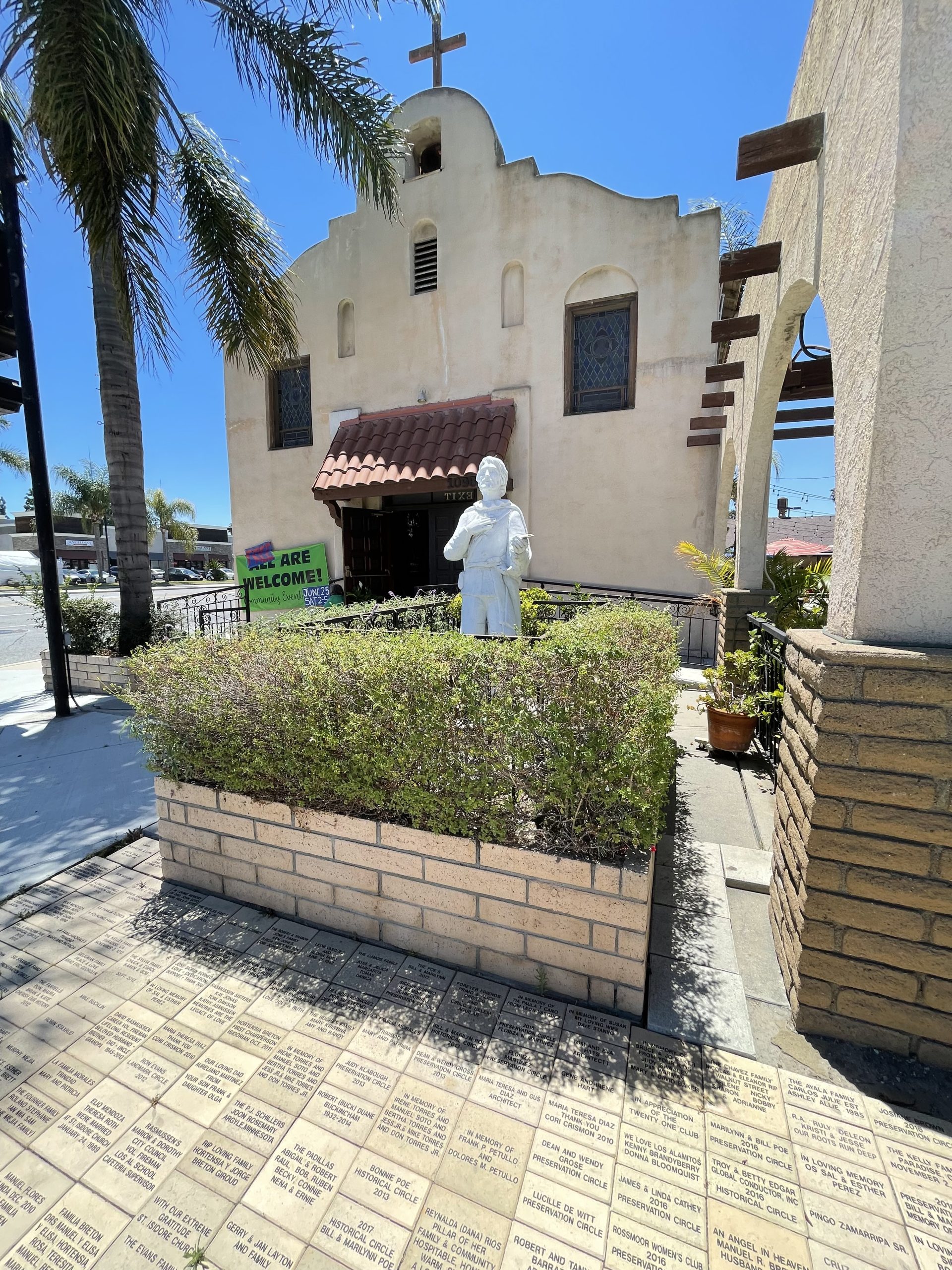
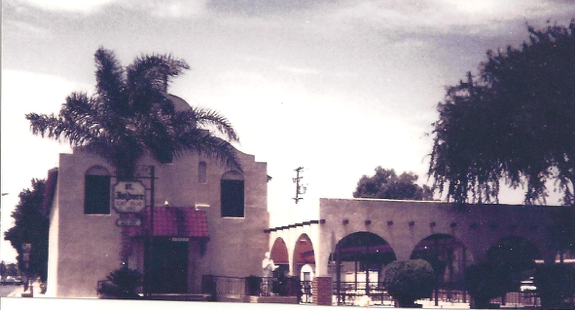
For many in Los Alamitos that ground is St. Isidore Historical Plaza and Chapel. The oldest public building in the city and the crossroads for many cultural influences that have left their mark on this town. “It is the jewel of Los Alamitos that has been cut into a gem by the hands of many from many backgrounds over the last 100 years,” says St. Isidore docent and co-producer of the Plaza’s upcoming 100th Centennial Festival, Maria Teresa Diaz. “We want to invite the community that knows us and the community that doesn’t know us to come and help us celebrate our 100 years in Los Alamitos.”
In the long and tightly woven story of Los Alamitos, no history is more closely tied to our origins, to the place from where we came, than St. Isidore’s Chapel and the plaza that surrounds and sustains the property just off Katella Avenue and the former main street of old Los Alamitos, Reagan. This little chapel and its plaza have marked the passage of time with many festivals and fiestas, with music and dance, art and cultural events that have connected this community together for the past 100 years.
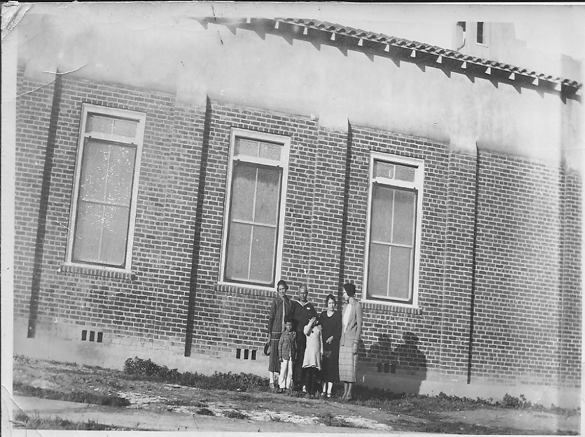
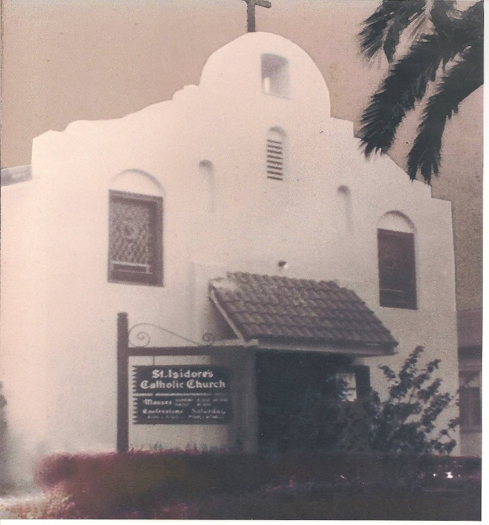
And the community’s connections to St. Isidore is as alive today and as vital to its supporters and patrons as it was to its earliest parishoners and supporters who built the modest chapel in 1925-26, and then rebuilt it again after the great earthquake of 1933, this time in the California Mission style. The “hands of many” coming together as early as 1923 to plan and build a chapel.
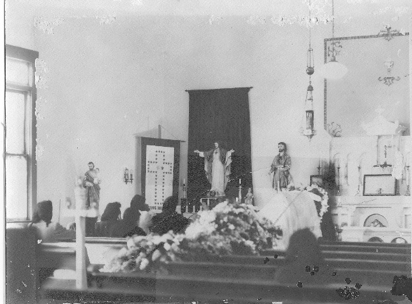
First it was the old Mexican families, some of whose names go back to the Spanish land grant days and later worked for the Bixbys as ranch hands, farmers and foremen of the Bixby Ranch. Then it was the Belgian and Portuguese farmers and Dutch dairymen who came to the area in successive waves, each adding their own skills and backgrounds to the mix of cultures that sustained the chapel and its plaza as a gathering place for all under the one roof of St. Isidore.
Those connections to historic St. Isidore run deep for many families in and around Los Alamitos. None deeper than for those in the Mejia family. Eva Mejia Hilts is one of four children to the Mendoza family whose precedents span five generations of family that grew up in and around the little chapel. Like her sisters Eva was baptized at St. Isidore, married there, and has returned there to do her part to preserve the chapel and plaza for her own descendants. Born before WWII she remembers Los Alamitos as a small town that began and ended at either end of the old main street, Reagan.
“I recall walking south down the main street of Los Alamitos, just a dirt and gravel road all the way to 7th Street through the shade of the eucalyptus trees on both sides all the way. On weekends dad would drive us up the hill to the Bixby Ranch. Along the way we gathered gunny sacks from the fields. We would use them as sleds to slide down the long hill from the Ranch. I only remember the exhilaration of sliding down that hill over and over. I don’t ever remember the long walks back up.”
The Bixby Ranch in those days, along with the sugar beet factory Bixby’s beet farmers supplied, was the center of the universe for the community that would become Los Alamitos. It provided the work and a sense of community that allowed the local families to prosper. It was in fact Fred Bixby who in 1924 donated the property at the corner of Katella “Road” and Reagan Street for the express purpose of providing land to build a Catholic church. That church stands today as St Isidore, and is the center of the universe now for many of the old Los Al families.
Built in 1925-26 the little chapel and its open air plaza soon became a center of spiritual and cultural life for a wide region around it, drawing parishoneArs and patrons from Stanton, Buena Park, Garden Grove, Westminister, Hawaiian Gardens and beyond. They were farmers, field workers, dairymen and carpenters who worked on the Bixby’s Rancho California, and later for the sugar beet industry centered in Los Alamitos. Eva’s own great grandfather, Luis Mendoza, was a supervisor of the sugar beet factory.
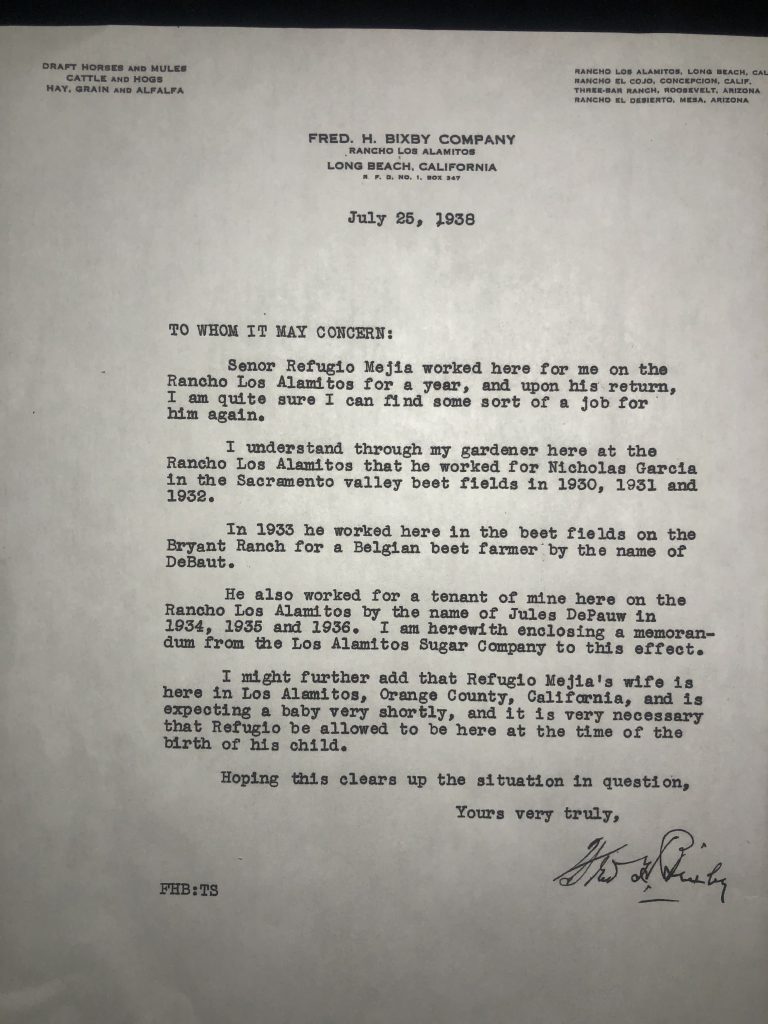
Fred Bixby by all accounts was a thoughtful and compassionate landowner who, in addition to donating the land where the chapel stands today, opened his hill top hacienda to many gatherings and fiestas for his workers and their families. Eva recalls among the family stories passed down to her was when her father, Refugio Mejia, had to return to Mexico to attend to a family medical crisis there. Returning to the US would have been almost impossible at the time, if not for a letter Fred Bixby penned personally to immigration authorities requesting an expedited repatriation of Eva’s father back into the country on the grounds that he was an exemplary worker citing many work-related experiences he had held here in California.
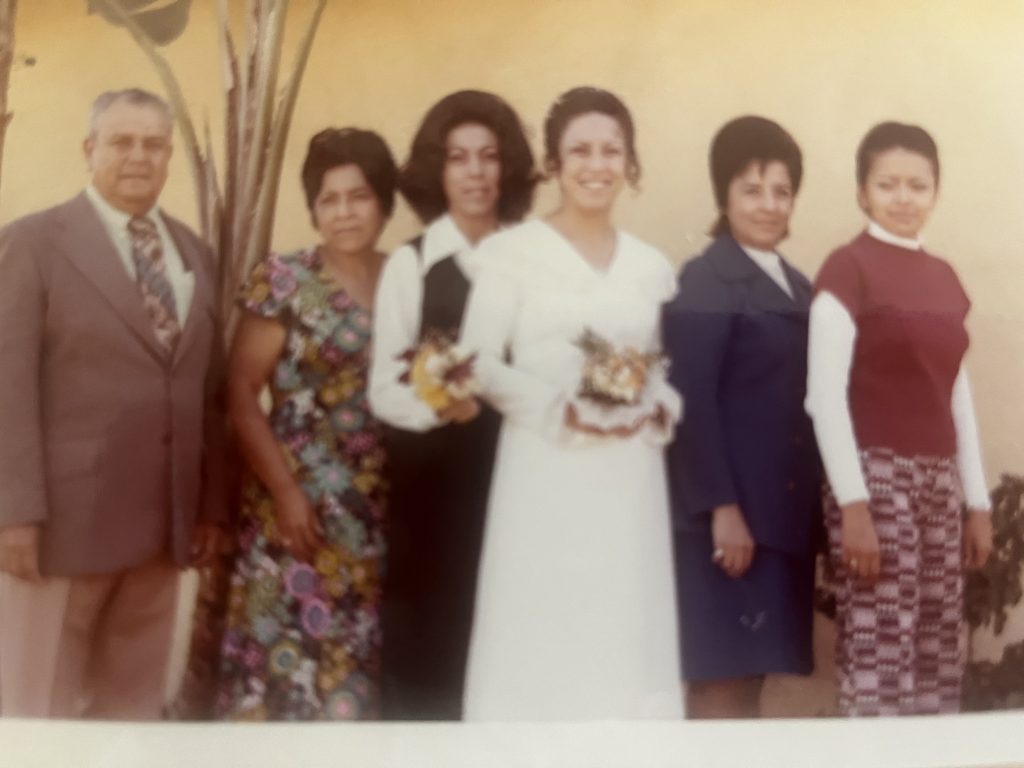
(L-R) Refugio “Ray” Mejia, his wife Esther and four daughters, Victoria, Eva, Madeline and Esther, one family that enjoyed five generations of life centered around the tiny chapel. Eva was baptized at St. Isidore, married there, and has returned there to do her part to preserve the chapel and plaza for her own descendants.
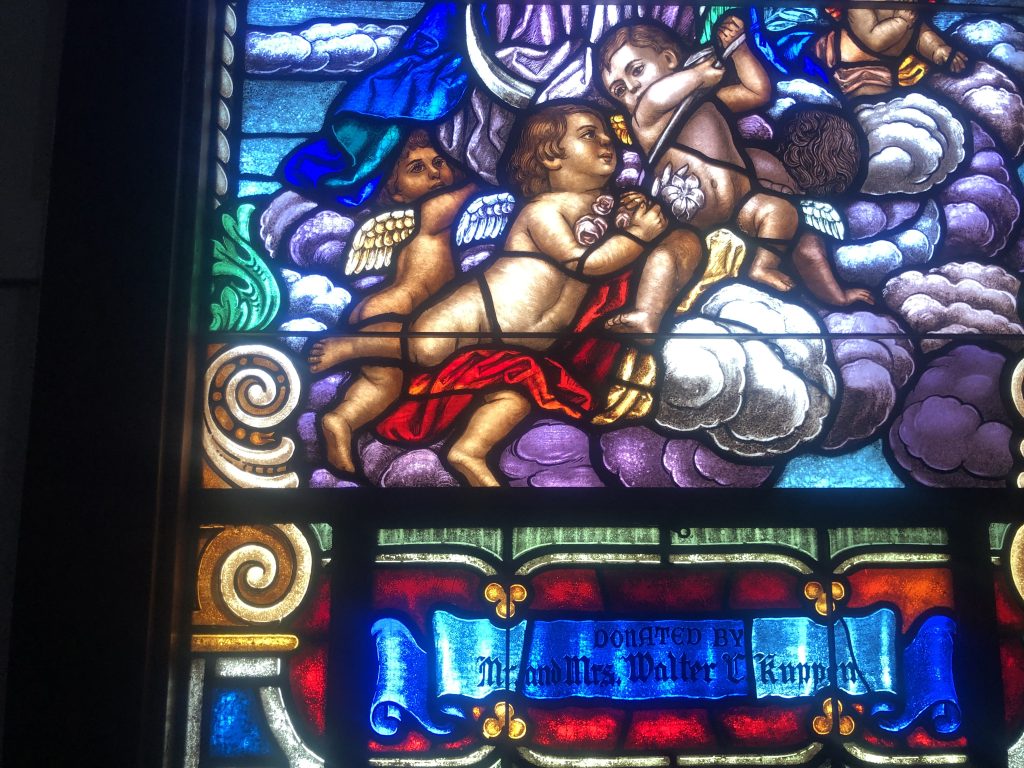
There were many local Hispanic families like Eva’s who can trace their lineage back to the early Bixby days and the boom years of the sugar beet industry in the early 20th Century. Families of many cultural backgrounds who gave of their time and treasure to eventually create a chapel and social life around its plaza. There were Portuguese, Belgian and Dutch immigrants who came to the area for the same economic reasons as the Mexicans, who also participated in the building and the restorations of St. Isidore Chapel and its plaza. Most of the spectacular stain glass windows that adorn the walls of the chapel were paid for by donations from these local families.
They saw the chapel and the plaza as a cultural center of the community. And when the brick edifice of the first St. Isidores church was decimated by the ‘33 earthquake, it was by the hands of these same immigrant families that the chapel was rebuilt and rededicated to the greater Los Alamitos community.
“It took many hands over many years to build St. Isidore’s,” says Marilynn Poe, long time advocate and board member of the historical plaza and member of one of the early Los Alamitos families, the Poes. “And a lot of angels along the way.” Some, like Marilynn herself, not even Catholic. “I knew the history of the chapel and the many immigrant families that had a role in its creation,” she remembered recently. “So when some of these families came to me in 1999 when I was mayor, with their urgent request to save the chapel once again from closure and possible demolition, I couldn’t say no.”
The running battles to save St. Isidore’s chapel and plaza have been ongoing. Its future uncertain at many points in its 100 year history. But thanks to timely interventions by some of the more recent “angels along the way,” the land under the buildings is now owned free and clear by the St. Isidore Historical Plaza’s own nonprofit, and the chapel itself is now officially recognized as a state and federal historical site.
Still, much work remains to be done. Retrofit and restoration work is constant and ongoing. The glorious stain glass windows, the center pieces of the chapel, are currently being restored one at a time at great expense. But the work is essential to the legacy of St. Isidore because each window was funded by and dedicated to a particular Mexican, Portuguese, Dutch or Belgian family who financed the original fabrication of each and every one. Names of families like Van Demaele, Kuppen, Baraldi and Aguilar identify donors from many cultural backgrounds. These windows alone tell the story of a collaboration between cultures that has been the hallmark of St Isidore’s survival for the past 100 years.
St. Isidore remains today a crossroads of many cultures reflected in the varied arts, dance and musical performances it presents to the public throughout the year, while at the same time facilitating the important day to day work by hosting many other nonprofit and service organizations that provide everything from food donation to blood banks, family relief and support, to substance abuse recovery programs, as well as partnering with the City of Los Alamitos on many of its events.
Maria Theresa, Eva Mejia Hilts and Marilynn Poe are just a few of many who have carried forward the struggle to preserve the historic chapel and plaza from decay, from insolvency, and from the wrecking ball. But the future, as we said earlier, is never certain. There are those who believe there is no future in preserving the past. For those supporters of history who understand the value in capturing the past, no explanation of why is necessary. One of those supporters of St. Isidore’s little chapel and plaza was Mildred Jones, founder and matriarch of one of the first nonprofits in Los Alamitos, Casa Youth Shelter. About St. Isidore she said, “St. Isidore’s is very precious to me. They helped me when I was struggling so hard to start Casa. Please help us save St. Isidore’s, it is the heart of this community.”
Thanks to the perseverance of all of these “angels along the way,” St. Isidore Historical Chapel and Plaza will continue its mission of serving and preserving at its original plaza site. So today there is much to celebrate in its 100th year of serving the spiritual needs of its patrons and the secular needs of the greater community around it. The celebration will begin on June 27 with St. Isidore’s Centennial Festival. Billed as an “Open House for all,” the day’s events will include live musical performance, crafts, vendor booths, food and drink, and even an escape room for kids and adults, all on the plaza grounds, and of course, ongoing presentations by Plaza docents about the chapel’s 100 year history, including a special area history presentation by the docents of the Bixby’s Rancho Los Alamitos, conducted in the chapel itself.
Courtesy photo
Then, on August 29, the Centennial Celebration continues with a Gala Dinner that will include a pre-dinner cocktail hour out on the plaza with music. The open-air sit- down dinner will be accompanied by ongoing auction activities, and after-dinner entertainment will include a live band and dancing. And of course, just off the plaza in the Floriza Martinez Hall ( another “angel along the way”) there will be running displays of St. Isidore’s historic past, eventful present, and hopeful future for the curious to take in.
These upcoming events are designed to celebrate and to educate the public about the curious little chapel off Katella Ave., the “hidden jewel of Los Alamitos” that has been the center of life for so many over the past 100 years. Take in one or both of these events and become part of an illustrious Los Alamitos family that honors its past, and faces its future with the dignity of knowing from whence it came.
Happy birthday St. Isidore at 100!
The June 27 Centennial Festival Open House is free to the public from 2-7 p.m. (small fee for escape room)
The August 29 Gala Dinner from 5-10 p.m. ( or until the dancing stops) is by reservation only. Please contact the St. Isidore office at 562-596-9918, or go to StIsidoreHistoricalPlaza.org for more info on either of these events.