In a move that surprised many, Mayor Pro Tem Stacy Berry has resigned her seat on the Cypress City Council, effective July 5.
The move creates an interesting situation for the council, since voters approved a change in the city charter in 2020 that requires the empty seat be filled within 60 days and allows the council to appoint someone to fill the seat or otherwise hold a special election.
According to Measure P, a special election could cost taxpayers more than $220,000. Either way, appointed or elected, the new Council member will fill the remainder of Berry’s existing term, which ends in 2022.
According to a city press release, Berry “submitted a letter of resignation to the City Council on June 28, notifying the City Council that she will resign her position effective July 5, 2021, for personal reasons.”
Berry was first elected to the City Council in November 2014 and re-elected in November 2018, her City Council colleagues selected her to serve as Mayor from December 2018 to December 2019.
“I would like to thank Mayor Pro Tem Berry for her years of dedicated service on behalf of Cypress,” said Mayor Jon Peat. “We wish her the best in her new endeavors,” he said in the release.
Berry, meanwhile, thanked Cypress residents for their “overwhelming” show of support at the news. “It really touched me,” she said in an interview, “quite frankly, when you’re in the day-to-day bubble of always having another issue coming up, you don’t always see this side of it.”
“You don’t always hear the good comments,” she said. “I didn’t expect that kind of reaction.”
Berry said she and her husband are moving to Prescott, Arizona. “My husband recently retired and we have decided to move to a home we own there,” she said, “but this is truly bittersweet.”
Berry said she decided to resign now because it was the “right thing to do.”
“We are going to put a for sale sign up in our front yard,” said Berry, and “that’s not a good look for the Mayor Pro Tem,” she said.
“I feel so blessed,” said Berry, “for me, this has been the journey of a lifetime.”
While there have been some “tough votes” along the way, Berry said she is truly grateful that she decided to serve the city.
“I will miss Cypress, especially the wonderful people of Cypress,” she said.
Berry was set to term out in 2022, along with Peat and Council member Paulo Morales.
The Cypress City Council will discuss options to fill the vacant City Council seat at its July 12, 2021 meeting. The Cypress City Charter allows the City Council to appoint a replacement or hold a special election if the seat is not filled within 60 days of becoming vacant.
While one candidate, Carrie Hayashida, finished well above the rest of the pack in 2020, the city charter puts the existing council under no obligation to select the top vote getter in the most recent election.
If the council does, as expected, open the process to allow citizens to apply for the vacant seat, they will have the option to select any of the qualified candidates who apply by a simple majority vote.
The discussion is expected to begin next Monday at the regular council meeting on July 12.
The Los Alamitos City Council honored former mayor and council member Marilyn Poe who was back at the city council chambers this week to receive the California Parks and Recreation Society District 10 Volunteer Merit Award.
The presentation took place at last week’s meeting and was presided over by Mayor Mark Chirco.
“Marilyn has played an integral role in the city of Los Alamitos, and in the Orange County region, by volunteering for numerous organizations, all while raising her family of three children,” said Chirco.
“This is quite an honor,” said Poe, thanking city Recreation official Emeline Noda for nominating her. Poe thanked the people throughout the community who volunteer their time to assist the city.
”We were raised to give back to our community,” she said, “and for our parents, it was just a natural thing. Anything I’ve done for this community; I have always received more than I’ve given,” said Poe.
She urged others to volunteer as well. “For anyone out there that feels like they want to participate, they should jump in with both feet.”
“You will be glad you did,” said Poe.
Chirco said Poe began her public service back in 1988, being appointed to the Parks, Recreation and Cultural Arts commission. She was first elected to the city council in 1994 where she served for 12 years alongside council member Ron Bates, who recently won a seat to return to the council.
Poe served as Mayor of Los Alamitos in 1999 and 2003 and was re-elected to the city council in 2008 and served again as mayor in 2010. During her years of public service, Poe served on a variety of Orange County boards and commissions, including the Orange County Fire Authority, Rivers and Mountains Conservancy, OC Council of Governments and the Southern California Association of Governments.
In the community, Poe has volunteered for the Los Alamitos PTA, softball leagues, The Youth Center, St. Isidore Historical Plaza, Family Resource Center and many others, all while raising her own three children.
Chirco thanked Poe and congratulated her on receiving the award. Poe was technically nominated for the award by the entire Los Alamitos Parks, Recreation and Cultural Affairs Committee.
“Parks are a big deal here,” said Chirco, “the sense of community we have is a big deal.” During the presentation, Chirco also read a Proclamation that makes July “Parks make life Better” month throughout the city.
Landing close to midnight, travel-worn soldiers emerge from a charter aircraft into a blackened night and are immediately blanketed with seasonal humidity. For the nearly 100 Soldiers of the 40th Infantry Division from Los Alamitos, California, arriving at Yokota Air Base in Japan on June 7 was just the beginning of their overseas training. They will join Orient Shield 21-2, a joint exercise with the Japanese Ground Self-Defense Force and several other U.S. Army units performing multi-domain operations.
Units like the 311th Medical Logistics Support Team from the Ohio Army Reserve, 25th Combat Aviation Brigade from Wheeler Army Airfield in Hawaii and 1st Battalion, 28th Infantry from Fort Benning, Georgia, will contribute key roles to the upcoming annual exercise that rotates between JGSDF divisions and U.S. Army units.
The 40th ID last took part in the exercise in 2018 when U.S. Army Lt. Col. Brian Wintzer participated as the deputy; this year he is serving as the 40th ID fires support coordinator.
“It feels great being back in Japan working with the JGSDF,” said Wintzer. “Even though our languages are quite different, we share a unique bond as soldiers which enables us to work well together and grow the partnership. I’m excited to be part of such a great bilateral team, learning from one another and sharing ideas.”
The sharing of ideas came after World War II when the United States and Japan entered into an alliance with the U.S.-Japan Mutual Security Treaty signed in 1951. Because the Japanese constitution did not support an offensive military posture at that time, Prime Minister Shigeru Yoshida allowed the U.S. to maintain a presence in Japan in exchange for military protection. This agreement allowed the country to rebuild. Over the years, the partnership has grown to become the cornerstone of stability in the Indo-Pacific region.
The interoperability of this united force is tested during Orient Shield, which offers an opportunity to exchange not only strategic knowledge, but also culture and lasting collaboration.
“I was prior active duty in special forces operations and it was very important to build rapport with NATO countries,” said U.S. Army Sgt. Victor Gonzalez, an intelligence analyst with the 40th ID, Intelligence and Sustainment Company. “I think the Army should maintain relationships with other partners, especially in a future warzone or combat environment.”
From this spirit of mutual learning comes the ability to hone the skills and readiness necessary to work as a combined fighting force. Past the language barrier, each army must navigate the best blended courses of action should enemy aggression to Japan prompt the formation of a joint task force. The effective coordination between armies and each battlefield element is refined during bilateral exercises like Orient Shield.
“Each time we come to Japan, we deepen relationships and understanding of the JGSDF’s capabilities and strengths,” said U.S. Army Maj. Gen. Laura Yeager, the commander of the 40th ID. “Our natural orientation is toward the Pacific; we have greatly appreciated the opportunities to train with I Corps and U.S. Army Japan.”
On Tuesday, June 22, SynED, a national non-profit organization that identifies emerging best practices for effective articulation between employers, job seekers, and education providers, announced that Henry Hua was selected as its national Cyber Hero for June 2021.
Hua is the Dean of Business and Computer Information Systems at Cypress College, a part of the California Community Colleges system. His passion for cybersecurity education and focus on building relationships with local employers is resulting in a pipeline of employment for community college students, opening doors to high-paying careers in the red-hot cybersecurity labor market.
Cypress College serves students from under-represented and low-income communities that might not always think about cybersecurity as a career path that’s available to them. One of Hua’s goals is to give them the confidence they need to see themselves in the field and acquire the skills it takes to get there.
“What we’re trying to do is have everybody understand that they bring value and how to express that value to potential employers,” Hua said. “We want our students to know that they’re coming into the profession and coming into a career, not just taking a few classes here and there.”
Steve Tran, CISO at MGM Studios, said Hua and his team at Cypress are very receptive and responsive to industry needs and want to do everything they can to make sure that students are set up to be successful from day one on the job.
“Cybersecurity is a complex, broad, and diverse field. Henry’s pragmatic approach to the program is effective because he listens to the needs of the industry and the students to build a program that precisely meets their needs and demands,” Tran said. “Most importantly, he cares about creating opportunities and lowering barriers to address the cybersecurity talent shortage.”
It’s easy to get caught up in the day-to-day trends and the excitement of launching new programs, but Hua sees his work as something that serves a much bigger purpose.
“I always tell my team that we’re here to change a generation, not to do something new that’s fly by night,” Hua said. “That mantra of changing a generation has always been something that we’ve carved into the work that we do.”
Brandon Nguyen was a student in Cypress College’s cybersecurity program and now serves as one of its mentors while he pursues a bachelor’s degree from UC Irvine. He’s worked with Hua since 2017 and considers him to be a valued mentor.
“Henry always has high goals for our program, but they only make the program better for our students and our partners,” Nguyen said. “He is always on the lookout for projects, competitions, equipment, and resources that our students can use to increase their learning. He also seeks to partner with other institutions and industry to collaborate with them and strengthen cyber education community.”
Hua became interested in cybersecurity while working as a data quality analyst for the North Orange County Community College District and earned a master’s degree in information assurance from Cal Poly Pomona.
He saw the educational opportunity in the field when he began serving as Dean of Mathematics, Business, and Computer Technology at San Bernardino Valley College. Things picked up steam when he arrived at Cypress College in 2017 and met cybersecurity instructor Ben Izadi.
“We have a lot of opportunities in this space, especially in Orange County, right? It’s kind of a hot topic, and there are a lot of companies out here,” Hua said. “Ben and I just started to discuss what it is that we wanted to do and what our vision was for the program, and that snowballed into what we have today.”
Cypress College offers an associate degree in cyber defense, as well as a cybersecurity certificate and a dual enrollment program that serves more than 1,000 K-12 students. It also has a robust CyberPatriot program that allows more than 400 high school and community college students to participate in the national competition.
Along with these cybersecurity-specific initiatives, Hua is also working to make cybersecurity part of the other disciplines within the Business & CIS department. He wants the college’s students to graduate with a “Swiss army knife” mentality that will allow them to bring together various skills and experiences and stay nimble as industries continue to change.
“There isn’t a business that doesn’t need cyber. And without cyber, there is no business,” Hua said. “We’re trying to have students understand that this is a very dynamic relationship that allows people to work together in very different spaces that are closer than they think.”
Izadi said the cybersecurity program has grown drastically in a short period of time thanks to Hua’s vision and leadership. Cypress is one of three colleges in California to receive their CAE2Y (Center of Academic Excellence 2-Year) designation by the U.S. National Security Agency and Department of Homeland Security.
“Before I met Henry in 2017, our Cybersecurity program had only a handful of students and we barely had any engagement with the middle school and high school students,” Izadi said. “In less than four years, through Henry’s leadership and dedication, we have transformed our program into one that is nationally recognized.”
Few things can bring our community together like the thrill and exhilaration that an Airshow can, and fans can look forward to another great year of world-class aerobatics and supersonic military jets at the family-friendly, patriotic Pacific Airshow. Premium Airshow tickets will go on sale July 1 for the 2021 show, taking place Oct. 1 – 3 over the beautiful Pacific Ocean in Huntington Beach.
This year’s show is set to be the best one yet and will feature the U.S. Navy Blue Angels celebrating their 75th anniversary season and flying new F/A-18 Super Hornets, the Canadian Forces Snowbirds celebrating their 50th anniversary, Captain Kristin “BEO” Wolfe leading the U.S. Air Force ACC F-35 Lightning II Demo squad, the U.S. Marine Corps MV-22 Osprey Demo Team, and the U.S. Army Golden Knights parachute demonstration team. Dozens of other civilian, military, and local first responder performers will be announced soon.
“Pacific Airshow excites the inner aviator in all of us, unites our community in our common love for our country, respect for our military and veterans, and pride in our innovations,” said Kevin Elliott, Pacific Airshow director. “We can’t wait to welcome everyone back to the beach for the best airshow yet. Stay tuned for a few surprise announcements coming soon.”
Pacific Airshow fans can use the new mobile app to learn about this year’s Airshow performers, discover major points of interest using an interactive map, purchase event tickets, and stay up to date with important event updates and announcements. Fans can download the mobile app through their provider’s app store.
Fans have five options for premium Airshow viewing this year, which can be purchased on the new mobile app and at the Pacific Airshow website.
1. General Admission – $25 per person, kids under 5 free (please bring ear protection for them!)
Located at the water’s edge at Show Center, this open beach area is right in the heart of the action. Formerly known as the “Drop Zone” or “Beach Seating,” this private area on the beach is the perfect place to bring your blankets, chairs and umbrellas and enjoy the action from as close as you can get. Fans will have access to nearby beverage stands including beer and wine, food trucks and dedicated restrooms. EZ Up tents are not allowed.
2. Pier Seating – $40 per person
At 30 feet above the sand, Airshow fans are closer than ever to every roar, twist, and turn. These unreserved seats on the Huntington Beach Pier are offered on a first come, first served basis and fans will have access to the Airshow’s live announcer feed, plus nearby beverage stands, food trucks and restrooms. Coolers, umbrellas or EZ Up tents are not allowed.
3. Premiere Club Seating – $199 per person on Saturday/Sunday, $149 per person on Friday
This all-inclusive topflight ticket is perfect for the most dedicated Airshow enthusiasts. Formerly known as the “Flight Line Club,” this section is located next to the Airshow’s Show Center. Each ticket includes hosted food and beverage options, access to private restrooms, and an unforgettable view of exciting aerobatic performances – all in the comfort of a tented pavilion complete with tables, chairs, and patio umbrellas. Seating is unreserved and personal coolers, EZ Ups and umbrellas are prohibited. Must be 21 years or older to drink alcohol.
4. Premiere Club Seating + Table for 10 – $1,990 on Saturday/Sunday, $1,490 on Friday
Enjoy all the premium offerings available in the Premiere Club Seating section, plus a private reserved table for up to 10 people.
5. Cabanas – $3,950 on Saturday/Sunday, $2,950 on Friday
Personal coolers, EZ-Ups and umbrellas are prohibited.
For more information, please visit www.pacificairshow.com, follow Pacific Airshow on social media @pacificairshow and download the mobile app from the app store.
The Orange County Board of Education has withdrawn its request to hold one or more “educational forums” on Critical Race Theory in the community of Rossmoor, the Event News Enterprise has confirmed.
The Orange County Board of Education voted 5-0 at their July 7 meeting to withdraw its rental request and instead, voted to hold both of the planned meetings at their existing facility in Costa Mesa.
The board had earlier filed an application to rent the RCSD Rush Park auditorium for the CRT educational forums, one on July 27, and the other, potentially on August 24.
Former President Ken Williams, Jr., told the OCBE that the June 22 special meeting held by the Rossmoor Community Services District (to discuss the OCBE rental application) had been “a very contentious meeting.”
“It is quite obvious that there is a good percentage of people locally who didn’t want potentially confrontational groups in their community,” Williams told the OCBE.
Accordingly, he said potential security estimates at both Rossmoor, and Yorba Linda (another potential site), were “cost prohibitive” for OCBE. Williams said neither site turns out to be “workable” for OCBE.
Instead, Williams then recommended the OCBE host both the July 27 and August 4 CRT forums at the OCBE facilities in Costa Mesa. Even though the facility can only accommodate approximately 150 people, Williams asked the staff about setting up a tent outside with live streaming and audio facilities for overflow.
Nina Boyd, Associate Superintendent for the Orange County Department of Education, said cost estimates provided for security at Rush Park were perhaps “overstated,” but she noted because of nearby freeways and the potential cost of calling in reinforcements, the estimate could have indeed been quite expensive.
Boyd leads OCDE’s Governance, Leadership and Community Partnerships division and serves as liaison to the Orange County Board of Education.
While OCBE has arranged such tents for outside facilities in the past, said Boyd, recent discussions with local police indicate they cannot utilize the same spaces, citing additional security concerns.
“The climate has changed in America,” she told the OCBE.
Nevertheless, the board unanimously agreed to change the venue to Costa Mesa and work on provisions to accommodate up 300 people expected to attend two educational forums on Critical Race Theory.
Meanwhile, Rossmoor Community Services District General Manager Joe Mendoza has confirmed that OCBE has, as of Thursday morning, officially withdrawn its Rush Park rental request.
At the OCBE’s most recent meeting Wednesday, Mari Barke, of Rossmoor, was elected President of the Board for the next year.
See more details and reaction in the Event News Enterprise next week.
Courtesy photo
Rossmoor resident Mari Barke is now President of the Orange County Board of Education.
As he exits the principal’s office at Los Alamitos High School this week, Dr. Gregg Stone is more convinced than ever that he is taking with him much more than he gave, which was significant indeed.
And with four decades of inspiring leadership in education, Stone has never lost sight of why he became a teacher those many years ago.
Stone, who first retired as principal in 2019, agreed to return to LAHS in that role at the height of the pandemic following the sudden resignation of his replacement, Dr. Chris Vlasic.
This week he effectively vacates the office for a second time, making way for former Paramount High School Principal Christiana Kraus, who becomes LAHS Principal on July 1. According to LAUSD, Stone has graciously been working with the new principal since her selection.
Over the years, Stone, a former coach, and counselor, has become admired, some say beloved, for his wit, integrity, and reasoned leadership.
Yet, he remains a deeply profound, if somewhat inward leader, who leads by example. Stone has managed to stand out without shouting, or even calling attention to himself, even in a world that increasingly rewards the opposite.
“I’m not the person that’s necessarily out front leading the band, so to speak, but I can do it,” said Stone, “but it’s not something that I necessarily push for.”
A native of Long Beach, Stone began his education at Long Beach City College and received his undergraduate degree at Cal State Long Beach with a teaching credential for English. “I was passionate about it,” said Stone, always knowing he wanted to teach English and coach basketball.
He earned a double master’s degree, one in counseling, the other in educational administration and finally earned his Ph.D. from the University of Southern California in educational administration and management.
He began his career teaching English and coaching basketball at Millikan. As his dream began to take shape. Stone found inspiration from other coaches he admired.
“I’m a firm believer that everyone, you know, has a purpose,” says Stone, and “I knew early on, I wanted to be a teacher and coach and that was kind of my goal and my focus from the get-go,” said Stone.
His purpose, however, goes even deeper as Dr. Stone said he quickly developed an inner urge to counsel struggling students. Stone said early on, he saw fellow coach, and mentor, Max Fraley coaching and counseling and knew he was meant to do it as well.
Dr. Gregg Stone fulfilling his dream. Coaching basketball and teaching English at Millikan High.
“I thought to myself, I really would like to do what Max is doing, being a counselor and coaching. I thought that would be a great blend,” he said.
Also, within a decade, Stone says he discovered that while teaching was rewarding, it was perhaps giving him as much value as he was delivering to students. Even today, Stone carries with him a memento, a photo, from his earliest days to remind him of that impact.
“It’s not very fancy,” he said of the photo. “And people look at it and say, ‘Where are you in this picture?’” “I’m not in it,” he tells them. “It is a picture of the 1983 yearbook class at Millikan, put together with 35 black and white mug shots in there” and then presented to him by the class. He was the class advisor.
For Stone, it’s not about the picture but the “impact” the class had made on him. Still today, these students, now in their early 50’s, remain in touch.
Like all teachers, Stone moved around a bit during his career, accepting a couple of stints as Assistant Principal, first at Rogers Middle School and then back at Millikan.
At 37, he and his wife Chris were married, with another of his longtime mentors, Coach Bill Odell, serving as best man. “He had a big influence on my life,” said Stone of Odell, noting they are still best friends today.
Stone said among his proudest moments were when LAUSD allowed him to present LAHS diplomas to his graduating children. Dr. Stone with his son Michael. Courtesy photo
He and Chris settled in Seal Beach, where the couple’s two children, Michael and Jenna, were born.
At that point, Stone said he had accepted an assignment at Capistrano Valley High School, thinking they may want to move there. “Eventually, though, we decided that we really liked Seal Beach,” where they remain today.
Dr. Stone presenting a diploma to his daughter Jenna.
Stone said he then quickly tired of the commute to Capistrano. Always a doting father, Stone said he quickly became frustrated when traffic jams would steal time away from his children.
“This was not what I signed up for, and put the dad hat on for,” he thought.
When he had a choice to return to Long Beach Unified or fill a position at Los Alamitos Unified in 1998, he chose Los Alamitos High School, where he became Director of Administration and Curriculum Development. There would be no more long commutes and his memories would be filled with Griffins for the remainder of his career.
Eventually, Dr. Stone became Assistant Principal and was later selected to replace Dr. Brandon Martinez as Principal upon Martinez’ retirement.
His devout introspection was further evidenced by his flourishing pen. Over the years, Dr. Stone became an academic poet laureate, of sorts, writing poetry that blossomed into big demand.
He credits his now legendary poetry to a former teacher. Always ready with a story, self-reflection, a Stone parable, if you will, the former Principal somehow always chooses thoughtful words and stories. He says it can be traced back to his own education.
For his poetry, Dr. Stone gives credit to his 11th grade English and yearbook teacher, Joan Danielsen. “When I had to develop public speaking skills, she advised me to script it (write it down first),” said Stone.
“So, when I started to script for public speaking, I found it easier to write a poetry piece rather than prose,” he said. Therefore, going forward at key engagements, such as a teacher retirement, Dr. Stone said he would rather write, and deliver a poem. The recipients loved it.
“Then people would ask me to write a poem for them, and I would, not knowing how they were going to land,” said Stone, adding that eventually he began to write poetry for his family on key occasions.
“It adds a personal touch,” he said, “but for whatever reason, the spark of writing has to be attributed to her (Danielsen).”
During his career, Dr. Stone also earned his counseling credential, having never lost his love, and need, to help struggling teens do better.
“I told my wife that I really kind of felt drawn to that, especially freshmen kids. Sometimes that transition from 8th to 9th can be a bit abrupt for kids so I kind of felt myself gravitating to help struggling kids,” he said.
In one way or another, Dr. Stone said he has worked with teens his entire career. “Hopefully, you’re impacting the kids, but they impact you,” he said.
When he retired in 2019, students at Los Al produced a touching three-minute video where students, teachers, administrators each took turns “tipping their hats” and making loving gestures to music that simply ended with “no words could ever describe what you’ve done for us.”
Stone said then “it was time to retire.”
Even after his first retirement, however, Dr. Stone was, without fanfare, quietly returning to LAHS to volunteer his time to counsel struggling students. He does the same in Long Beach.
Then, in 2020, Dr. Stone said he got a phone call from his old friend, District Superintendent Dr. Andrew Pulver.
“Dr. Pulver called at the end of July (2020),” said Stone, “and he told me about Chris’ decision (to leave) and asked about whatever time I could give LAHS.” Stone said he asked Pulver permission to think about it and discuss it with his wife, Chris.
Dr. Stone said he and Pulver are longtime friends, having entered the school district about the same time two decades ago.
Given the pandemic conditions, Stone said he told the Superintendent he’d come back for at least one semester, “then we could revisit the idea in September of last year, an admission that Pulver later confirmed.
Despite the pandemic and the massive disruption caused by construction at the high school, Stone said, upon his return, he was comfortable back in the Principal’s Chair, and eventually agreed to remain until July 1, when the new principal steps in.
During Dr. Stone’s unexpected year back at LAHS, his writing and personal stories became an inspiration for parents and students, as he filled the school’s email newsletter with reflections and his parable-like stories that simultaneously taught, led and inspired by example.
Upon his return during the pandemic, however, Stone said he found students and staff “anxious” and “fearful.” Totally understandable, he said, given the pandemic conditions, switching from hybrid to distance, then back again, and with a no-touch protocol on campus.
In many ways, Dr. Stone was seemingly perfect if not pre-destined to lead the school through this once-in-a-century emergency with his quiet wisdom and sure handed leadership despite the world of chaos around him.
It turned out to be a victory lap, of sorts, as Stone was able to join the School Board to cut the ribbon on the new Olympic Aquatic complex and sign the beam for the new STEM building as construction continued during the pandemic, all of which had been facilitated by voter approval of a bond issue.
Throughout his career, Dr. Stone demonstrated his commitment to students at every end of the spectrum, celebrating the overachievers but never forgetting those who lead in different, perhaps more unseen ways.
During his brief interim tenure, Dr. Stone said he informed school officials that he was changing the “Student Leadership Awards” to “Student Impact Awards.”
“If I was going to pick them (award recipients), I wanted to pick students that not only led, but made an impact on leadership and fellow students,” said Stone.
Dr. Stone said he picked a student who wrote him a detailed, three-page letter challenging certain practices, which she later sent to the school board, and a special education student whom everyone knew, but who could only communicate using certain gestures and sounds.
“They may not be in bold leadership roles,” Dr. Stone said he informed LAHS academic counselor Gail Davenport, “but they (students) certainly are making a difference.”
As he reflected on his long career, Dr. Stone said students like those he picked in 2020, were like many throughout his career, that had perhaps impacted him as much or more than he has impacted them.
If they are honest, said Stone, all teachers at retirement “are a little bit different than when they were hired.”
He said when Dr. Pulver called to thank him for coming back and helping the system, “I said Andrew, you helped me as much or more than I helped you.”
Nevertheless, Dr. Stone was named “King of Hearts” by the Los Alamitos Education Foundation in February, which raised $150,000 in his honor for scholarships and other purposes, and the district named Dr. Stone “Hero of the Heart” for the entire LAUSD system last month.
“Gregg, you’re just an incredible man of humility, an incredible man of faith, an incredible man of service and you’re really our Hero of the Heart and I could not be prouder to call you my friend,” said Dr. Pulver in June as they presented Stone with his “Hero” Award.
“You always inspire me to think differently and to be an advocate for our staff and students,” said Pulver, “and to not be swayed from what we know in our hearts is the right thing for students.”
Board President Marlys Davidson said she remembered the time Dr. Stone flatly refused to consider running for School Board because of his counseling work. “You said to me that you didn’t want to give up the volunteer time you had working with the kids at the high school. That’s the kind of person you are,” said Davidson.
Davidson said she felt like it was “destiny” when he was called back to the high school during the pandemic. “I can’t imagine another person on this planet doing the job you did, having the heart you have and caring in the way you do.”
“You are always the calm in the center of any storm,” said long time LAUSD Board member Meg Cutuli, “you just always do what is best for the students.”
Chris Forehan thanked Stone for simply being an “incredible human being.”
Board member Diana Hill, also a longer-serving member, told Stone how she was indeed “impacted” by him when her sons attended LAHS. “It really impacted me who you were and how you handled things,” said Hill.
“You always gave unlimited time and attention to any student who needed it,” she said.
The way that Dr. Stone describes success is perhaps much different than many. In fact, he tells yet another story as an example.
As a former coach, Stone is a great admirer of pro basketball great Bill Russell. “Bill Russell was a center for the Boston Celtics,” said Stone, leading the team to 11 championships in 13 seasons. Yet, said Stone, he never scored more than 20 points per game.
“If you asked Bill Russell about playing a great game, he would say, ‘If I played a great game, only evaluate it on how much I made my other teammates play well.’”
It is seemingly not only a great story about basketball, but a great metaphor for his career as well. Always willing to pass the ball, slap a teammate on the back, encourage them to take more shots, etc. without so much as asking for anything in return but mutual success.
“We all have a purpose,” said Stone, “we all have something to share.” From his earliest days teaching English to his return as LAHS Principal, his core mission, and purpose, has not changed.
From coaching to counseling, and later administration, his role was to find the “gifts” in students and then provide the process and encouragement for them to give voice to share them.
Nevertheless, Stone is still somewhat resistant to the word “retirement,” preferring instead to simply call it yet another “reassignment.” Yes, he said, there will be vacations and cruises with his wife, Chris. But for Dr.
Stone, there is still work to be done.
He has already requested permission from the incoming principal to continue counseling struggling students.
“If I can still help out with counseling, perhaps a case with kids that need help, because if I think if we can get them help and support, I’m going to try to make them better,” said Stone. “I’m not done yet.”
Following an exhaustive review of its proposed $20 million 2021-22 budget, the city council voted unanimously to adopt the new spending plan that restores many previously frozen staff positions and creates a capital improvement plan to restore many projects previously on hold.
According to Mayor Mark Chirco, the city’s plan adheres to the fiscal sustainability pledge yet does reflect a city again on the move.
At the heart of the revised budget plan is the 2020 voter approval of Measure Y, which provides the city with an additional 1.5 cent increase in sales tax collections for every dollar spent inside the city on affected goods and services.
Los Alamitos had faced dire financial consequences for the past few years, yet made the case to voters under the previous council, led by former Mayor Richard Murphy, as they made the case that it was time for voters to invest in the future.
Though the margin was razor thin, voters approved Measure Y, which now allows the council to adjust its budget to reflect this new investment.
During the public hearing on the proposed budget, Koehler gave the council, and taxpayers, an overview of his department’s management of $12 million in city investments and its $3 million in debts, which he said was part of more than 22 separate funds managed by the finance department.
The city’s finance department has projected in its five-year forecast that Measure Y, coupled with a robust economy that will also increase other fee-based income, could bring in more than $4 million per year to city coffers.
Under the new spending plan, the city’s capital improvement plan is five times larger than previous years and, according to the forecast presented by interim Finance Director Craig Koehler, the city could amass a surplus of more than $10 million over the next five years if spending and revenue levels remain consistent.
Kohler said the current economic recovery is the “fastest growth in history.” He said the boom is showing itself in construction and building materials, while some sectors like business travel might take as long as three years to fully return to previous levels.
The city’s fiscal 2021-22 budget reflects $19.9 million in projected revenue, and $19 million in spending, producing a projected surplus of just under $1 million.
While the draft budget reflected a slightly higher surplus, the council agreed to also include a $1.6 million initiative to immediately improve many city streets. While not all of funding required for the street improvement plan would come out of the general fund, the adjustment to include it absorbed some of the earlier projected surplus.
In addition, the city now expects to receive $2.7 million from the federal American Rescue Plan over the next two years, which has not yet been budgeted and will not be until all of the regulations are released.
Like other cities, Los Alamitos officials say they will double down to reinvest in the city’s infrastructure. According to city manager Chet Simmons, the spending plan is “a very aggressive, but needed approach to shore up the city’s infrastructure.”
Acting Deputy City Manager Ron Noda gave the Council an overview of the proposed capital improvement and development plan, which includes major investments in technology to put more power in the hands of constituents.
“Our overall goal is to improve customer service,” he said, noting that new software that will allow for online payments, code enforcement, digital scheduling, among other enhancements, and will improve the overall “customer experience” for city residents.
While technology is a great thing, council member Ron Bates interjected a thought to remember that the population was “aging,” so he urged the administration not to lose sight of the in-person experience as well in its planning.
Noda said the staff still prefers in-person experiences, but the new digital options will allow for greater convenience for all citizens.
Responding to a question from Mayor Pro Tem Shelley Hasselbrink, Noda said the new technology push will also include “apps” that allow residents to request “work orders” for such things as sidewalk cracks, potholes, and other needed improvements.
Noda said the plan also includes a significant citizen outreach and a “huge economic development push.”
Finally, Noda said, while the city is proposing a massive increase for capital investments over the next year, most of that additional spending will not come from the city’s general fund, saying staff were able to generate other revenues, such as grants, to pay for the increase.
Police Chief Eric R. Nunez thanked the council for restoring several full-time positions in the proposed budget. Of the city’s proposed expenditures of nearly $20 million, the police department budget will absorb $8.5 million, according to the documents.
Nunez said the budget will restore at least six positions, including five full-time and one part-time position, and will result in “better service delivery for our folks.”
The outgoing chief said the new budget will allow for a professional recruiter for a new chief and for better organization of the existing department. “There were challenges that relate back to our personnel shortages,” he told the council.
Most of all, he said, it would result in improvements to the department’s response time for service.
Bates asked Nunez to ensure the city seeks the best young officers available for the force while Hasselbrink asked the police chief to consider implementing a plan to further integrate police with youth in the community, such as the Police Interaction with Youth program in La Palma.
Acting Recreation Director Emeline Noda said the city’s proposed recreation department will allow for continued expansion of the city’s programs and classes for all residents, from seniors to teens, from arts programs to wellness and many in between.
In addition, she said “people are coming out of the woodwork to get involved in society” since the lifting of pandemic restrictions. Nevertheless, she said, the recreation department is up for the challenge.
“We are all working very diligently,” she said.
In addition, Noda said they planned to include “more cultural aspects into city programs,” and she also announced the recreation department’s intention to create a “city foundation” to promote all departments in the city.
Simmons told the council that a reorganization of the city’s administrative department is underway, complete with technology enhancements with a “recommitment to transparency.”
He said the city is also realigning its strategic planning efforts to fulfill the fiscal sustainability pledge made by the council and will work to enhance their existing strategic partnerships.
“We’re building a new organizational structure,” said Simmons, designed to track all strategic objectives and planned work in the city and then coordinate “how that work is going to be accomplished.”
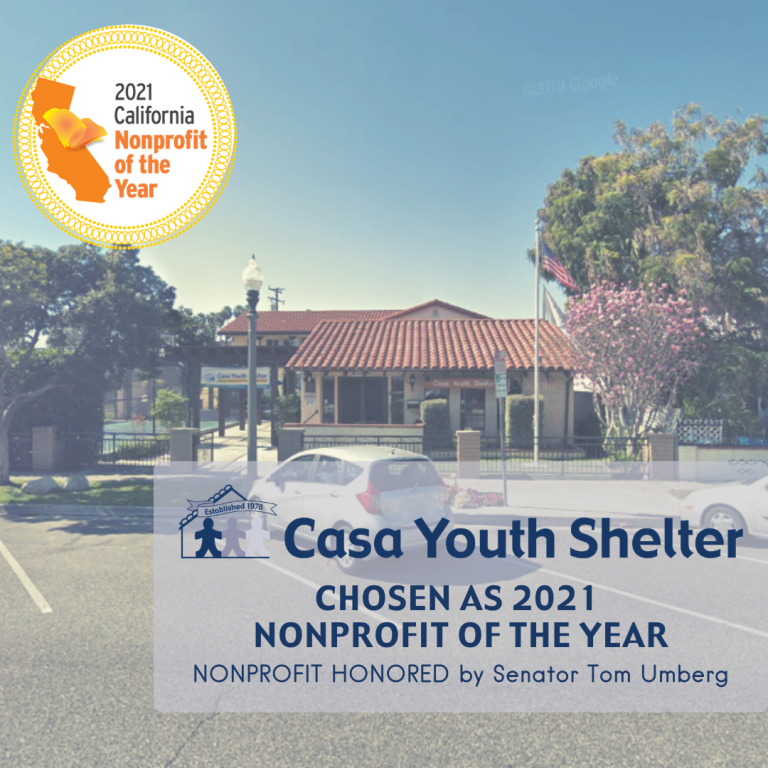
Casa Youth Shelter is proud to announce it has been selected as a 2021 California Nonprofit of the Year by Senator Tom Umberg representing Senate District 34.
“I am proud to award such an incredible organization with this annual honor. Casa Youth Shelter has helped countless children and families overcome difficult times by providing them with comfort, safety, and a continuously supportive community. The 34th Senate District is lucky to have Casa as a valuable resource,” said Senator Umberg.
Casa Youth Shelter is one of more than one hundred nonprofits that will be honored by their state senators and assemblymembers for their tremendous contributions to the communities they serve.
For over 43 years, Casa Youth Shelter has served and nurtured youth, ages 12-17, with shelter, counseling, and support services, empowering them to come through their crisis with increased confidence, stability, and tools for continued growth. They serve youth and families from over 50 cities in Orange, Los Angeles, and other counties in Southern California. Year over year, our top three referring cities are Anaheim and Santa Ana in Orange County, and Long Beach in Los Angeles County. From safe shelter to counseling, parenting classes to life skills, Casa Youth Shelter’s door have remained open 24/7, even during these unprecedented times.
“We are deeply humbled and grateful to be recognized by Senator Tom Umberg as a 2021 Nonprofit of the Year. I am proud to say that Casa Youth Shelter’s staff works incredibly hard every day, and even more over this past year, to make sure youth in crisis feel respected, safe and secure, and get the tools they need to stabilize and transform their lives. With our phenomenal staff, our caring Board of Directors, and the generous partners who make our work possible, we have been able to support teens in crisis with shelter, counseling, and basic needs every day,” comments Amy Lakin, Executive Director at Casa Youth Shelter.
“The pandemic and shelter-in-place orders of the past year and a half have put nonprofits– usually hidden in plain sight – in the spotlight,” explains Jan Massaoka, CEO of the California Association of Nonprofits (CalNonprofits). “California Nonprofit of the Year is an opportunity for our elected officials to celebrate the good work they see nonprofits doing in their districts, and for everyone to appreciate the collective impact of nonprofits in our communities.”
California Nonprofits Day, now in its sixth year, was formally recognized by 2021 Assembly Concurrent Resolution 80, authored by Assemblymember Luz Rivas, and co-authored by Senator Monique Limón. Each year legislators from across California have chosen a Nonprofit of the Year in their district.
Traditionally, honorees and legislators are invited by CalNonprofits, Chair of the Senate Select Committee on the Nonprofit Sector Senator Monique Limón (Santa Barbara), and Chair of the Assembly Select Committee on the Nonprofit Sector Assemblymember Luz Rivas to a celebratory luncheon on California Nonprofits Day. This year, like 2020, the luncheon was cancelled in response to pandemic restrictions, but legislators moved forward with honoring nonprofits doing great work in their districts.
According to “Causes Count,” a 2019 report commissioned by CalNonprofits, the nonprofit sector is the 4th largest industry in the state, employing more than 1.2 million people. Each year, California nonprofits generate more than $273 billion in revenue and bring in $40 billion in revenue from outside of California. The unpaid labor contributed by volunteers at nonprofits is equivalent to 330,000 full-time jobs every year.
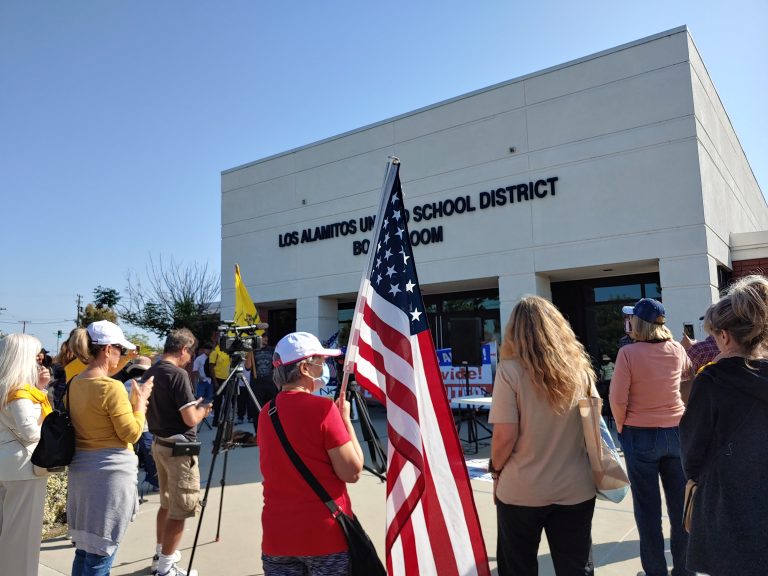
The Rossmoor Community Services District Board of Directors voted 3-2 Tuesday to allow the Orange County Board of Education to rent a community facility to discuss a politically charged topic that many residents fear will bring unnecessary danger to their sleepy, bedroom community.
At issue was whether to allow the county board to rent the Rush Park auditorium to hold Community Forums about Critical Race Theory, a loosely defined topic that has suddenly become a hot topic across America.
The RCSD special meeting had been prompted by an uproar that erupted after General Manager Joe Mendoza approved an application for rental of the Rush Park auditorium for two meetings, one on July 27 and another on Aug. 4, organized by the Orange County Board of Education.
The Orange County Board of Education, which comprises five trustees elected to four-year terms, has virtually no authority over local school districts or their curriculum. Instead, its responsibilities include approving charter schools and hearing inter-district transfer and expulsion appeals.
The board also approves the annual budget of the Orange County Department of Education, a separate agency that serves some of the county’s most vulnerable student populations and supports local districts with services necessary for their operations, including high-speed internet access and security, professional development, legal and fiscal guidance, payroll services and student enrichment.
Following the Los Alamitos Unified School Board’s decision to adopt an elective course on ethnic studies, the county board had decided to hold two county-wide forums to “educate” residents on CRT.
During the year-long debate before adopting the elective ethnic studies course, LAUSD District Supt. Dr. Andrew Pulver and the district’s school board have repeatedly said they have no intention of teaching critical race theory.
RCSD Board President Dr. Jeffrey Barke, a former member of the LAUSD board, has been a strong and vocal opponent of LAUSD’s decision to implement an elective course on ethnic studies.
His wife Mari is an elected member of the Orange County Board of Education.
Ken Williams, Jr., OCBE President, acknowledged during the meeting that he had discussed the use of Rush Park auditorium with Ms. Barke, though he said neither that discussion nor the Los Alamitos Unified decision to implement an ethnic studies course had influenced the decision.
It had “absolutely nothing to do with our decision to go forward” with these special forums, claimed Williams.
“Why are we using this auditorium (Rush Park),” rhetorically asked Williams, because “the facilities at the Orange County Department of Education are limited to 200 and we anticipate 350 people” attending, he said, answering his own question.
Moreover, Williams, said Rush Park was an “incredible auditorium,” with a seating capacity of 500, which is “more than what we need.”
Also, Williams said Rush Park had the audio and video facilities required by the Brown Act and that the cost to the Orange County Department of Education, which provides audio and video support and livestreams county board meetings, “is nominal as compared to other private facilities which may be inappropriately and excessively expensive.”
Actually, the Rush Park facility does not yet have video facilities, but the OCDE has agreed to pay the same third-party video crew used by the RCSD district.
According to public documents, the proposed budget 2021-22 budget for OCDE is listed as $309 million.
According to Williams, the OCDE educational community forums are special board meetings that were approved by the county board to be held July 27 and Aug. 4.
He said there will be no regular business conducted and the meetings will “strictly be an educational forum composed of scholars from the academic and university level, as well as experts from the field of law.”
Nevertheless, once the testimony began, community residents said they suspected there was a whole other reason why the forums were being held in Rossmoor, one said she did not “trust” the Orange County Board of Education and many worried that the forums will create the same type of danger that existed near the end of the LAUSD debate.
Ladelle Clark, said “this is the first time ever that the (Orange County Board of Education) has come to Rossmoor to educate us.”
She said LAUSD “has been trying to educate people for the last six months. The problem is,” she said, “people don’t want to be educated. They want to be supported in the views they hold and that’s what’s happening at this event.”
“And if this (RCSD) board endorses this meeting, you have passively given your support to that against our local school district. I have a feeling that the cake is baked, but hopefully, I’m wrong.”
Another Rossmoor resident, Maria Swanson, said “the reason people don’t like politicians is because politicians don’t seem to care about what is best for the community. And in this case, it’s very clear that keeping the community safe is in the best interest,” she said.
Rossmoor resident Josh Spiller was incredulous. “I have to be honest. This is downright ridiculous,” he said. “Why is it the responsibility of RCSD (to hold these forums)? … Rossmoor has no control over the LAUSD.”
“This meeting will drive in the extremes from both sides of politics, left and right, and this meeting is a higher level of risk than any other meeting proposed for our little auditorium here in the RCSD,” said Spiller.
David Sachs, a Rossmoor resident since 1975, said Los Alamitos Unified “provides an excellent education” and explained that ethnic studies “is already a done deal.”
“I don’t see what authority any of you have to countermand that,” said Sachs, saying he thought education was indeed lacking inclusion relating to “the kind of people who came from so many different places to contribute to what this country has become.”
“I don’t see why students at the high school should be deprived of that element in the education of our history,” said Sachs.
“I don’t think there is any doubt that this meeting is going to attract very passionate people from both sides and violence is violence,” he said.
“It doesn’t matter what they say … the safety of this community is of paramount importance,” said Scott Miller, a 33-year resident of Rossmoor.
“A park is a place where children should be playing,” he said. “Rejecting this meeting is an appropriate course for public safety,” he added.
Rossmoor resident Brenda Gorman said she thought “it was never the intention” of community facilities like Rush Park “to be part of a large controversial event” like the one the county board was planning.
“This is not a meeting for Rossmoor,” she said.
Gorman suggested the event would threaten public safety and she asked if insurance would cover any damage to neighborhood homes or property, should it occur as a result of the meetings.
Conversely, there were others attending the hearing who expressed strong sentiment in support of the meeting, many of whom have been part of the ethnic studies opposition movement since it surfaced.
Harriett Reid of Long Beach said LAUSD had “failed to inform the community what Critical Race Theory is and what it means for their children. I think many have been deceived about the class and what it will entail.”
“They are not aware of the gender diversity, the gender spectrum and the different areas their children will be exposed to,” said Reid.
“A majority of parents were completely unaware of everything that was going on and I can’t think of a better place to have it (the meeting). I don’t know why people are afraid of information,” she said.
Robin Itzler, of Cypress, said she thought Rossmoor was a convenient location for the meeting, saying she wanted to hear the pros and cons of CRT.
“What’s better than hearing from a panel of experts,” Itzler suggested, turning to the audience saying, “nobody’s screaming, nobody’s fighting.” She asked RCSD to let the people listen then come to their own conclusions.
Maggie Marchese of Los Alamitos who said her first language is Spanish said she also supported the meeting, saying parents need to learn more about the social justice standards passed by LAUSD.
“Most parents do not understand what critical race theory is and how that is going to be incorporated through the social justice standards in K-12 in every subject,” said Marchese.
Rick Walter of Long Beach who acknowledged he attended the April 20 ethnic studies town hall said “we just think the public needs to know about what’s going on.”
He suggested that one-third of students from LAUSD come from Long Beach so “please have the meetings here,” he said.
Staci Muller of Seal Beach who has children attending LAUSD, agreed.
“I think it is important to have this meeting,” she said, adding “we need an explanation for what this means for our students.”
Marc Ang, a community organizer from Los Angeles, said there was no violence at the Los Al protest event and called the focus on emphasis on safety a bit “hyperbolic.” He said the proposed Orange County Board of Ed forum will only “enrich the community.”
Director Jeffrey Rips, who would later clash with Barke over the political intent of the meeting, asked Orange County Sheriff’s Department Captain Gary Knutson why security was enhanced for the RCSD special meeting last week.
“Our role is to provide for the safety and security of the members of the public … to express their viewpoints in a safe manner as possible,” said Knutson. Rips implied if RCSD needed beefed up security just to hold a hearing on whether to have the meeting, that an actual meeting could be much different.
Security issues around the proposed July 27 meeting dominated a major portion of the discussion.
Residents repeatedly expressed concern, given the fact that near the end of the process, LAUSD had to switch to online meetings after the Los Alamitos Police Department expressed concern for being able to keep the peace.
Director Nathan Searles, appearing from Indiana on Zoom, point blank asked Williams the rationale of having the physical meeting in Rossmoor and not simply on Zoom, since it was reportedly aimed at the entire population of Orange County.
“To have a meeting on Zoom,” said Williams, somehow diminishes the “impact of the information that has to be given,” he said. He suggested Zoom hinders the “ability to transmit educational ideas.”
“In person meetings are far more effective,” Williams told Searles.
“At the special educational forums that you have held in the last five years, how many have resulted in physical altercations, Director Mark Nitikman asked Williams?
“As far as physical altercations or injuries, none that I’m aware of,” said Williams.
Following an exhaustive review of potential security arrangements, Capt. Knutson said the OC Sheriff’s Office had 3,000 personnel and, if necessary, even with mutual aid, could provide sufficient security for July 27.
He noted, however, that while there are no known credible threats, the meeting was still a month away and there are no 100 percent guarantees.
Barke then made the motion to have the July 27 forum in Rossmoor, “with a request, not a requirement” for the county board to seek a different venue for the Aug. 4 meeting.
In addition, the motion includes an agreement to have OCDE pay for all additional security costs, videotaping and other related expenses related to the forum. In addition, OCBE is required to indemnify and insure the event.
During the debate on the motion, Rips said “we are here to make a decision on whether an event should happen here or not. Whatever side you’re on is not necessarily important to this decision.”
“We are here to serve the betterment of Rossmoor community and Rossmoor citizens. It doesn’t go further than that,” said Rips, “and that for me is what I am thinking about.”
“So many people in our community are concerned about having this event here that it is almost irresponsible for us not to respond.”
Rips said “the fact that we’re promoting that we’re having a news media event to me is telling the world to come here and be a part of whatever is going to happen…I think optics are important and what I’m seeing the (count board of education) bringing a topic here against our local education. That’s not a partnership and it doesn’t feel right,” said Rips.
“I’m just doing here what I think is right for our community,” he added.
Then, the debate turned dour and political.
Rips told Barke he had “taken our community (Rossmoor), which is supposed to be about parks and trees and roadways, a nonpolitical environment and you chose to use your position for something that’s political. That’s totally outside the bounds of what we’re supposed to be doing,” he said.
“It is a conflict and you’re living that conflict,” Rips told Barke.
“Director Rips, you are incorrect,” said Barke, “this has nothing to do with politics for me.”
When Rips tried to interject, Barke said “I didn’t interrupt you. I understand you’re making a comment and I’m just telling you (Rips) you’re incorrect,” said Barke.
“We have a pro-life church that rents this auditorium every week. And if there were pro-choice people that came out and made a lot of noise and were upset about us allowing such an organization to rent the space, we wouldn’t want to be influenced by that,” said Barke.
“So, my concern is that that group which is the loudest thinks that that’s going to have the most influence and that’s not correct and that’s not right,” said Barke.
“And this is a very simple issue in my mind,” continued Barke.
“It has nothing to do with CRT. It has nothing to do with ethnic studies. This is a public auditorium that anybody can rent. And we have a duly elected Board of Education that represents the wide geography of Orange County. There’s five members of this board, and they voted, the majority voted to allow this educational forum to go forward,” he said.
Barke told the board to refuse to rent the auditorium would set a bad precedent for Rossmoor Community Services District.
“And if we make a precedent to say no, then the next group that comes in is going to be coming before the board as well, because now we will have set the precedent that if you don’t like a group…just simply come to the board, appeal the general manager’s decision,” he said.
“I don’t think that’s a good idea,” he said.
With that, Barke called the question. Barke, DeMarco and Nitikman voted to hold the meeting. Rips and Searles voted no.
The Orange County Board of Education’s community forum will be held July 27 at Rush Parkauditorium and potentially again, Aug. 4.
Barke’s motion was amended to provide for a review of the potential August rental of the facility at the next meeting of the RCSD.
On May 24, the Cypress City Council held a workshop to discuss the possible funding sources that should be pursued to maintain Lexington Park which is the nearly completed park at the corner of Cerritos Ave and Lexington Dr. It was reported in the workshop that the City needs $350,000 each year to cover the maintenance costs for the park. The $350,000 is made up of two components: $223,000 for operations and $127,000 to fund a reserve for future replacement/rehabilitation costs. As such, the city needs to seek a significant amount of revenue for ‘at market’ uses.
It is evident from the chart shown during the workshop that a significant portion of the use is being programmed for Market Use. The City Manager describes the park as a ‘Brand new, first class, super well designed amenity in an area that doesn’t have amenities like that.’ The City Manager went on to say: ‘We live in a world where recreation users are willing to spend money in exchange for value.’ The City Manager did say that the community will have access to the walking path, exercise equipment, and the playground. It was also noted that the community could reserve the picnic pavilions for a fee.
Mayor Peat made the point that ‘We are building a really fantastic asset and that’s what we should be charging for.’ When the question was raised as to whether or not the City should charge for parking, Mayor Peat said: ‘We are building a pristine asset, charge them for the use of the asset, not the parking.’
While I know that AYSO was a strong supporter of this park having the two soccer fields, it was stated that AYSO will continue to play most of its games at Lexington Junior High. The City Manager indicated that the later hours (7pm to 10pm) at the new park are being allocated to Market Use, not because ACUAF shouldn’t be out there, but because ACUAF should be asleep. ACUAF is the Advisory Committee on Use of Athletic Facilities. ACUAF makes recommendations for the use of fields for the youth leagues. The City Manager went on to say: ‘We dream of a world where there is a professional or collegiate soccer or lacrosse team that is a regular presence during the weekday to practice or train.’
Council Member Morales pointed out that if his family wanted to reserve a field, he would have to pay for it. He made that point in case someone wanted to say that city tax dollars are supporting a for profit event. He said that we already do that. The point that he doesn’t make is that there is a big difference between use by Cypress residents and the use by entities outside our city. The implications on noise and traffic by programs that come from outside of our city will be significantly greater than any use by our residents especially since the Market use is at night.
The city indicated that it is unlikely that there will be enough funds to maintain this park from the park portion of the property taxes generated at such time that the race course property is developed. Council Member Marquez was the only one to ask this very important question: ‘Was there any planning before all this started to think about these costs?’ The response she received was that they have been thinking about these costs since day one. One has to wonder why the City Council would sign a contract to build a very expensive park without having a funding plan to maintain it. Is it wise to buy anything when you don’t know if you can afford to maintain it?
The City Manager stated that the General Fund loaned the funds to Recreation and Community Services to build Lexington Park in anticipation of the loan being repaid from park fees paid when the race course property is developed. The earlier point made during the workshop was to charge Market users for operating costs, not development costs. It is very doubtful that this park would have cost what it is costing had it been developed as a community park with more passive space rather a ‘Brand new, first class, super well designed amenity’ as described by the City Manager. It also probably wouldn’t have necessitated so much night time Market use which will clearly be disruptive to adjacent neighborhoods. As such, one can conclude that the incremental costs to build the amenities for Market use are included in the loan that the General Fund made to Recreation and Community Services. Therefore any park fees paid by residential developers will be used to pay off the loan. It is important to remember that any fees paid by a developer are included in the price of a new home which means that anyone purchasing a newly constructed home in Cypress will be paying the development costs of this park including the costs related to Market use.
Another point that wasn’t discussed is: What will happen if the developer of the race course provides a built out park when the residential area is constructed? The park fee that the city charges is when a developer doesn’t provide new park space for residential development. State law gives a developer the option of providing a built out park or paying the park fee. If a built out park is provided, there won’t be any funds available to repay the General Fund for the loan made to build Lexington Park. Who will pay off the loan if park fees aren’t paid by the developer?
With the construction of the park nearing completion, the lights have been put in place. These lights have been estimated to be about 80 feet tall. While clearly little consideration was given to the residents across Cerritos Ave, absolutely no consideration was given to the Senior Housing that is one of the planned uses of the property surrounding the park at such time that the race course closes.
Since the City doesn’t post links to their workshops, you will need to ask the City Clerk to send you a copy to download via Dropbox. The workshop is an hour and twenty minutes long. After listening to the workshop, you can decide for yourself if this is a community park or a business enterprise.
Note: George Pardon is the founder and Director the advocacy group Citizens for the Responsible Development of Cypress.
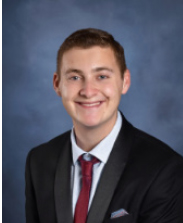
The Rossmoor Woman’s Club honored Los Alamitos High School seniors Feben Worku and Jacob Endelman as students of the month for May and June, respectively.
A senior at Los Alamitos High School, Feben Worku recently committed to attend the University of Southern California with a Marx and Rose Scholarship for Human Biology. She is excited to attend her dream school, and study her favorite subject in hopes of becoming a Physical Therapist or a Sport Medic for professional athletes. In school, she is involved in various activities and extracurriculars. She is the Senior Co-President of ASB, the Vice President of Giving Sport Apparel, and is on the varsity girls soccer team. She looks forward to receiving her education at USC, and will miss the friendships and bonds she has created at Los Al with all her friends, faculty, coaches, and teachers.
Jacob Endelman
Jacob Endelman has certainly made the most of his 4 years at Los Alamitos High School where he currently has a 4.8 GPA (4.3 cumulative). Jacob has been a member of the award winning Los Al Choir program and Model United Nations program for the past 4 years. He has taken 8 advanced placement courses and took one dual enrollment course through Orange Coast Community College. Jacob has earned his biliteracy seal in Spanish and 3 career honor cords through a combination of coursework and career exploration. He will also be awarded the Gold honor cords for his community service where he has completed over a 1000 hours of volunteer work. Jacob was selected by the Legion’s Post as the 2020 Boys State Delegate representing Mid-City. Jacob has developed a strong passion for politics and has worked on major local, state and national elections. campaigns. Jacob will be attending University of California, Irvine in the fall as a Political Sciesmajor.
He aspires to be an attorney before serving as a judge or politician.
Each student received a certificate and $600 scholarship award from the Rossmoor Woman’s Club.
Dear Editor,
Following the sentencing of former police officer Derek Chauvin, who was found guilty in the death of George Floyd while in police custody, Floyd’s brother Philonise said, “Not just black lives matter, but all lives matter.”
This means that all the Black Lives Matter signs should be immediately changed to state what many patriotic Americans have been saying since the Black Lives Matter/Antifa violence started: ALL LIVES MATTER! Therefore, all the restaurants that have “Black Lives” decals on their windows should take them down and replace them with “All Lives.”
Eleanor Howard
Los Alamitos
Dear Editor,
I would like to respond to the letter published by former LAUSD school board president Dr. Jeff Barke. Dr. Barke served the Los Alamitos School District as a member of the school board for twelve years, an impressive feat and a position that garnishes a lot of trust. At first glance, Dr. Barke may seem like the right person for this discussion on the ethnic studies course. I’ll admit, I voted for him for his last term on the school board, however I didn’t understand Dr. Barke until recently and his ideology. So before we give too much weight to Dr. Barke, let’s take a further in depth look into his ideology and what he has to say on the matter.
Let’s start off with the material for the course. For some reason, I keep on seeing Dr. Christine Sleeter brought up yet I couldn’t immediately find anything about her. It took me a while to find any mention of her as the course outline and the reading materials for the ethnic studies course found on the school district website makes no mention of her. Eventually I found this mention of Dr. Sleeter in the form of a video recording of the LAUSD board meeting on February 9 of this year. I will say it was quite enlightening and the presentation was very well put together. In her presentation, Ondrea Reed outlines the most basic ideals for the ethnic studies course. At approximately minute thirty seven of the board meeting Ms. Reed says a shared quote from Dr. Sleeter and Dr. Miguel Zavala as the quote itself comes from their joint book Transformative Ethnic Studies in Schools: Curriculum, Pedagogy, & Research. The quote Ms. Reed uses is “dismantling hegemonic structures, such as racism, requires naming them, questioning their existence, and then envisioning and working towards alternatives”. Sletter is mentioned again a few minutes later in saying that “participation in ethnic studies courses is significantly and positively related to cognitive development”.
Again Sletter is quoted alongside Dr. Zavala in saying “ethnic studies seeks to rehumanize experiences, challenge problematic Eurocentric narratives, and build community solidarity across difference”. Dr. Barke claims that critical race theory makes up the framework for the ethnic studies course. If that is the case, then why is there no mention of critical race theory if it is such a fundamental concept to the course of ethnic studies? The reason is simple, it isn’t. These are just quotes of Dr. Sleeter. Nothing published by Dr. Sleeter will be used in the course as outlined by the course resources found on the school district’s website. As far as the collaboration between the California Department of Education and the Southern Poverty Law Center for the ethnic studies guidelines, I can’t find any evidence of this. If this collaboration did occur, how is there still no mention of critical race theory if it is so pivotal to the course?
Next we’ll go onto his dismissal of the curriculum. He begins by calling the effort to teach ethnic studies in its current format as “neo-Marxist”. This isn’t the first time that Dr. Sleeter has been referred to as a Marxist in this paper. Maybe I’m just missing it, but I can’t seem to find anywhere where Dr. Sleeter calls for the working class to throw off their shackles and seize the means of production by overthrowing the bourgeoisie.
Dr. Barke follows this up with a statement that a lens of the oppressors and the oppressed is anti-American. The only reason why I can think he would say this is because either Dr. Barke doesn’t believe in oppression in American history, he underplays the value of oppression in American history, or Dr. Barke is fully aware of this and chooses not to include oppression as it would not fit his patriotic viewpoint. We had slavery and fought a war over the institution of it. We created the Chinese Exclusion Act of 1882 which not only prohibited immigration from China, but prevented them from becoming US citizens. In World War II we forced Japanese citizens into internment camps after the bombing of Pearl Harbor. No matter which of the above options Dr. Barke adheres to, he adheres to a stance of ignorance, one that seems to be a running theme in his career.
Dr. Barke claims that “allowing students to determine what curriculum should be taught makes about as much sense as allowing a patient to determine what surgery should be performed…”. Dr. Barke is the type of doctor that when confronted with a patient concerned about being susceptible to coronavirus would give the patient a gun and tell them that’s their best protection. Yet it boggles the mind of Dr. Barke that the education system is failing its students in certain areas. In his statement about the decline in CAASPP scores, Dr. Barke cites the years 2016 and 2018 as years of failure in students’ understanding of math. This just also happens to be towards the tail end of Dr. Barke’s term on the LAUSD school board. The available data on the CAASP’s website only goes as far back as 2014, but it shows that math scores for LAHS have ranged from as low as 49% in 2014 to as high as 59% in 2016. These scores are still a failure and were overseen by school board member, Dr. Jeffery Barke.
Finally, at the end of his letter he brings forth the educational forum that will take place in Rush Park as to the topic of Critical Race Theory. He assures us that the community will be hearing from distinguished experts on the topic. Will we though? In his piece presented in last week’s paper, Dr. Barke says he addresses the facts, but the man lives in a world of fantasy. Dr. Barke seems to disregard experts and peer reviewed studies when it comes to establishing his ideology. He has ignored the scientific community when it comes to the existence of global warming as published by multiple news outlets in May 2011 when he led the charge in teaching the “controversy” on global warming and again he has ignored the scientific community when it comes to the coronavirus in his 2020 interview with Peggy Hall. Can the community be truly sure that this forum will deliver on the promise of experts, or will it end up as an echo tunnel for Dr. Barke and his cronies to repeat the falsehoods he has presented? Dr. Barke worries about critical race theory, but it seems the thing he should be worried about is critical thinking.
Billy Villegas
Los Alamitos
Rossmoor Woman’s Club took part in the GFWC Blanket Challenge to help make 2,201 blankets. The General Federation of Women’s Clubs has a long history of providing handmade baby blankets and hats for the March of Dimes Mission Health Baby program. Rossmoor Woman’s Club was able to donate 27 blankets and 60 quilts from the skilled quilters of Heart 2 Heart Quilts to three area hospitals: MemorialCare Miller’s Long Beach, MemorialCare Fountain Valley and Fountain Valley Regional Hospital. They were all very excited to receive the donations and share with their NICU families.
Heart 2 Heart Quilts is located at Grace First Presbyterian Church in Long Beach. Through the gift of quilting, Heart 2 Heart Quilters are able to provide children in need with a warm blessing. Contact the church office at (562) 420-3393 for more information.
The RWC is a social and philanthropic organization that was founded in Rossmoor in 1958, but accepts members from all surrounding areas. For more information, visit the group’s website at www.rossmoorwomansclub.com.
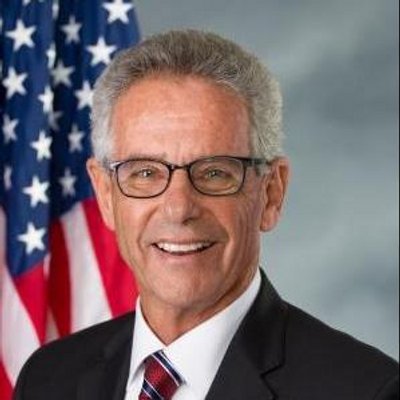
Senator Thomas J. Umberg (D – Santa Ana) has announced that two of his measures impacting California veterans were approved by Assembly policy committees yesterday.
Senate Bill 665, which allows private employers to establish, and maintain, a written veteran’s preference employment policy and hiring program, passed out of the Assembly Labor and Employment committee by a vote of 7-0. In early June, Senate Bill 665 was also approved by the Senate 32-0 with bipartisan support.
“We have a moral obligation to treat our veterans with dignity because they are willing to make the ultimate sacrifice to defend our Constitution,” said Senator Umberg, a retired Colonel in the United States Army. “I would like to thank chairman, Assemblymember Ash Kalra and committee staff for working with us to make this piece of legislation stronger for our California veterans.”
Human resource professionals are constantly developing workplace policies in the best interest of employees and their employers. Assisting veterans to gain employment is an effective way for employers to practice voluntary hiring preference for honorably discharged veterans. According to the National Conference of State Legislatures, “a total of 39 states have enacted legislation allowing private employers to give preference to veterans in hiring, promotion and retention decisions. Of these, 15 states extend the preference to the spouse of a disabled veteran or to the surviving spouse of a deceased veteran.”
Similar efforts to create a Veterans Hiring Preference in California passed the State Assembly with bipartisan support [AB 1383 (2015), AB 160 (2016), & AB 353 (2017)]. Senate Bill 665 boasts a large coalition of support from organizations such as the American Legion-Department of California, California Association of County Veterans Service Officers, California State Commanders Veterans Council, Military Officers Association of America-California Council of Chapters, and the Vietnam Veterans of America-California State Council, Orange County Veterans & Military Families Collaborative, Orange County Black Chamber of Commerce, Veterans Legal Institute, Council of California Goodwill Industries, and many others.
“SB 665 honors and recognizes the sacrifices of our veterans. Transitioning from service to civilian workforce is not always easy. By offering a voluntary hiring preference for veterans to the private sector serves as a tool to help young men and women who served and assist in building a career.”
SB 498, which impacts legal services for veterans, was also approved on Consent by the Assembly Judiciary Committee. SB 498 expands the definition of “indigent person” to determine eligibility for free legal services by increasing one measure of income eligibility from 125% to 200% of the Federal Poverty Level (FPL) and by exempting veteran disability benefits from household income. Currently, an entire population of California veterans is excluded from free and low-income legal assistance as a result of their disability benefits.
Both SB 498 and SB 665 will next be heard in Assembly Military and Veterans Committee in the coming weeks. Organizations and veterans interested in supporting either measure are encouraged to contact Lisa Tran at Lisa.Tran@sen.ca.gov or 916-651-4034.
U.S. Congressman Alan Lowenthal (CA-47) and Congressman Brian Fitzpatrick (PA-01), today, joined by 20 House colleagues, introduced legislation to protect imperiled seabirds from international fishing threats while increasing ongoing seabird conservation efforts in the United States and abroad.
The Albatross and Petrel Conservation Act would implement the Agreement on the Conservation of Albatrosses and Petrels (ACAP), an international conservation agreement that has been signed by 13 member countries since 2001 and covers 31 species of albatrosses, petrels and shearwaters. Despite previous calls by President George W. Bush and President Barack Obama to ratify the agreement, the Senate has yet to vote on the agreement.
“This is a critical opportunity for the United States to resume its leadership role in international conservation efforts,” Congressman Lowenthal said. “It is vital that we implement the ACAP to encourage other nations to adopt strong conservation standards and also in order to take steps to ensure that foreign fishing vessels follow international conservation measures that protect endangered seabirds.”
Many albatross and petrel species are listed among the most threatened seabirds in the world because of habitat loss and fisheries bycatch (unwanted fish and other marine creatures caught during commercial fishing for a different species), but the U.S. has been a leader in reducing fisheries bycatch.
“Serving as good stewards of our environment and working to ensure endangered species can be protected and repopulated is something each of us are called to regardless of location, background or political ideology,” Congressman Fitzpatrick said. “This bill will help reduce habitat destruction, minimize marine debris, and slow the spread of invasive species. I’m proud to stand with my colleagues in support of this bipartisan legislation and urge others to join us in the defense of endangered species.”
The Albatross and Petrel Conservation Act ties together existing U.S. laws and statutes without substantially changing current laws in order to implement the international agreement.
The legislation would also authorize the U.S. Fish and Wildlife Service and the National Marine Fisheries Service to implement fisheries conservation measures, increase international fisheries enforcement, restore habitat, reduce non-native species, develop educational programs, and cooperate internationally on conservation efforts.
Congressman Alan Lowenthal represents the cities of Long Beach, Lakewood, Signal Hill, Avalon, Los Alamitos, Rossmoor, Cypress, Westminster, Garden Grove, Buena Park, Anaheim, Midway City and Stanton in California’s 47th Congressional District. He can be followed on Facebook, Twitter, or his website.
Mayor Pro Tem Stacy Berry submitted a letter of resignation to the City Council on June 28, notifying the City Council that she will resign her position effective July 5, 2021 for personal reasons, according to a press release released June 30.
Berry was first elected to the City Council in November 2014 and re-elected in November 2018, her City Council colleagues selected her to serve as Mayor from December 2018 to December 2019.
“I would like to thank Mayor Pro Tem Berry for her years of dedicated service on behalf of Cypress,” said Mayor Jon Peat. “We wish her the best in her new endeavors.”
The Cypress City Council will discuss options to fill the vacant City Council seat at its July 12, 2021 meeting. The Cypress City Charter allows the City Council to appoint a replacement or hold a special election. The City Council must decide how to fill the seat within 60 days of it becoming vacant. In either case, the new Council Member will complete the term of office which ends in November 2022.
The Event News Enterprise will have a follow up story in next week’s edition.
The free July 4 event, hosted by the cities of Los Alamitos & Seal Beach will feature live music on the main stage beginning with King Salmon Band followed by the 40th Infantry Division Band. Food vendors will be available. The event’s climax begins promptly at 9:00 p.m. with one of the best and longest fireworks displays in Southern California.
Gates will open at 4:00 p.m. via Lexington Drive off Katella Ave and Orangewood Avenue off Los Alamitos Blvd. No pedestrians, walk-ins, or bicycles will be allowed to enter the Joint Forces Training Base. Reservations are required for all vehicles and can be made at https://losal4thofjulyfireworks.eventbrite.com. Only one ticket per vehicle is required.
Due to heightened security, please provide plenty of time and patience to enter and exit the base. I.D. checks (over the age of 16) and a health screening is required for everyone in the vehicle. Please have I.D. out and accessible at entry.
Please note that alcohol, fireworks, BBQ’s, RV motor homes/trailers, and pets (except for service animals) are not allowed on the installation. Face coverings are required and participants are requested to stay inside, next to, or in front of their vehicle, only to leave to visit the food vendors and/or restroom units, and immediately returning to their vehicles.
Timeline for the 34th Annual 4th of July Fireworks Spectacular
4:00pm Gates are open and event begins
4:15pm King Salmon Band on the Main Stage
6:15pm 40th Infantry Band on the Main Stage
7:45pm Dignitary speeches
8:00pm 40th Infantry Band resumes
9:00pm Fireworks show begins
9:30pm Event concludes
This event is free to anyone wishing to attend, with reservations, thanks to the generosity of our Premier Community Partner – Republic Services and or Rising Star Sponsors – Rossmoor Community Services District, Sea Air Federal Credit Union, Charles Abbott Associates, Inc., Financial Partners Credit Union, The Shops at Rossmoor, OC Breeze, and the Event-News Enterprise.
For additional information, contact the Los Alamitos Recreation and Community Services Department at (562) 430-1073 or visit www.cityoflosalamitos.org/recreation.
Cypress Salute to America
The City of Cypress is pleased to announce the Salute to America Celebration to be held at Cypress College. This patriotic celebration will feature food trucks, live music from Electric Vinyl, the ultimate rock tribute group, all leading up to a spectacular fireworks display.
City officials say that no registration will be required to attend. It will be festival seating – picnics, families, and lawn chairs are encouraged.
In addition, no motor homes will be allowed, no alcohol, no smoking, no dogs, no BBQs or fireworks.
Officials say state and county health safety guidelines will be followed. The Cypress Salute to America will be held Friday, July 2, from 5:30 until 9:30 p.m. at Cypress College, 9200 Valley View Street.
Event Timeline
5:30pm – Event area opens and food trucks available
7:00pm – Live Music provided by Electric Vinyl
9:00pm – Fireworks Display
About the band: Electric Vinyl perform a diverse repertoire of songs appealing to audiences of all ages. Electric Vinyl use their strong vocal power, melodic four-part harmonies and audience engaging showmanship to authentically recreate the concert experience of Aerosmith, Bon Jovi, Boston, Def Leppard, The Eagles, Fleetwood Mac, Foreigner, Journey, Led Zeppelin, Queen, Rush, Styx, Tom Petty, U2, Van Halen and many others.
A food truck vendor application is available on the city’s website.
According to some, the city of Cypress remains in perhaps the best fiscal position of any of Orange County’s cities, and the budget adopted for 2021-22 this week reflects that growing strength.
And, according to Matt Burton, the city’s Director of Finance and Administration, the American Rescue Plan passed by Congress is a “once in a generation windfall” that will further allow the Council to further invest in the city’s infrastructure.
Burton told the Council this week that the city will apparently receive more than $11 million as part of the plan, approximately $2 million more than previously expected.
“You know this Act (of Congress) is a once in a generation windfall for Cypress,” said Burton, and “we’re in a position to wait and build a multi-year spending plan for these allocations.”
The $1.9 trillion stimulus plan was passed by Congress in March , providing a supplement to American workers, cities and towns to speed the economic recovery.
While the spending parameters (what the city can spend the money on) have not been finalized, Burton said the city can afford to wait it out and develop a plan to invest the money “to maximize long-term benefits to the community.”
Burton did note that all funds from the American Rescue Plan have to be spent by 2024.
Also, the Council approved its current fiscal year budget of $41.7 million, which includes a capital improvements plan of $4.2 million.
Burton said the current budget does not include any of the expected $11 million federal windfall, though other monies from earlier Congressional pandemic funding have been budgeted and spent according to the guidelines connected to them.
While Burton said it was too early to tell, he said the current budget could show a very slim deficit by the end of next year ($100,000), but he said there is a good chance the city’s annual revenue will more than exceed current expectations.
Nevertheless, he said the city is well prepared for the tiny shortfall should it occur.
Burton also presented updates on several other major funds managed by the city, including parks and recreation, among others, saying while the pandemic did have a negative effect on the city, it was “not nearly as severe” as expected.
He concluded his presentation showing long term charts and graphs that illustrated the city’s strong reserves and upward trends, though he said challenges do remain.
“Pensions are still our biggest challenge,” said Burton, “and they haven’t gone away.” He said Cypress will be dealing with CalPERS, the state’s pension investment agency, “for the foreseeable future.”
Burton said while things are very positive and headed in the right direction, Cypress has not totally recaptured the grandeur of revenue growth seen a few years ago.
“We are not back to where we were a few years ago,” he noted.
Following his presentation, several council members, including the mayor, thanked Burton for his financial leadership, as they also paid tribute to Burton’s staff discipline and that of earlier councils that has left the city in a strong financial position.
Because of this, said council member Anne Hertz, Cypress “is in one of the strongest fiscal positions in Orange County.”
In addition to approving the budget, the Council also passed a seven-year capital improvement investment plan of approximately $84 million, which includes the proposed expenditure of nearly $10 million in the next fiscal year alone.
Public Works Director Doug Dancs explained an overview of the detailed plan to the council that includes a vast array of infrastructure investments over the next seven years.
By constantly reinvesting in infrastructure, said Dancs, the city remains such an appealing place to live and work.
Dancs said the infrastructure improvements include such things as parks, recreation, streets and roads, public facilities, traffic improvements, sewer system enhancements, parkways and medians, storm drains, etc.
More detailed financials and investment plans are available for viewing on the city’s web site, they said.
Mayor Jon Peat announced that the council is working with staff to “reopen the city” as quickly as safely possible following the Gov. Gavin Newsom’s lifting of restrictions June 15.
Peat was also excited to announce that the city’s popular “Summer Concerts on the Green” would begin June 25, near the tennis courts at the Cypress Civic center, where they are traditionally held, complete with food trucks and a variety of other attractions.
According to the city’s website, the classic rock group “The Answer” will perform June 25 at the first of the summer concerts.
Also this week, citizens who live near the Christine P. Swain Elementary School in Cypress complained bitterly during the council’s open forum that proposed changes by the Cypress School District will decimate their home values.
Bob Youngsma, and another neighbor, asked the council to step into the fray and protect their neighborhood.
He said residents who live around Swain Elementary “are very upset with the city council and the (Cypress) School district. What they are doing is unacceptable,” he said.
The school district has embarked on a modernization program that, with other major changes, aims to turn Slain into a school bus maintenance facility, which Youngsma said will diminish their property value.
“You’ve got to get into this game,” he told the council. “This is going to get nasty.”
Youngsma said the property on which the school is located is permitted for a school site, “not a 30,000 square foot commercial building.”
Nevertheless, while City manager Peter Grant and city attorney Fred Galante briefly addressed the issue, Galante said the state of California grants wide latitude to school districts in such matters, though they agreed to look into it further.
Another caller, Anthony Folse, took council member Paulo Morales to task for his comments at a recent meeting rejecting the Pride flag in Cypress. “Last meeting, you said the LGTBQ community was already welcome in Cypress, how do you show we are welcome,” he asked? How are you offering help to those of us who are suffering? Comparing the community to Black Lives Matters was “beyond disrespectful,” he said. He thanked council member Frances Marquez for trying to have the month declared Pride Month and told Morales he should “apologize to the LGBTQ community.”
In other action, the council;
Thanked Marquez for requesting vaccination clinics in Cypress, saying three had already been held and another is scheduled for July 6 at the Los Alamitos Race Course. No appointments necessary.
Accepted the Arterial Rehabilitation, Project 258, in the amount of $735,697.86 and approved the final payment of $36,784.89 to All American Asphalt.
Accepted the Citywide Park Enhancements, Project 247, in the amount of $224,189.77 and approved the final payment of $11,209.49 to Speedy Fix, Inc.
Accepted the Residential Street Resurfacing Improvements, Project 286, in the amount of $114,202.86 and approve the final payment of $5,710.14 to All American Asphalt.