

By Brooklynn De Shazer
Sixteen years ago, the concept of a Leadership Academy was only an idea. One phone call later, that idea began to grow into a program that would help the lives of teenagers. Today, that idea has grown into a program that has helped more than 450 teenagers, and every year more than 30 professionals volunteer their time to help prepare teens beyond the classroom.
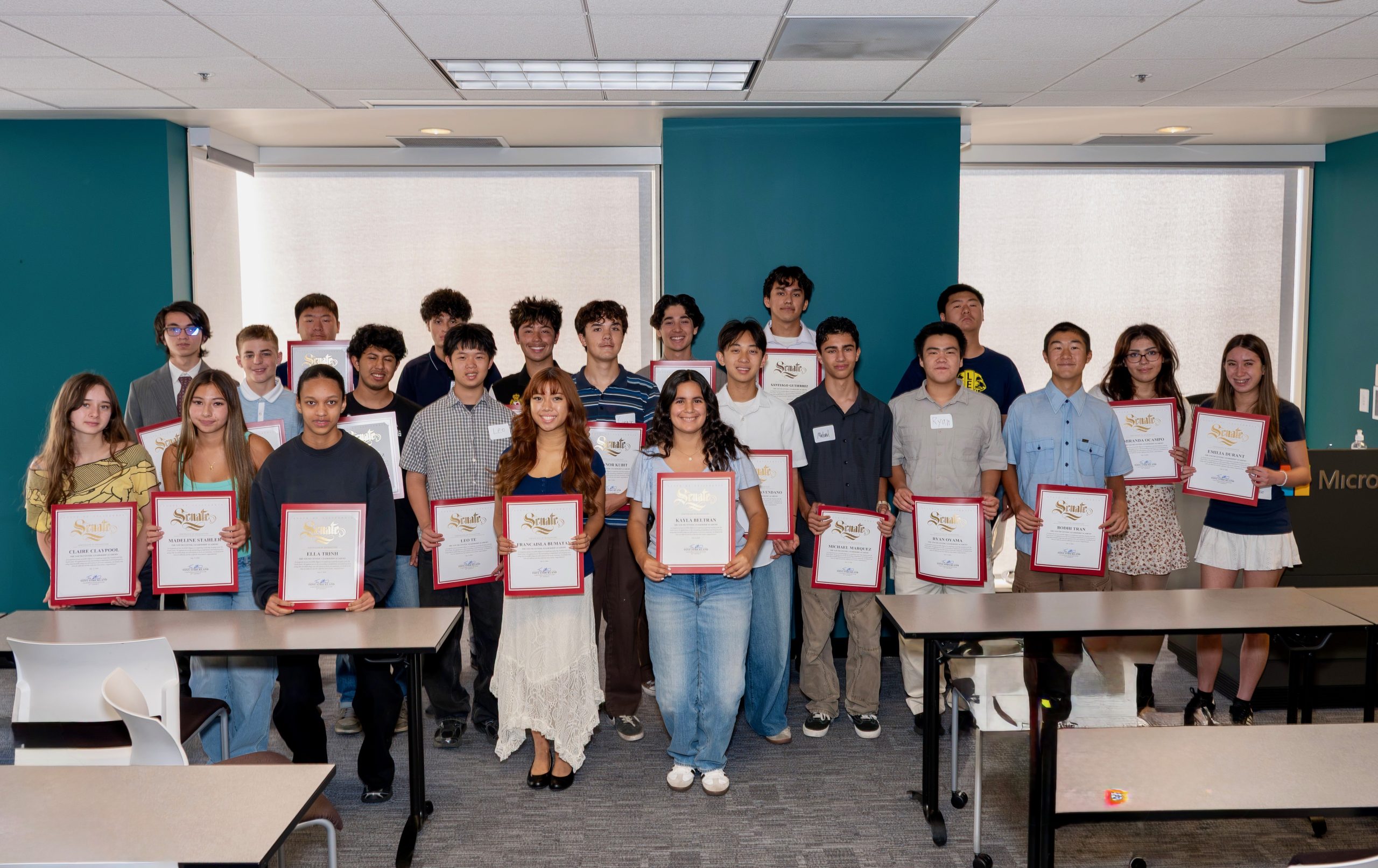
The Leadership Academy students celebrated their graduation on the 16th floor of the Microsoft Technology Center. Before the graduation began, students participated in a panel with six professionals who shared their lessons and experiences.
The Leadership Academy was a week-long program that taught students aged 15-19. Students learned basic life skills like cooking and car maintenance. The program also taught teens the importance of public speaking, setting goals, managing money properly, developing interview skills and building a resume.
“Every young person has the potential to lead. At The Youth Center’s Leadership Academy, we help students discover their strengths, build confidence, and develop the life skills that prepare them not just for college or a career, but for life,” said Lina Lumme, CEO of the Youth Center in Los Alamitos.
The final panel focused on a lesson that is hard for most teens to understand: there is no single path to success and students do not have to have everything figured out.
Finding your own path
Hector Bordas encouraged students to notice the strengths and interests that keep appearing in the background.
For Bordas, leadership was not a career he planned to go into. He went to college and got his degree in biomedical engineering and thought he had everything planned out. That changed when he did not get into medical school.
He realized that solving problems and bringing people together had always been in his life and he could use these skills.
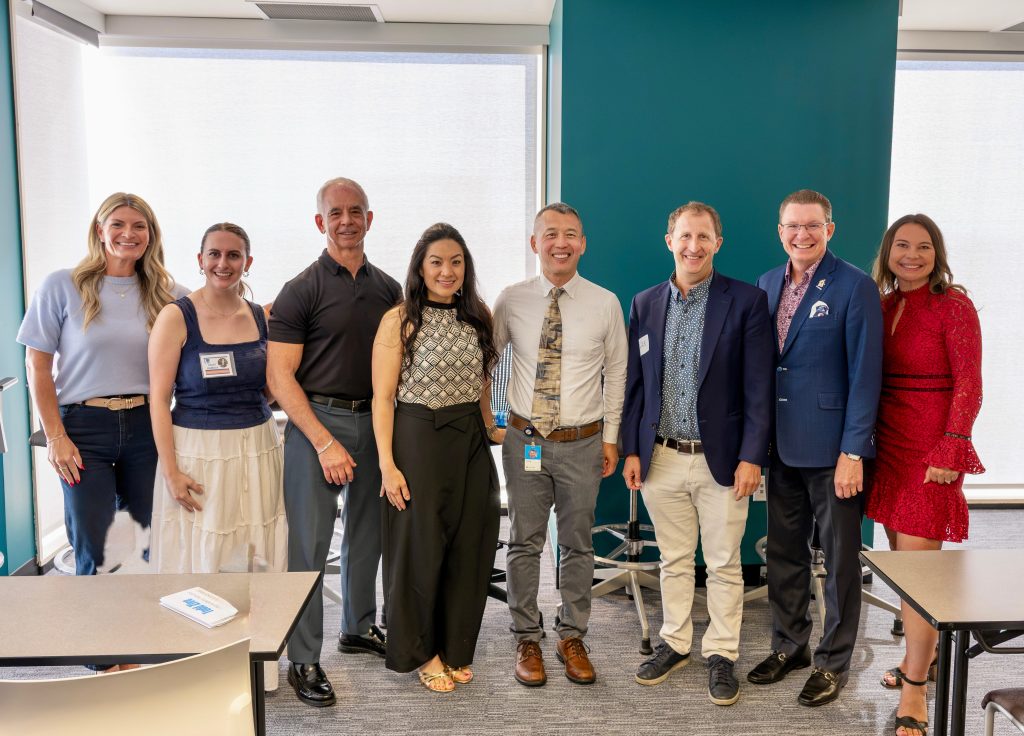
Photo by Tim De Shazer
“What’s in your background that keeps showing up all the time that you are good at? Not necessarily what you want to do, but something you’re actually good at,” said Bordas.
Jen Fontanilla shared a similar message about how career paths do not always follow a straight line.
Fontanilla also went to school to be a doctor and got her degree in biology but realized she did not want to be a doctor anymore. She pursued her interest in finance and graphic design without a degree in either.
¨You do not have to have this expectation of ‘Oh my gosh, it has to be this,’” said Fontanilla.
Both of their stories emphasized how students can explore different interests, change directions and create opportunities for themselves.
The importance of relationships
Another important lesson learned was the importance of showing up and creating relationships.
Andy Zhang, a Senior Cloud Solution Architect at Microsoft, illustrated how powerful a community can be. He started a local tech group in Washington, D.C. with seven people and expanded to hosting events where 400 people showed up.
Zhang needed help and decided to reach out to Microsoft. Microsoft ended up sponsoring the event, giving him an entire floor for the evening and later he was hired by Microsoft.
“If you are not on LinkedIn, I would urge you when you graduate to make a LinkedIn Page,” said Zhang.
Janelle Brunette experienced a similar journey full of growth. She started at Octane, 18 years ago, as the fifth employee. By focusing on building relationships, she worked her way up to be the COO and now the new CEO.
“At the end of the day, relationships are everything,” said Brunette.
The importance of mindset
After surviving a spinal surgery that left Eric Goodman in a full-body cast at 15 years old, he learned the power of choosing your outlook on your day.
“You wake up in the morning, nobody can take that from you. Nobody can give it to you. It’s 100% of you. You wake up and you’re either going to have a positive mindset for the day, or you are going to have a negative mindset. Those are your two choices,” said Goodman.
His mindset led him to begin working at a company as a minimum wage employee and work his way up to become the CEO and then owner of the company. He now owns three companies.
Similarly, Todd Zive shared how people around you shape your mindset.
After the tragic loss of his father at a young age, Zive struggled with believing in himself. At a swimming camp, his coaches and peers stepped in to support him. This gesture taught him the importance of how powerful encouragement can be.
“Surround yourself with people who do believe in you and everybody has the power to be that person for someone else, because we all need someone to believe in us,” said Zive.
The lessons shared at the Leadership Academy really reflect its purpose to give teens the opportunity to learn practical skills and learn how to build connections. Sixteen years on, the program is still serving our local youth as it says congratulations to the Leadership Academy Class of 2026.