

In the face of great adversity, how would you react? Would you lose all hope in the world? Lose all faith that whatever big and bad is coming your way will invoke the end? Or would you rise above the challenge, understanding the true nature of what it means to be yourself and ultimately, human?\This is the dilemma the titular character has to face (and more!) in the Segerstrom Center of the Arts’ latest production, The Life of Pi.
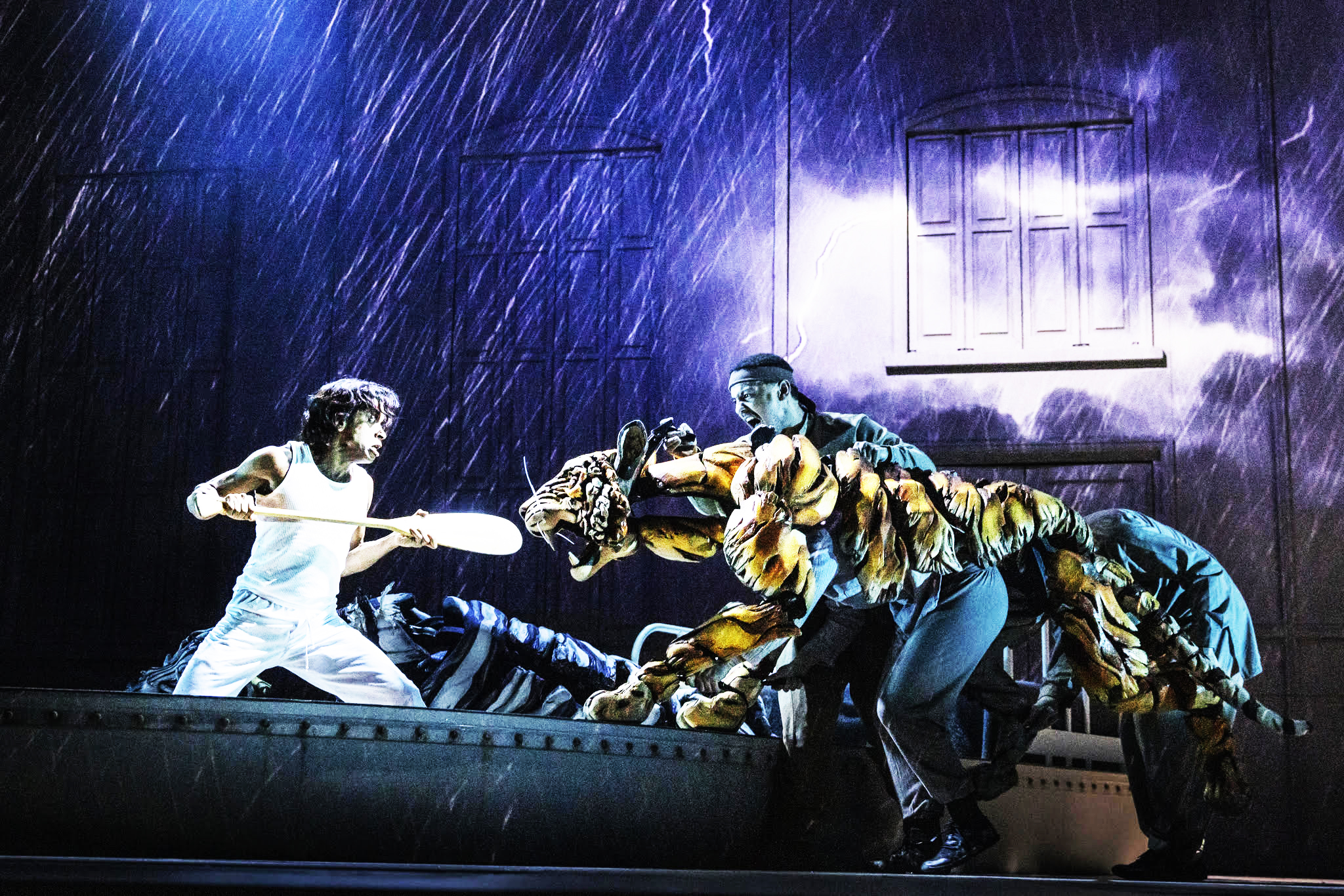
Life of Pi tells the story of 17-year-old Pi (Taha Mandviwala), as he embarks on a journey from political uprisings in his homeland of India, to what he thinks will be Canada with his family. But, after a dangerous storm destroys the ship, Pi is left stranded at sea with some unlikely survivors— “a hyena, a zebra, an orangutan, and a 450-pound Royal Bengal tiger named Richard Parker.
In a word, this play is masterful. Seemingly blending together all elements of the stage with exceptional acting (both human and puppet alike), allows the audience to be transported into the harrowingly realistic, yet simultaneously magical world that is the trauma-ridden mind of Pi.
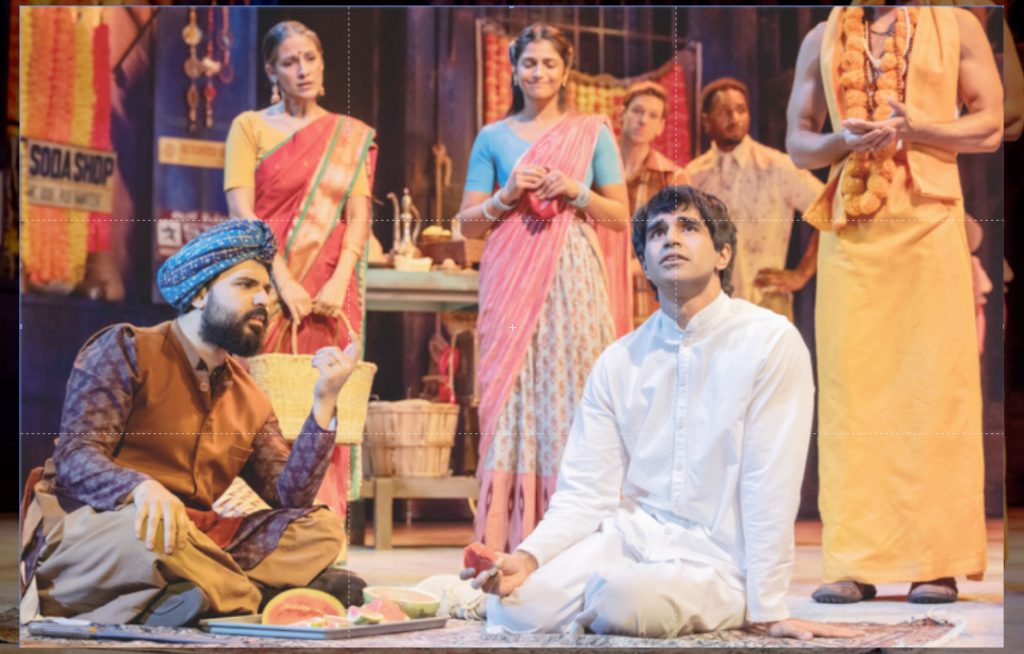
Life of Pi would not work as well as it does without the enthusiasm performance of Mandviwala, who brings a level of critical awareness, yet playful energy to the young Pi. Quite literally, he is jumping from corner to corner of the stage, especially during his early years in India.
The story shifts quickly (almost too quickly…) into the tragic turn his life takes. Yet, Mandviwala is not taken aback by this sudden change in tone. He makes the audience feel every minuscule emotion of Pi’s descent into madness, and the resilience that follows, making the otherwise outlandish story all the more real.
In a press conference hosted on June 4, Mandviwala goes into his performance stating that one of the most challenging aspects of playing Pi was learning how to “economize” his energy. “The show is an engine,” he continues.
“[I need to know] where to pull back.” This control he has over his body and mind in relation to what is happening on the stage exemplifies the idea that what the audience is witnessing is all too real, and that in order to survive, we must believe alongside him.
While Mandviwala excels in his role, he is not the only show-stopper present in the play. The production utilizes large puppets to bring the iconic animals present in the story to life, and they are iconic.
For example, the notable tiger Richard Parker puppet costume weighs over 35 pounds, and is held by a three-person team; one person for the head, one for the heart, and one for the hind. Puppeteer Aaron Haskell one of the eight person team that rotates puppeteering the tiger, and the rest of the zoo friends— goes into more detail about this, explaining that in order to fully express the emotions Parker holds, the team is constantly communicating with one another. If he takes a deep breath at the head, he will exaggerate the motion in order for the other puppeteers to know to follow suit. “[We are constantly] transmitting info [to each other] with movements,” he explains.
This level of companionship and trust within the puppeteers is exemplified completely within the production. Richard Parker and all the other animals feel lifelike, with the humans controlling them falling into the background.
A symbiotic relationship between audience and performers are at play. This is quite intentional, according to Assistant Puppetry & Movement Direction/Puppet Captain Besty Rosen, where she explains that the artists try to find a “sweet spot” of making sure the puppets are “recognizable, while still trying to stay true to the authenticity of the animals in [the difficult] situations.” The performers try to stay true to our expectations while also living up to the extraordinary world the story resides in. They believe it, so we do too.
Striking the right tone within this production can be a difficult feat, considering the heavy nature of the material. I will not sugarcoat it: This is a tough watch. Animals die brutally. People die brutally. It’s brutal. But despite the graphic nature, there is an undercurrent of hope. Faith blooms in adversity, and Pi understands that like no one else. It is the central core of his being, and the play as a whole.

The play takes place entirely in his memories, so the audience sees the world through his eyes. And in every single moment of pain, suffering, loneliness, PTSD flashbacks, you name it, Pi still believes in good. It may take a bit (looking at you, Richard Parker), but he believes that all of us, beneath the surface, have a desire to do good in the world. Because if he does not believe it, he will not survive. And if we do not believe it either, the story will not live.
Life of Pi is a harsh depiction of a man suffering alone at sea. While hard to watch at times, the artistry weaved throughout the entire production makes us remember every detail about what it takes to be truly human.
The Life of Pi on June 3. Directed by Ashley Brooke Monroe, the production will run at the Center until Sunday, June 15. Tickets start at $44.07, and can be purchased “online at scfta.org, in person at 600 Town Center Dr., Costa Mesa, CA 92626, and by phone at 714.556.2787.