

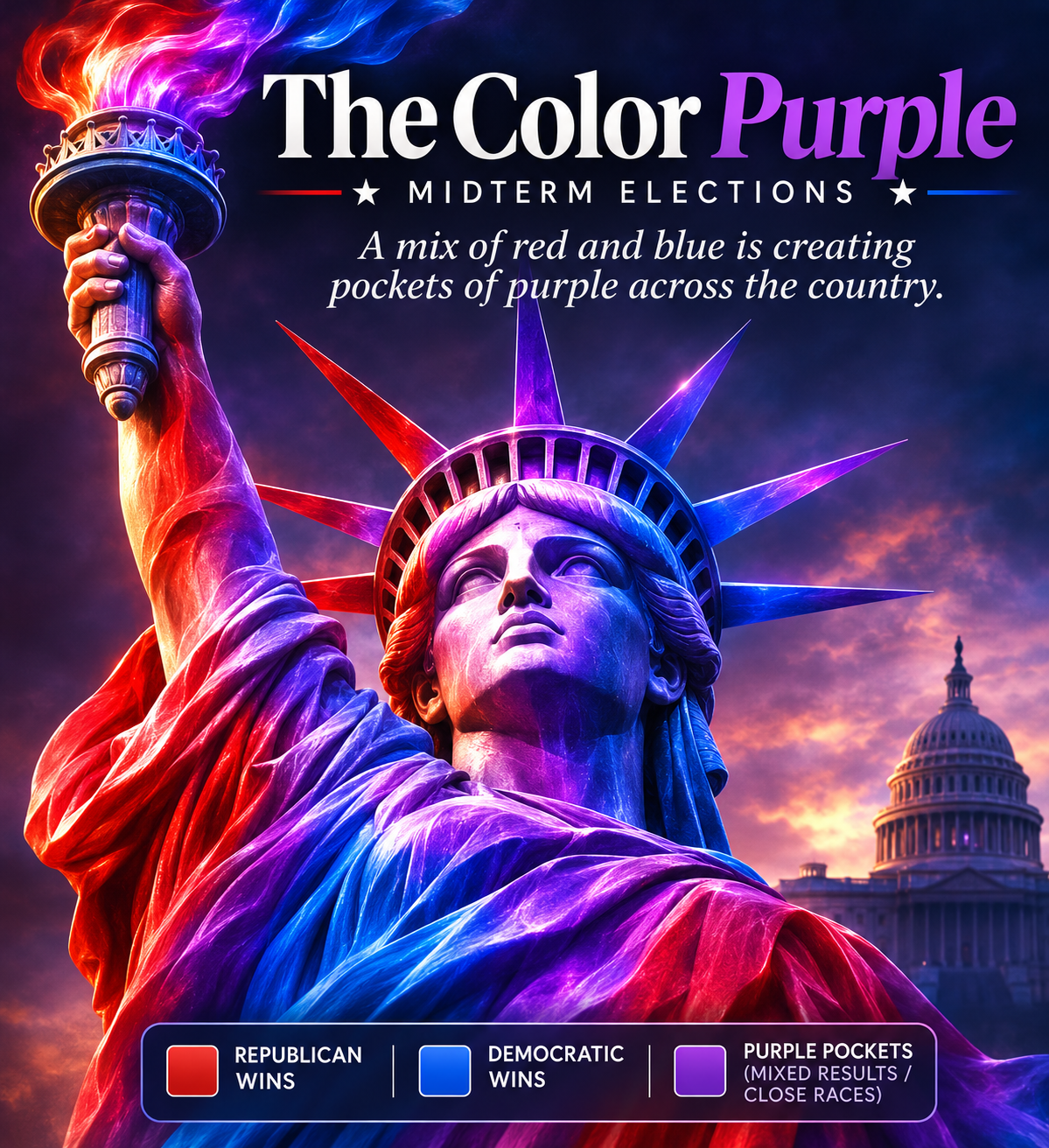
The Color Purple, a character named Shug suggests to protagonist Celie that it may offend God to walk past a field of purple without stopping to honor it.
Purple has represented “royalty,” or governance, for most of human history. In the ancient world, purple dye was extremely rare, made only from the very rare Murex sea snails off the coast of modern-day Lebanon.
Thus, the Tyrian purple cloaks of the most famous royals, the billionaire class before humans had any meaningful say in their own affairs, were that much more valuable.
The earliest spark of freedom came with the Magna Carta in 1215, but not until the 17th century did free thinkers like John Pym challenge King Charles I, prompting the devastating English Civil War and ultimately the beheading of the King and, with it, the “Divine Right of Kings.”
“The law is that which puts a difference betwixt good and evil, betwixt just and unjust. If you take away the law, all things will fall into a confusion, every man will become a law to himself,” wrote Pym.

In modern politics, purple has become the color of balance, as fields of red voters blend with blue, and vice versa, even as voters without a political preference become the purple-ish middle, willing to look both ways.
While many were shocked by the transformational swing induced by the mid-term vote, it has happened many times in our democracy. In many ways, while the celebrations of our 250th Anniversary were admirable, none were as awe-inspiring as the vote on Nov. 3.
Nothing so demonstrates how deeply held are the passions of freedom in the American psyche as to disregard torrents of billionaire cash, disregard an avalanche of algorithms, and disregard the rhetoric of dehumanization and division to swing back to the middle.
Almost a hundred years ago, after a historic landslide vote for President Franklin D. Roosevelt, when he tried to pack the Supreme Court and purge conservatives from his own party, American voters kept them in charge yet sent Republicans to Washington in record numbers.
In 1938, voters awarded Republicans a whopping 72 new House seats, enabling a coalition of Republicans and conservative Southern Democrats who promptly tempered the expansion of the New Deal.
The country didn’t turn red; it turned purple.
Again in 1952, following two decades of Democratic rule, voters chose a Republican, and not by accident, the candidate declaring his disdain for the New Deal. Americans elected Dwight D. Eisenhower as President, and he kept Social Security, expanded it, built the interstate highways, and kept America in NATO.
Eisenhower became what many call the century’s most purple president, and voters rewarded him with two terms.
More recently, in 1994, voters handed the U.S. House of Representatives to Newt Gingrich’s Republicans after 40 years of Democratic control, a reverse example of what we have today.
With Bill Clinton in the White House and little or no love and trust left between the two men, their tension produced welfare reform, a balanced budget agreement, and the first federal surpluses in a generation.
Ironically, in politics, purple isn’t the color of royalty but one of progress. It ain’t always pretty, but it gets things done.
Political scientists call this behavior “thermostatic.”
When governance runs too hot or heavy in one direction, the public inherently turns the dial the other way. From our earliest days, the freedoms written into our Constitution, though written in the 1770s, drew on lessons learned over centuries of outdated royalty and one-party rule.
The lesson here is that our country refuses to let either party or faction paint one color for too long. If we do, history has shown – even fresh history – what can happen, and it begins with the color purple.
Though pushback is allowed at the local, state and national level, this history also carries a warning.
Ironically, purple itself can’t hold its own forever. The dye fades, the rhetoric begins, and algorithmic design starts making the original colors bright again.
The party that just won big on Tuesday should remember that it was handed half a brush, not a mantle. It has happened before and will happen again. The hands of time swing the pendulum’s power both ways.
Even in once-considered “ruby red” Orange County, purple continues to noodle in. It won’t make everyone happy; others will deny it, and politicians will obfuscate, but that’s exactly the point.
Public interest is hard to define because it requires perspective. And truly, we need strong perspectives from all sides, red, blue, and indie white.
But is it too much to ask that government return to a forum where ideas are welcome, and power is balanced? Is it too much to ask that politicians be transparent? Is it too much to ask that politicians accept balanced districts that truly represent the people they are there to serve? The voters have asked for change, so let’s see what the future holds.
Is the color purple replacing partisanship with patriotism? Probably not, but we should not walk past, nor overlook the new fields of purple without at least honoring the hope they represent.David N. Young is the Orange County Press Club’s 2026 recipient of the Dave McQuay Award for Best Columnist.