

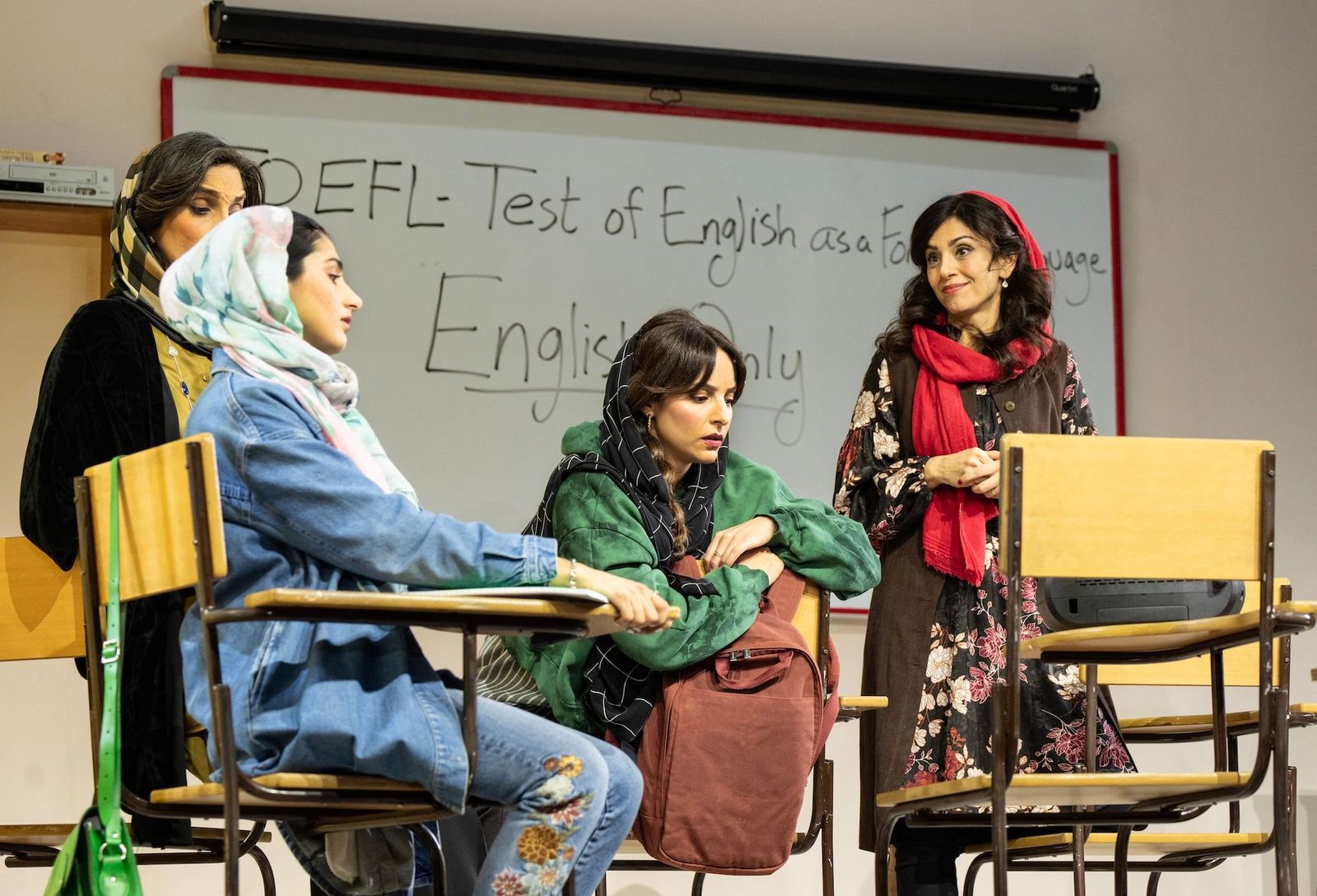
A Pulitzer Prize-winning play by Orange County playwright, Sanaz Toossi opened last week in Beverly Hills for a limited engagement. Though the play has enjoyed a great run on Broadway to other audiences, this is the first time it has been on stage while in the midst of a war with the country where her story is set.
Toossi, a promising playwright, was born and grew up in Orange County, California. She is of Iranian descent; her father, an engineer, emigrated to the United States before the Iranian Revolution, and her mother, a chemist, did so afterward, sources say.
Accordingly he was raised in a bilingual household with parents whose native language was Farsi. “I was a weird theatre kid,” she said of her youth. “When I started writing plays, I was trying to bridge the gap between my Iranian-ness and my American-ness,” she has said in interviews.
It’s an expertly controlled scream, though, subverting language. The play’s Iranian American actors speak with fluent contemporary American accents when their characters are speaking in Farsi, and use stilted or studied Iranian accents when they are speaking English.
Toossi told American Theatre, “I tell immigrant stories, but I don’t tell them in the United States. How can we tell immigrant stories from the site of migration? I think for Iranians, this question of staying or leaving is huge, and it has affected every family so deeply. I think I always just wanted—needed—people to know the Iran that I know. The Iran that’s never ever portrayed in media or seen in the news.”
“We grew up naturally with a separation. All of us. We know what family separation means from the day we are born. And Iranians are so resilient. Our culture lifts up celebration and joy, and our parties are obnoxiously beautiful and egregious. But even in our celebration, in our extravagant weddings, I am always so cognizant of what it means to celebrate when not everyone is there. I’ve never had a second where I didn’t know that,” the playwright said.
In the Time Magazine story about The World’s Most Influential Rising Stars, two-time Pulitzer Prize winning playwright Lynn Nottage wrote, “I live for those incomparable moments when you encounter an artist who opens a door to reveal a fresh perspective on the world. English is immersive, provocative, and immensely moving; set in Iran, it follows a small group of individuals in an English language class, each searching for new forms of communication and, ultimately, liberation.”
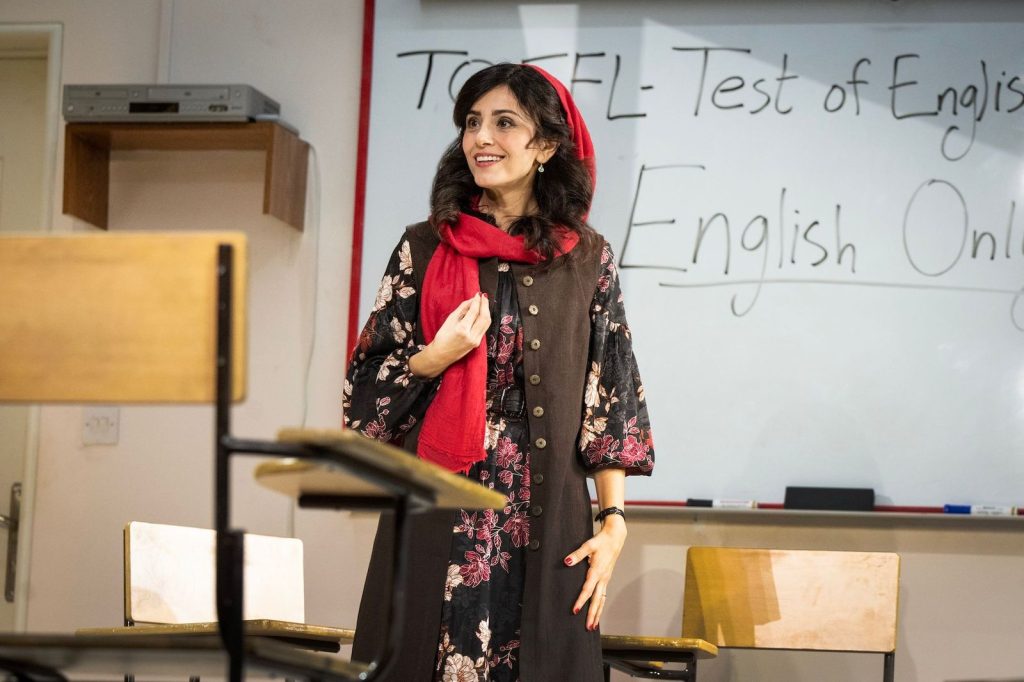
Toossi’s “English” play is set in a classroom in Karaj, Iran, in the year 2008, where four Iranians attempt to learn English before coming to America.
Four adults, including a young aspiring doctor, an older woman dreaming of Canada, a man torn between two worlds, and a woman loyal to the earth she was born on, sit in plastic chairs while trying to become someone else.
Their teacher, Marjan, who once lived in England and carries that experience like a second spine, has given them a rule: English only. Speak the tongue of elsewhere. Swallow your mother language.
In granting “English” their 2023 award for Best Play, the Pulitzer Prize committee described the show as “a quietly powerful play” about four Iranians preparing for an English-language exam at a storefront school near Tehran.
In that process, family separations and travel restrictions drive them to learn a new language that may alter their identities and represent a new life.
American Theater Magazine cited “English” as one of the 20 of 50 plays of the new Millennium that “pushed theater forward.”
This play has only gained in relevance since its 2022 premiere by the Atlantic Theater Company in New York.
Following its critically acclaimed Broadway run, “English” is on stage locally. Directed by Knud Adams, the play has a strictly limited engagement of 24 performances at the Bram Goldsmith Theater at the Wallace Annenberg Center for the Performing Arts.
Critics have said the play imparts what many are feeling: that feeling, of being perpetually translated, of living in the gap between what you mean and what you are understood to mean —precisely what Iranian Americans are living through again right now.
A broader climate that has induced Iranian Americans “into the exhausting posture of explanation: we are not that government, we do not endorse those missiles, we are here, we are from here, we are also from there, we mourn in two directions at once.”
In addition to winning the Pulitzer, “English” has enjoyed commercial success on Broadway, earning a spectacular array of reviews for the cast and kudos for the playwright.
One of the four students in the play, Roya, portrayed in the production by Pooya Mohseni, says that, above all, Toossi’s Pulitzer-winning play evokes real human emotion.
Mohseni is an award-winning Iranian/American actor, writer, filmmaker, and transgender activist who played “Roya” in the original cast of “English” on Broadway, among her many credits.
“My mom was an English teacher,” said Mohseni, “so I grew up in that environment since I was about four or five.”
“I have fun with the other actors that have gotten to do it (play a part in “English”),” she said. “I wanted to return to this role to make sure that this story is being told authentically and the way audiences have embraced it,” she said.
Despite the Iran connection, Pooya, said “English” is simply good theatre.
“English” is good and nuanced storytelling, she said, noting the play evokes much laughter and delight, while also smartly dealing with the underbelly of immigration and learning a new language.
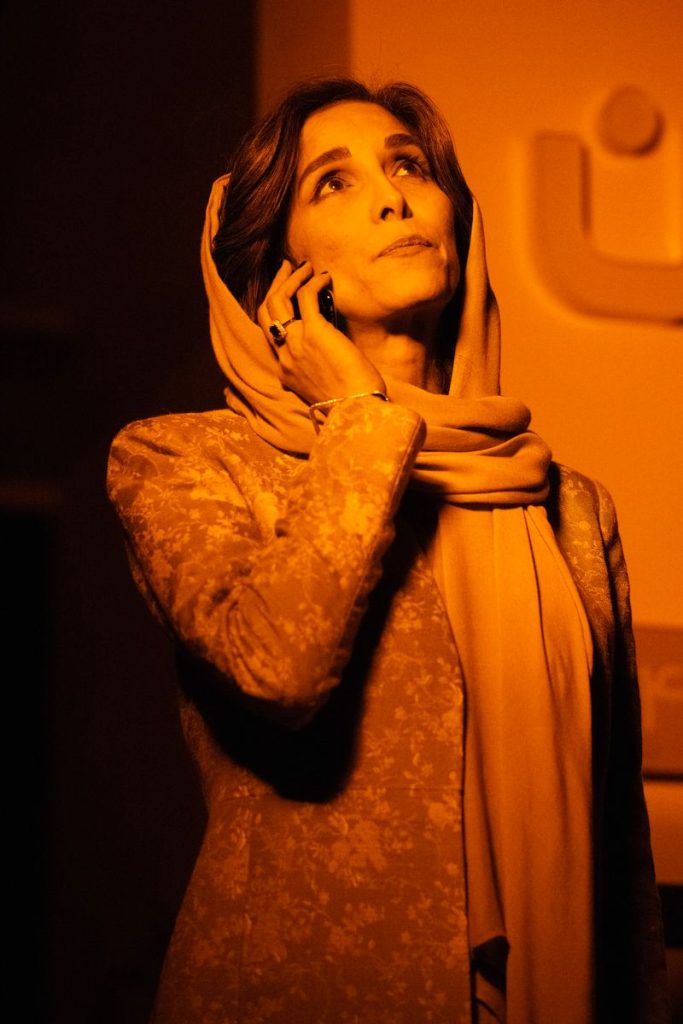
“This is not a political play,” said Mohseni, “it is a social play. It keeps selling out because people who see it often come back to see it again with their friends and family members.”
Toossi’s script has “people laughing their hearts out, then some tender, deeper moments that have made them think about either themselves or how they relate to the world to it,” said Mohseni.
“The play has allowed them to have more grace and compassion towards people having difficulty communicating through a language that is not their mother tongue.”
“Aside from the laughing and the crying, the play has lingered with them long after they have left the theatre,” said Mohseni.
“You will laugh, you will cry and hopefully leave slightly changed after seeing the play,” she said.
“English” is now on stage in Beverly Hills with two shows per day, a matinee at 2 p.m. and an evening show at 7:30 p.m. Tickets are available through The Wallis, AXS and Vivid Seats.
###