

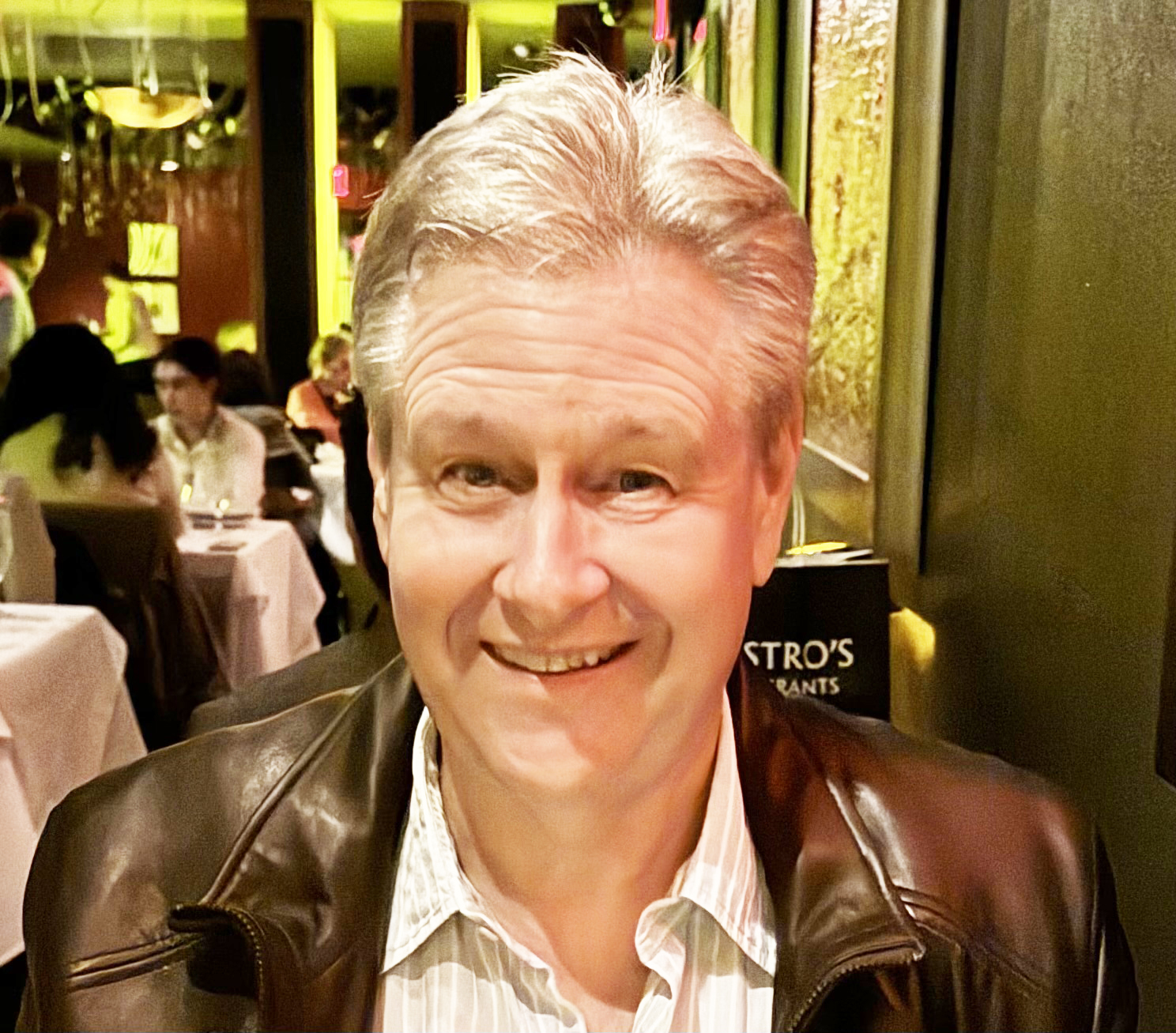
Guest Editorial by Tom Moore
On August 25 the Cypress City Council casts the most consequential land-use vote in our history: the Los Alamitos Race Course site.
Roughly 134 acres. About 1,791 homes. 448,000 square feet of commercial space. Moody Street punched through to Katella, opening our quiet neighborhoods to regional traffic for the first time.
The property owner realizes a windfall estimated in the hundreds of millions. Residents receive an eight-acre park at the edge of the site; half of it a stormwater basin.
I’m asking for one acre, a public plaza in the commercial core. Less than three-quarters of one percent of the site. That’s the entire ask.
What voters were promised. In June 2018, Cypress asked voters to approve a major density increase on the racetrack. In exchange, Specific Plan 2.0 described a 17.5-acre Town Center: “walking trails, picnic areas,” a “main street and gathering place for the community,” and “areas for recreation, gatherings and reflection for Cypress residents.” The City Attorney’s impartial analysis — the official summary in the ballot guide described a three-acre public park overlay in the commercial core.
Density for the developer. A civic heart for the public. That was the bargain, and voters kept their end of it.
How three council members undid it
Cypress owned 13.3 acres of that ground on Katella, bought with taxpayer redevelopment funds. Selling public land requires a Disposition and Development Agreement, the binding contract dictating what the buyer must build. We held the deed. We held the pen.
December 2019. Jon Peat, Rob Johnson, and Paulo Morales voted 3–1 to approve the DDA with Shea Properties — without the three-acre park requirement in it. Eighteen months after the election, in a single vote, the leverage was gone.
June 2020. The same three voted 3–2 to convey the parcel. Then, in a second 3–2 vote, they approved a $1.47 million refund to the developer covering roughly a quarter of the amenities Shea planned to build.
Mariellen Yarc and Stacy Berry, who had opposed the DDA in 2019, voted no on both. Cypress bought the land with public money, sold it without securing the square, then reimbursed the buyer.
Then the words changed. Specific Plan 3.0 now permits the three-acre park obligation to be satisfied on peripheral, edge-of-property land. The language survived. It stopped meaning
what it meant on the ballot. Even the plan’s name, “Cypress Town Center and Commons,” is ironic. A commons area belongs to everyone.
This one belongs to Shea.
A detention basin is not a town square. City officials call the park “more passive, nature-oriented” than an active park like Lexington, an honest description, and a concession. You cannot hold a farmer’s market in a detention basin, or light a Christmas tree in one, or meet a neighbor there for coffee.
All of it sits at the site’s edge, far from where anyone will actually shop, eat, or gather.
The Council should also ask a plain question: is stormwater infrastructure this project needs anyway being counted as the parkland the project owes?
So here is my ask, precisely. I am not asking for more open space. I am asking that one acre of it be moved. Take a single acre of the four usable acres at Cerritos and Moody and place it in the middle of the commercial core, framed by buildings with shops and restaurants opening onto it.
Same total acreage. Same cost to the developer. A different city.
Follow the money
The Southern California Coalition of Businesses and Taxpayers, funded by Valley Vista Services, the city’s trash hauler, and by development money, has spent more than $75,000 on Cypress races since 2014.
Peat benefited from $35,577 in independent expenditures. Johnson, $9,825, ( three expenditures on a single day in October 2016). Paolo Morales, $25,546.52 combined $10,000 in direct contributions and $15,546.52 in independent expenditures.
This is a pattern, not an incident. In 2019 the Council signed away the one contract term that could have guaranteed a public square. Two years later, Peat and Morales extended Valley Vista’s trash franchise to 2037 with no competitive bid, and a 32 percent rate increase.
And it didn’t stop. Records from the O.C. Registrar of Voters show the Safe Neighborhoods PAC was funded with $62,000 combined from Grand Central Recycling & Transfer Station operated by Valley Vista, and developer Chris Bardis.
Independent expenditure filings show about $7,000 of that supported Bonnie Peat, who is married to Jon Peat; Bardis also gave $500 directly to her campaign.
Two years later, in a July 3, 2024 email to the City’s planning director, he described himself as “a part owner in some of these properties,” assuming the racetrack, while asking that his letter be forwarded to the Mayor and City Council in support of the Housing Element.
State law doesn’t require recusal here. But the public interest is a higher standard than the legal minimum. Before this Council votes on the 134 acres, every member of the Council should state on the record what campaign support they’ve received from parties with an interest in this property.
One acre is enough
Pioneer Courthouse Square in Portland, the space the city calls its “living room,” is under an acre. An acre becomes a town square when buildings frame it and shops open onto it.
No planning commission
And no one else is reviewing this. Thirty of Orange County’s 34 cities have a planning commission, a citizen body that studies a project this size and recommends before the Council votes.
Cypress is one of four without one. Mayor Leo Medrano called the idea “red tape,” noting it would only be advisory since decisions “still rest with the City Council.” He’s right.
And that is precisely why dismissing a planning commission as “red tape” was such a reckless thing to say in an Op-Ed. On a hundred-and-thirty-four-acre, half-billion-dollar project, “advisory” oversight is still oversight. Cypress has none.
You’ll hear that the Council’s hands are tied. They aren’t. An environmental report is a study, not a permit, the Council still votes whether to accept it, and tract maps are approved with conditions. State law sets how many homes we must allow; it says nothing about where the open space goes.
Why this falls to the Council
The applicant’s consultants will fill that chamber. Residents won’t, not because they don’t care, but because at 7:00pm on a Tuesday they’re doing homework at the kitchen table, driving to practice, working a second shift, or caring for a parent. They voted, handed the Council their proxy, and went back to raising their kids. Absence is not consent.
And this Council has the votes. David Burke, Kyle Chang, and Rachel Strong Carnahan are three of five. If the acre isn’t secured on August 25, it won’t be because they were outnumbered.
So: require the acre as a condition of approval out loud, from the dais, on the record. If the owner refuses, continue the item 180 days. If that fails, return it to the voters who were promised it in 2018. Appoint the planning commission residents have asked for.
In 2019 we had the deed and signed it away. In 2020 we wrote a check on top. If we can’t move one acre out of a hundred and thirty-four, it won’t be because the developer said no. It will be because nobody asked.
Thomas Moore is a 60-year Cypress resident