Home Blog Page 116

Los Al adopts 2021-22 Fiscal Year budget of $20 million

Following an exhaustive review of its proposed $20 million 2021-22 budget, the city council voted unanimously to adopt the new spending plan that restores many previously frozen staff positions and creates a capital improvement plan to restore many projects previously on hold.

According to Mayor Mark Chirco, the city’s plan adheres to the fiscal sustainability pledge yet does reflect a city again on the move.

At the heart of the revised budget plan is the 2020 voter approval of Measure Y, which provides the city with an additional 1.5 cent increase in sales tax collections for every dollar spent inside the city on affected goods and services.

Los Alamitos had faced dire financial consequences for the past few years, yet made the case to voters under the previous council, led by former Mayor Richard Murphy, as they made the case that it was time for voters to invest in the future.

Though the margin was razor thin, voters approved Measure Y, which now allows the council to adjust its budget to reflect this new investment.

During the public hearing on the proposed budget, Koehler gave the council, and taxpayers, an overview of his department’s management of $12 million in city investments and its $3 million in debts, which he said was part of more than 22 separate funds managed by the finance department.

The city’s finance department has projected in its five-year forecast that Measure Y, coupled with a robust economy that will also increase other fee-based income, could bring in more than $4 million per year to city coffers.

Under the new spending plan, the city’s capital improvement plan is five times larger than previous years and, according to the forecast presented by interim Finance Director Craig Koehler, the city could amass a surplus of more than $10 million over the next five years if spending and revenue levels remain consistent.

Kohler said the current economic recovery is the “fastest growth in history.” He said the boom is showing itself in construction and building materials, while some sectors like business travel might take as long as three years to fully return to previous levels.
The city’s fiscal 2021-22 budget reflects $19.9 million in projected revenue, and $19 million in spending, producing a projected surplus of just under $1 million.
While the draft budget reflected a slightly higher surplus, the council agreed to also include a $1.6 million initiative to immediately improve many city streets. While not all of funding required for the street improvement plan would come out of the general fund, the adjustment to include it absorbed some of the earlier projected surplus.

In addition, the city now expects to receive $2.7 million from the federal American Rescue Plan over the next two years, which has not yet been budgeted and will not be until all of the regulations are released.

Like other cities, Los Alamitos officials say they will double down to reinvest in the city’s infrastructure. According to city manager Chet Simmons, the spending plan is “a very aggressive, but needed approach to shore up the city’s infrastructure.”
Acting Deputy City Manager Ron Noda gave the Council an overview of the proposed capital improvement and development plan, which includes major investments in technology to put more power in the hands of constituents.

“Our overall goal is to improve customer service,” he said, noting that new software that will allow for online payments, code enforcement, digital scheduling, among other enhancements, and will improve the overall “customer experience” for city residents.

While technology is a great thing, council member Ron Bates interjected a thought to remember that the population was “aging,” so he urged the administration not to lose sight of the in-person experience as well in its planning.

Noda said the staff still prefers in-person experiences, but the new digital options will allow for greater convenience for all citizens.

Responding to a question from Mayor Pro Tem Shelley Hasselbrink, Noda said the new technology push will also include “apps” that allow residents to request “work orders” for such things as sidewalk cracks, potholes, and other needed improvements.

Noda said the plan also includes a significant citizen outreach and a “huge economic development push.”
Finally, Noda said, while the city is proposing a massive increase for capital investments over the next year, most of that additional spending will not come from the city’s general fund, saying staff were able to generate other revenues, such as grants, to pay for the increase.

Police Chief Eric R. Nunez thanked the council for restoring several full-time positions in the proposed budget. Of the city’s proposed expenditures of nearly $20 million, the police department budget will absorb $8.5 million, according to the documents.

Nunez said the budget will restore at least six positions, including five full-time and one part-time position, and will result in “better service delivery for our folks.”

The outgoing chief said the new budget will allow for a professional recruiter for a new chief and for better organization of the existing department. “There were challenges that relate back to our personnel shortages,” he told the council.

Most of all, he said, it would result in improvements to the department’s response time for service.
Bates asked Nunez to ensure the city seeks the best young officers available for the force while Hasselbrink asked the police chief to consider implementing a plan to further integrate police with youth in the community, such as the Police Interaction with Youth program in La Palma.

Acting Recreation Director Emeline Noda said the city’s proposed recreation department will allow for continued expansion of the city’s programs and classes for all residents, from seniors to teens, from arts programs to wellness and many in between.
In addition, she said “people are coming out of the woodwork to get involved in society” since the lifting of pandemic restrictions. Nevertheless, she said, the recreation department is up for the challenge.
“We are all working very diligently,” she said.

In addition, Noda said they planned to include “more cultural aspects into city programs,” and she also announced the recreation department’s intention to create a “city foundation” to promote all departments in the city.

Simmons told the council that a reorganization of the city’s administrative department is underway, complete with technology enhancements with a “recommitment to transparency.”

He said the city is also realigning its strategic planning efforts to fulfill the fiscal sustainability pledge made by the council and will work to enhance their existing strategic partnerships.

“We’re building a new organizational structure,” said Simmons, designed to track all strategic objectives and planned work in the city and then coordinate “how that work is going to be accomplished.”

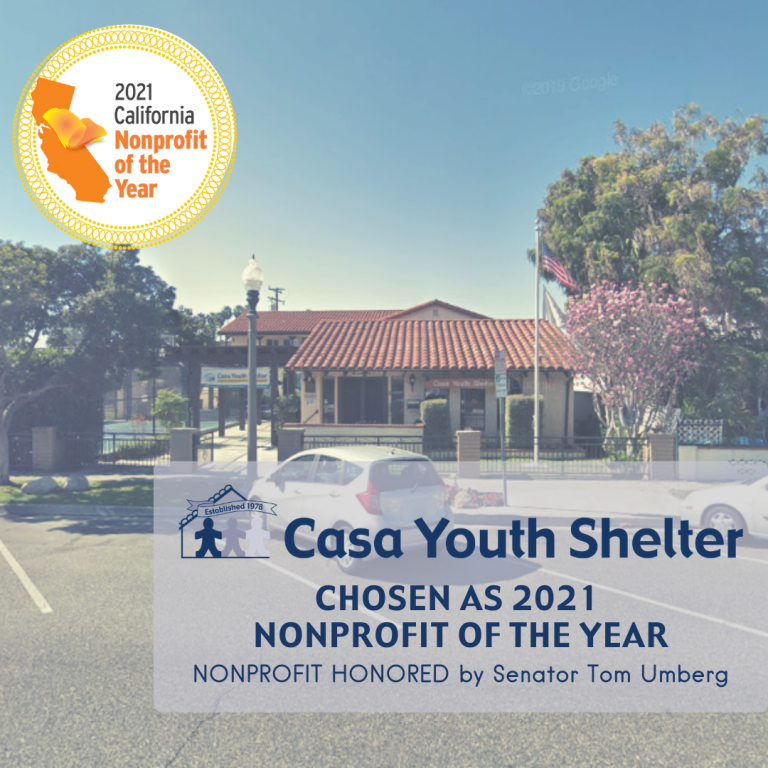
Casa Youth Shelter named 2021 California Nonprofit of the Year

Casa Youth Shelter is proud to announce it has been selected as a 2021 California Nonprofit of the Year by Senator Tom Umberg representing Senate District 34.

“I am proud to award such an incredible organization with this annual honor. Casa Youth Shelter has helped countless children and families overcome difficult times by providing them with comfort, safety, and a continuously supportive community. The 34th Senate District is lucky to have Casa as a valuable resource,” said Senator Umberg.

Casa Youth Shelter is one of more than one hundred nonprofits that will be honored by their state senators and assemblymembers for their tremendous contributions to the communities they serve.

For over 43 years, Casa Youth Shelter has served and nurtured youth, ages 12-17, with shelter, counseling, and support services, empowering them to come through their crisis with increased confidence, stability, and tools for continued growth. They serve youth and families from over 50 cities in Orange, Los Angeles, and other counties in Southern California. Year over year, our top three referring cities are Anaheim and Santa Ana in Orange County, and Long Beach in Los Angeles County. From safe shelter to counseling, parenting classes to life skills, Casa Youth Shelter’s door have remained open 24/7, even during these unprecedented times.

“We are deeply humbled and grateful to be recognized by Senator Tom Umberg as a 2021 Nonprofit of the Year. I am proud to say that Casa Youth Shelter’s staff works incredibly hard every day, and even more over this past year, to make sure youth in crisis feel respected, safe and secure, and get the tools they need to stabilize and transform their lives. With our phenomenal staff, our caring Board of Directors, and the generous partners who make our work possible, we have been able to support teens in crisis with shelter, counseling, and basic needs every day,” comments Amy Lakin, Executive Director at Casa Youth Shelter.

“The pandemic and shelter-in-place orders of the past year and a half have put nonprofits– usually hidden in plain sight – in the spotlight,” explains Jan Massaoka, CEO of the California Association of Nonprofits (CalNonprofits). “California Nonprofit of the Year is an opportunity for our elected officials to celebrate the good work they see nonprofits doing in their districts, and for everyone to appreciate the collective impact of nonprofits in our communities.”

California Nonprofits Day, now in its sixth year, was formally recognized by 2021 Assembly Concurrent Resolution 80, authored by Assemblymember Luz Rivas, and co-authored by Senator Monique Limón. Each year legislators from across California have chosen a Nonprofit of the Year in their district.

Traditionally, honorees and legislators are invited by CalNonprofits, Chair of the Senate Select Committee on the Nonprofit Sector Senator Monique Limón (Santa Barbara), and Chair of the Assembly Select Committee on the Nonprofit Sector Assemblymember Luz Rivas to a celebratory luncheon on California Nonprofits Day. This year, like 2020, the luncheon was cancelled in response to pandemic restrictions, but legislators moved forward with honoring nonprofits doing great work in their districts.

According to “Causes Count,” a 2019 report commissioned by CalNonprofits, the nonprofit sector is the 4th largest industry in the state, employing more than 1.2 million people. Each year, California nonprofits generate more than $273 billion in revenue and bring in $40 billion in revenue from outside of California. The unpaid labor contributed by volunteers at nonprofits is equivalent to 330,000 full-time jobs every year.

Rossmoor Directors split 3-2 over use of venue for OCDE hearing

The Rossmoor Community Services District Board of Directors voted 3-2 Tuesday to allow the Orange County Board of Education to rent a community facility to discuss a politically charged topic that many residents fear will bring unnecessary danger to their sleepy, bedroom community.

At issue was whether to allow the county board to rent the Rush Park auditorium to hold Community Forums about Critical Race Theory, a loosely defined topic that has suddenly become a hot topic across America.

The RCSD special meeting had been prompted by an uproar that erupted after General Manager Joe Mendoza approved an application for rental of the Rush Park auditorium for two meetings, one on July 27 and another on Aug. 4, organized by the Orange County Board of Education.

The Orange County Board of Education, which comprises five trustees elected to four-year terms, has virtually no authority over local school districts or their curriculum. Instead, its responsibilities include approving charter schools and hearing inter-district transfer and expulsion appeals.

The board also approves the annual budget of the Orange County Department of Education, a separate agency that serves some of the county’s most vulnerable student populations and supports local districts with services necessary for their operations, including high-speed internet access and security, professional development, legal and fiscal guidance, payroll services and student enrichment.

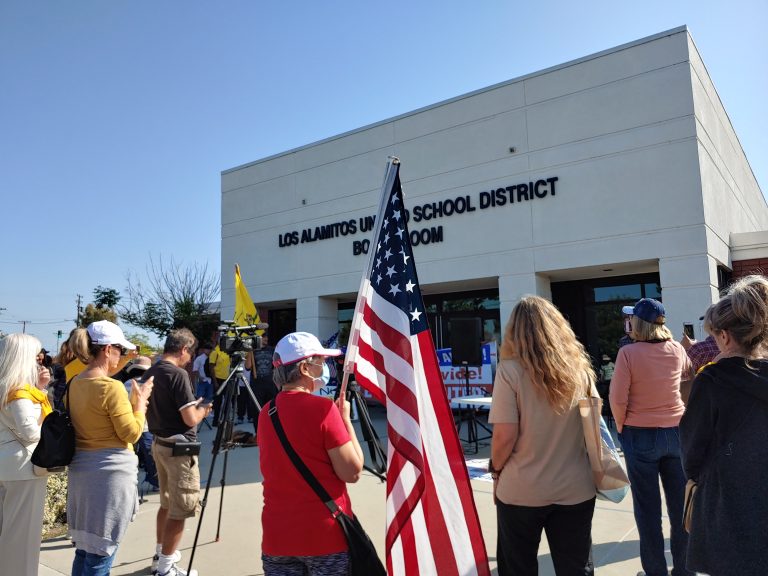
Following the Los Alamitos Unified School Board’s decision to adopt an elective course on ethnic studies, the county board had decided to hold two county-wide forums to “educate” residents on CRT.

During the year-long debate before adopting the elective ethnic studies course, LAUSD District Supt. Dr. Andrew Pulver and the district’s school board have repeatedly said they have no intention of teaching critical race theory.

RCSD Board President Dr. Jeffrey Barke, a former member of the LAUSD board, has been a strong and vocal opponent of LAUSD’s decision to implement an elective course on ethnic studies.

His wife Mari is an elected member of the Orange County Board of Education.

Ken Williams, Jr., OCBE President, acknowledged during the meeting that he had discussed the use of Rush Park auditorium with Ms. Barke, though he said neither that discussion nor the Los Alamitos Unified decision to implement an ethnic studies course had influenced the decision.

It had “absolutely nothing to do with our decision to go forward” with these special forums, claimed Williams.

“Why are we using this auditorium (Rush Park),” rhetorically asked Williams, because “the facilities at the Orange County Department of Education are limited to 200 and we anticipate 350 people” attending, he said, answering his own question.

Moreover, Williams, said Rush Park was an “incredible auditorium,” with a seating capacity of 500, which is “more than what we need.”

Also, Williams said Rush Park had the audio and video facilities required by the Brown Act and that the cost to the Orange County Department of Education, which provides audio and video support and livestreams county board meetings, “is nominal as compared to other private facilities which may be inappropriately and excessively expensive.”

Actually, the Rush Park facility does not yet have video facilities, but the OCDE has agreed to pay the same third-party video crew used by the RCSD district.

According to public documents, the proposed budget 2021-22 budget for OCDE is listed as $309 million.

According to Williams, the OCDE educational community forums are special board meetings that were approved by the county board to be held July 27 and Aug. 4.

He said there will be no regular business conducted and the meetings will “strictly be an educational forum composed of scholars from the academic and university level, as well as experts from the field of law.”

Nevertheless, once the testimony began, community residents said they suspected there was a whole other reason why the forums were being held in Rossmoor, one said she did not “trust” the Orange County Board of Education and many worried that the forums will create the same type of danger that existed near the end of the LAUSD debate.

Ladelle Clark, said “this is the first time ever that the (Orange County Board of Education) has come to Rossmoor to educate us.”

She said LAUSD “has been trying to educate people for the last six months. The problem is,” she said, “people don’t want to be educated. They want to be supported in the views they hold and that’s what’s happening at this event.”

“And if this (RCSD) board endorses this meeting, you have passively given your support to that against our local school district. I have a feeling that the cake is baked, but hopefully, I’m wrong.”

Another Rossmoor resident, Maria Swanson, said “the reason people don’t like politicians is because politicians don’t seem to care about what is best for the community. And in this case, it’s very clear that keeping the community safe is in the best interest,” she said.

Rossmoor resident Josh Spiller was incredulous. “I have to be honest. This is downright ridiculous,” he said. “Why is it the responsibility of RCSD (to hold these forums)? … Rossmoor has no control over the LAUSD.”

“This meeting will drive in the extremes from both sides of politics, left and right, and this meeting is a higher level of risk than any other meeting proposed for our little auditorium here in the RCSD,” said Spiller.

David Sachs, a Rossmoor resident since 1975, said Los Alamitos Unified “provides an excellent education” and explained that ethnic studies “is already a done deal.”

“I don’t see what authority any of you have to countermand that,” said Sachs, saying he thought education was indeed lacking inclusion relating to “the kind of people who came from so many different places to contribute to what this country has become.”

“I don’t see why students at the high school should be deprived of that element in the education of our history,” said Sachs.

“I don’t think there is any doubt that this meeting is going to attract very passionate people from both sides and violence is violence,” he said.

“It doesn’t matter what they say … the safety of this community is of paramount importance,” said Scott Miller, a 33-year resident of Rossmoor.

“A park is a place where children should be playing,” he said. “Rejecting this meeting is an appropriate course for public safety,” he added.

Rossmoor resident Brenda Gorman said she thought “it was never the intention” of community facilities like Rush Park “to be part of a large controversial event” like the one the county board was planning.

“This is not a meeting for Rossmoor,” she said.

Gorman suggested the event would threaten public safety and she asked if insurance would cover any damage to neighborhood homes or property, should it occur as a result of the meetings.

Conversely, there were others attending the hearing who expressed strong sentiment in support of the meeting, many of whom have been part of the ethnic studies opposition movement since it surfaced.

Harriett Reid of Long Beach said LAUSD had “failed to inform the community what Critical Race Theory is and what it means for their children. I think many have been deceived about the class and what it will entail.”

“They are not aware of the gender diversity, the gender spectrum and the different areas their children will be exposed to,” said Reid.

“A majority of parents were completely unaware of everything that was going on and I can’t think of a better place to have it (the meeting). I don’t know why people are afraid of information,” she said.

Robin Itzler, of Cypress, said she thought Rossmoor was a convenient location for the meeting, saying she wanted to hear the pros and cons of CRT.

“What’s better than hearing from a panel of experts,” Itzler suggested, turning to the audience saying, “nobody’s screaming, nobody’s fighting.” She asked RCSD to let the people listen then come to their own conclusions.

Maggie Marchese of Los Alamitos who said her first language is Spanish said she also supported the meeting, saying parents need to learn more about the social justice standards passed by LAUSD.

“Most parents do not understand what critical race theory is and how that is going to be incorporated through the social justice standards in K-12 in every subject,” said Marchese.

Rick Walter of Long Beach who acknowledged he attended the April 20 ethnic studies town hall said “we just think the public needs to know about what’s going on.”

He suggested that one-third of students from LAUSD come from Long Beach so “please have the meetings here,” he said.

Staci Muller of Seal Beach who has children attending LAUSD, agreed.

“I think it is important to have this meeting,” she said, adding “we need an explanation for what this means for our students.”

Marc Ang, a community organizer from Los Angeles, said there was no violence at the Los Al protest event and called the focus on emphasis on safety a bit “hyperbolic.” He said the proposed Orange County Board of Ed forum will only “enrich the community.”

Director Jeffrey Rips, who would later clash with Barke over the political intent of the meeting, asked Orange County Sheriff’s Department Captain Gary Knutson why security was enhanced for the RCSD special meeting last week.

“Our role is to provide for the safety and security of the members of the public … to express their viewpoints in a safe manner as possible,” said Knutson. Rips implied if RCSD needed beefed up security just to hold a hearing on whether to have the meeting, that an actual meeting could be much different.

Security issues around the proposed July 27 meeting dominated a major portion of the discussion.

Residents repeatedly expressed concern, given the fact that near the end of the process, LAUSD had to switch to online meetings after the Los Alamitos Police Department expressed concern for being able to keep the peace.

Director Nathan Searles, appearing from Indiana on Zoom, point blank asked Williams the rationale of having the physical meeting in Rossmoor and not simply on Zoom, since it was reportedly aimed at the entire population of Orange County.

“To have a meeting on Zoom,” said Williams, somehow diminishes the “impact of the information that has to be given,” he said. He suggested Zoom hinders the “ability to transmit educational ideas.”

“In person meetings are far more effective,” Williams told Searles.

“At the special educational forums that you have held in the last five years, how many have resulted in physical altercations, Director Mark Nitikman asked Williams?

“As far as physical altercations or injuries, none that I’m aware of,” said Williams.

Following an exhaustive review of potential security arrangements, Capt. Knutson said the OC Sheriff’s Office had 3,000 personnel and, if necessary, even with mutual aid, could provide sufficient security for July 27.

He noted, however, that while there are no known credible threats, the meeting was still a month away and there are no 100 percent guarantees.

Barke then made the motion to have the July 27 forum in Rossmoor, “with a request, not a requirement” for the county board to seek a different venue for the Aug. 4 meeting.

In addition, the motion includes an agreement to have OCDE pay for all additional security costs, videotaping and other related expenses related to the forum. In addition, OCBE is required to indemnify and insure the event.

During the debate on the motion, Rips said “we are here to make a decision on whether an event should happen here or not.  Whatever side you’re on is not necessarily important to this decision.”

“We are here to serve the betterment of Rossmoor community and Rossmoor citizens. It doesn’t go further than that,” said Rips, “and that for me is what I am thinking about.”

“So many people in our community are concerned about having this event here that it is almost irresponsible for us not to respond.”

Rips said “the fact that we’re promoting that we’re having a news media event to me is telling the world to come here and be a part of whatever is going to happen…I think optics are important and what I’m seeing the (count board of education) bringing a topic here against our local education. That’s not a partnership and it doesn’t feel right,” said Rips.

“I’m just doing here what I think is right for our community,” he added.

Then, the debate turned dour and political.

Rips told Barke he had “taken our community (Rossmoor), which is supposed to be about parks and trees and roadways, a nonpolitical environment and you chose to use your position for something that’s political. That’s totally outside the bounds of what we’re supposed to be doing,” he said.

“It is a conflict and you’re living that conflict,” Rips told Barke.

“Director Rips, you are incorrect,” said Barke, “this has nothing to do with politics for me.”

When Rips tried to interject, Barke said “I didn’t interrupt you. I understand you’re making a comment and I’m just telling you (Rips) you’re incorrect,” said Barke.

“We have a pro-life church that rents this auditorium every week. And if there were pro-choice people that came out and made a lot of noise and were upset about us allowing such an organization to rent the space, we wouldn’t want to be influenced by that,” said Barke.

“So, my concern is that that group which is the loudest thinks that that’s going to have the most influence and that’s not correct and that’s not right,” said Barke.

“And this is a very simple issue in my mind,” continued Barke.

“It has nothing to do with CRT. It has nothing to do with ethnic studies. This is a public auditorium that anybody can rent. And we have a duly elected Board of Education that represents the wide geography of Orange County. There’s five members of this board, and they voted, the majority voted to allow this educational forum to go forward,” he said.

Barke told the board to refuse to rent the auditorium would set a bad precedent for Rossmoor Community Services District.

“And if we make a precedent to say no, then the next group that comes in is going to be coming before the board as well, because now we will have set the precedent that if you don’t like a group…just simply come to the board, appeal the general manager’s decision,” he said.

“I don’t think that’s a good idea,” he said.

With that, Barke called the question. Barke, DeMarco and Nitikman voted to hold the meeting. Rips and Searles voted no.

The Orange County Board of Education’s community forum will be held July 27 at Rush Parkauditorium and potentially again, Aug. 4.

Barke’s motion was amended to provide for a review of the potential August rental of the facility at the next meeting of the RCSD.

Lexington Park in Cypress: Recreation or business enterprise?

By George Pardon

On May 24, the Cypress City Council held a workshop to discuss the possible funding sources that should be pursued to maintain Lexington Park which is the nearly completed park at the corner of Cerritos Ave and Lexington Dr. It was reported in the workshop that the City needs $350,000 each year to cover the maintenance costs for the park. The $350,000 is made up of two components: $223,000 for operations and $127,000 to fund a reserve for future replacement/rehabilitation costs. As such, the city needs to seek a significant amount of revenue for ‘at market’ uses.

It is evident from the chart shown during the workshop that a significant portion of the use is being programmed for Market Use. The City Manager describes the park as a ‘Brand new, first class, super well designed amenity in an area that doesn’t have amenities like that.’ The City Manager went on to say: ‘We live in a world where recreation users are willing to spend money in exchange for value.’ The City Manager did say that the community will have access to the walking path, exercise equipment, and the playground. It was also noted that the community could reserve the picnic pavilions for a fee.

Mayor Peat made the point that ‘We are building a really fantastic asset and that’s what we should be charging for.’ When the question was raised as to whether or not the City should charge for parking, Mayor Peat said: ‘We are building a pristine asset, charge them for the use of the asset, not the parking.’
While I know that AYSO was a strong supporter of this park having the two soccer fields, it was stated that AYSO will continue to play most of its games at Lexington Junior High. The City Manager indicated that the later hours (7pm to 10pm) at the new park are being allocated to Market Use, not because ACUAF shouldn’t be out there, but because ACUAF should be asleep. ACUAF is the Advisory Committee on Use of Athletic Facilities. ACUAF makes recommendations for the use of fields for the youth leagues. The City Manager went on to say: ‘We dream of a world where there is a professional or collegiate soccer or lacrosse team that is a regular presence during the weekday to practice or train.’

Council Member Morales pointed out that if his family wanted to reserve a field, he would have to pay for it. He made that point in case someone wanted to say that city tax dollars are supporting a for profit event. He said that we already do that. The point that he doesn’t make is that there is a big difference between use by Cypress residents and the use by entities outside our city. The implications on noise and traffic by programs that come from outside of our city will be significantly greater than any use by our residents especially since the Market use is at night.

The city indicated that it is unlikely that there will be enough funds to maintain this park from the park portion of the property taxes generated at such time that the race course property is developed. Council Member Marquez was the only one to ask this very important question: ‘Was there any planning before all this started to think about these costs?’ The response she received was that they have been thinking about these costs since day one. One has to wonder why the City Council would sign a contract to build a very expensive park without having a funding plan to maintain it. Is it wise to buy anything when you don’t know if you can afford to maintain it?
The City Manager stated that the General Fund loaned the funds to Recreation and Community Services to build Lexington Park in anticipation of the loan being repaid from park fees paid when the race course property is developed. The earlier point made during the workshop was to charge Market users for operating costs, not development costs. It is very doubtful that this park would have cost what it is costing had it been developed as a community park with more passive space rather a ‘Brand new, first class, super well designed amenity’ as described by the City Manager. It also probably wouldn’t have necessitated so much night time Market use which will clearly be disruptive to adjacent neighborhoods. As such, one can conclude that the incremental costs to build the amenities for Market use are included in the loan that the General Fund made to Recreation and Community Services. Therefore any park fees paid by residential developers will be used to pay off the loan. It is important to remember that any fees paid by a developer are included in the price of a new home which means that anyone purchasing a newly constructed home in Cypress will be paying the development costs of this park including the costs related to Market use.

Another point that wasn’t discussed is: What will happen if the developer of the race course provides a built out park when the residential area is constructed? The park fee that the city charges is when a developer doesn’t provide new park space for residential development. State law gives a developer the option of providing a built out park or paying the park fee. If a built out park is provided, there won’t be any funds available to repay the General Fund for the loan made to build Lexington Park. Who will pay off the loan if park fees aren’t paid by the developer?
With the construction of the park nearing completion, the lights have been put in place. These lights have been estimated to be about 80 feet tall. While clearly little consideration was given to the residents across Cerritos Ave, absolutely no consideration was given to the Senior Housing that is one of the planned uses of the property surrounding the park at such time that the race course closes.

Since the City doesn’t post links to their workshops, you will need to ask the City Clerk to send you a copy to download via Dropbox. The workshop is an hour and twenty minutes long. After listening to the workshop, you can decide for yourself if this is a community park or a business enterprise.

Note: George Pardon is the founder and Director the advocacy group Citizens for the Responsible Development of Cypress.

RWC awards LAHS students with scholarships

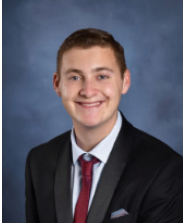
The Rossmoor Woman’s Club honored Los Alamitos High School seniors Feben Worku and Jacob Endelman as students of the month for May and June, respectively.

A senior at Los Alamitos High School, Feben Worku recently committed to attend the University of Southern California with a Marx and Rose Scholarship for Human Biology. She is excited to attend her dream school, and study her favorite subject in hopes of becoming a Physical Therapist or a Sport Medic for professional athletes. In school, she is involved in various activities and extracurriculars. She is the Senior Co-President of ASB, the Vice President of Giving Sport Apparel, and is on the varsity girls soccer team. She looks forward to receiving her education at USC, and will miss the friendships and bonds she has created at Los Al with all her friends, faculty, coaches, and teachers.

Jacob Endelman

Jacob Endelman has certainly made the most of his 4 years at Los Alamitos High School where he currently has a 4.8 GPA (4.3 cumulative). Jacob has been a member of the award winning Los Al Choir program and Model United Nations program for the past 4 years. He has taken 8 advanced placement courses and took one dual enrollment course through Orange Coast Community College. Jacob has earned his biliteracy seal in Spanish and 3 career honor cords through a combination of coursework and career exploration. He will also be awarded the Gold honor cords for his community service where he has completed over a 1000 hours of volunteer work. Jacob was selected by the Legion’s Post as the 2020 Boys State Delegate representing Mid-City. Jacob has developed a strong passion for politics and has worked on major local, state and national elections. campaigns. Jacob will be attending University of California, Irvine in the fall as a Political Sciesmajor.

He aspires to be an attorney before serving as a judge or politician.

Each student received a certificate and $600 scholarship award from the Rossmoor Woman’s Club.

BLM should change its slogan

Dear Editor,
Following the sentencing of former police officer Derek Chauvin, who was found guilty in the death of George Floyd while in police custody, Floyd’s brother Philonise said, “Not just black lives matter, but all lives matter.”
This means that all the Black Lives Matter signs should be immediately changed to state what many patriotic Americans have been saying since the Black Lives Matter/Antifa violence started: ALL LIVES MATTER! Therefore, all the restaurants that have “Black Lives” decals on their windows should take them down and replace them with “All Lives.”
Eleanor Howard
Los Alamitos

Response to Dr. Jeffrey Barke’s letter

Dear Editor,
I would like to respond to the letter published by former LAUSD school board president Dr. Jeff Barke. Dr. Barke served the Los Alamitos School District as a member of the school board for twelve years, an impressive feat and a position that garnishes a lot of trust. At first glance, Dr. Barke may seem like the right person for this discussion on the ethnic studies course. I’ll admit, I voted for him for his last term on the school board, however I didn’t understand Dr. Barke until recently and his ideology. So before we give too much weight to Dr. Barke, let’s take a further in depth look into his ideology and what he has to say on the matter.

Let’s start off with the material for the course. For some reason, I keep on seeing Dr. Christine Sleeter brought up yet I couldn’t immediately find anything about her. It took me a while to find any mention of her as the course outline and the reading materials for the ethnic studies course found on the school district website makes no mention of her. Eventually I found this mention of Dr. Sleeter in the form of a video recording of the LAUSD board meeting on February 9 of this year. I will say it was quite enlightening and the presentation was very well put together. In her presentation, Ondrea Reed outlines the most basic ideals for the ethnic studies course. At approximately minute thirty seven of the board meeting Ms. Reed says a shared quote from Dr. Sleeter and Dr. Miguel Zavala as the quote itself comes from their joint book Transformative Ethnic Studies in Schools: Curriculum, Pedagogy, & Research. The quote Ms. Reed uses is “dismantling hegemonic structures, such as racism, requires naming them, questioning their existence, and then envisioning and working towards alternatives”. Sletter is mentioned again a few minutes later in saying that “participation in ethnic studies courses is significantly and positively related to cognitive development”.

Again Sletter is quoted alongside Dr. Zavala in saying “ethnic studies seeks to rehumanize experiences, challenge problematic Eurocentric narratives, and build community solidarity across difference”. Dr. Barke claims that critical race theory makes up the framework for the ethnic studies course. If that is the case, then why is there no mention of critical race theory if it is such a fundamental concept to the course of ethnic studies? The reason is simple, it isn’t. These are just quotes of Dr. Sleeter. Nothing published by Dr. Sleeter will be used in the course as outlined by the course resources found on the school district’s website. As far as the collaboration between the California Department of Education and the Southern Poverty Law Center for the ethnic studies guidelines, I can’t find any evidence of this. If this collaboration did occur, how is there still no mention of critical race theory if it is so pivotal to the course?
Next we’ll go onto his dismissal of the curriculum. He begins by calling the effort to teach ethnic studies in its current format as “neo-Marxist”. This isn’t the first time that Dr. Sleeter has been referred to as a Marxist in this paper. Maybe I’m just missing it, but I can’t seem to find anywhere where Dr. Sleeter calls for the working class to throw off their shackles and seize the means of production by overthrowing the bourgeoisie.

Dr. Barke follows this up with a statement that a lens of the oppressors and the oppressed is anti-American. The only reason why I can think he would say this is because either Dr. Barke doesn’t believe in oppression in American history, he underplays the value of oppression in American history, or Dr. Barke is fully aware of this and chooses not to include oppression as it would not fit his patriotic viewpoint. We had slavery and fought a war over the institution of it. We created the Chinese Exclusion Act of 1882 which not only prohibited immigration from China, but prevented them from becoming US citizens. In World War II we forced Japanese citizens into internment camps after the bombing of Pearl Harbor. No matter which of the above options Dr. Barke adheres to, he adheres to a stance of ignorance, one that seems to be a running theme in his career.

Dr. Barke claims that “allowing students to determine what curriculum should be taught makes about as much sense as allowing a patient to determine what surgery should be performed…”. Dr. Barke is the type of doctor that when confronted with a patient concerned about being susceptible to coronavirus would give the patient a gun and tell them that’s their best protection. Yet it boggles the mind of Dr. Barke that the education system is failing its students in certain areas. In his statement about the decline in CAASPP scores, Dr. Barke cites the years 2016 and 2018 as years of failure in students’ understanding of math. This just also happens to be towards the tail end of Dr. Barke’s term on the LAUSD school board. The available data on the CAASP’s website only goes as far back as 2014, but it shows that math scores for LAHS have ranged from as low as 49% in 2014 to as high as 59% in 2016. These scores are still a failure and were overseen by school board member, Dr. Jeffery Barke.

Finally, at the end of his letter he brings forth the educational forum that will take place in Rush Park as to the topic of Critical Race Theory. He assures us that the community will be hearing from distinguished experts on the topic. Will we though? In his piece presented in last week’s paper, Dr. Barke says he addresses the facts, but the man lives in a world of fantasy. Dr. Barke seems to disregard experts and peer reviewed studies when it comes to establishing his ideology. He has ignored the scientific community when it comes to the existence of global warming as published by multiple news outlets in May 2011 when he led the charge in teaching the “controversy” on global warming and again he has ignored the scientific community when it comes to the coronavirus in his 2020 interview with Peggy Hall. Can the community be truly sure that this forum will deliver on the promise of experts, or will it end up as an echo tunnel for Dr. Barke and his cronies to repeat the falsehoods he has presented? Dr. Barke worries about critical race theory, but it seems the thing he should be worried about is critical thinking.
Billy Villegas
Los Alamitos


Rossmoor Woman’s Club donates blankets and quilts

Rossmoor Woman’s Club took part in the GFWC Blanket Challenge to help make 2,201 blankets. The General Federation of Women’s Clubs has a long history of providing handmade baby blankets and hats for the March of Dimes Mission Health Baby program. Rossmoor Woman’s Club was able to donate 27 blankets and 60 quilts from the skilled quilters of Heart 2 Heart Quilts to three area hospitals: MemorialCare Miller’s Long Beach, MemorialCare Fountain Valley and Fountain Valley Regional Hospital. They were all very excited to receive the donations and share with their NICU families.

Heart 2 Heart Quilts is located at Grace First Presbyterian Church in Long Beach. Through the gift of quilting, Heart 2 Heart Quilters are able to provide children in need with a warm blessing. Contact the church office at (562) 420-3393 for more information.

The RWC is a social and philanthropic organization that was founded in Rossmoor in 1958, but accepts members from all surrounding areas. For more information, visit the group’s website at www.rossmoorwomansclub.com.

Umberg veterans bill advances in the state assembly

Senator Thomas J. Umberg (D – Santa Ana) has announced that two of his measures impacting California veterans were approved by Assembly policy committees yesterday.

Senate Bill 665, which allows private employers to establish, and maintain, a written veteran’s preference employment policy and hiring program, passed out of the Assembly Labor and Employment committee by a vote of 7-0. In early June, Senate Bill 665 was also approved by the Senate 32-0 with bipartisan support.

“We have a moral obligation to treat our veterans with dignity because they are willing to make the ultimate sacrifice to defend our Constitution,” said Senator Umberg, a retired Colonel in the United States Army. “I would like to thank chairman, Assemblymember Ash Kalra and committee staff for working with us to make this piece of legislation stronger for our California veterans.”

Human resource professionals are constantly developing workplace policies in the best interest of employees and their employers. Assisting veterans to gain employment is an effective way for employers to practice voluntary hiring preference for honorably discharged veterans. According to the National Conference of State Legislatures, “a total of 39 states have enacted legislation allowing private employers to give preference to veterans in hiring, promotion and retention decisions. Of these, 15 states extend the preference to the spouse of a disabled veteran or to the surviving spouse of a deceased veteran.”

Similar efforts to create a Veterans Hiring Preference in California passed the State Assembly with bipartisan support [AB 1383 (2015), AB 160 (2016), & AB 353 (2017)]. Senate Bill 665 boasts a large coalition of support from organizations such as the American Legion-Department of California, California Association of County Veterans Service Officers, California State Commanders Veterans Council, Military Officers Association of America-California Council of Chapters, and the Vietnam Veterans of America-California State Council, Orange County Veterans & Military Families Collaborative, Orange County Black Chamber of Commerce, Veterans Legal Institute, Council of California Goodwill Industries, and many others.

“SB 665 honors and recognizes the sacrifices of our veterans. Transitioning from service to civilian workforce is not always easy. By offering a voluntary hiring preference for veterans to the private sector serves as a tool to help young men and women who served and assist in building a career.”

SB 498, which impacts legal services for veterans, was also approved on Consent by the Assembly Judiciary Committee. SB 498 expands the definition of “indigent person” to determine eligibility for free legal services by increasing one measure of income eligibility from 125% to 200% of the Federal Poverty Level (FPL) and by exempting veteran disability benefits from household income. Currently, an entire population of California veterans is excluded from free and low-income legal assistance as a result of their disability benefits.

Both SB 498 and SB 665 will next be heard in Assembly Military and Veterans Committee in the coming weeks. Organizations and veterans interested in supporting either measure are encouraged to contact Lisa Tran at Li*******@****ca.gov or 916-651-4034.

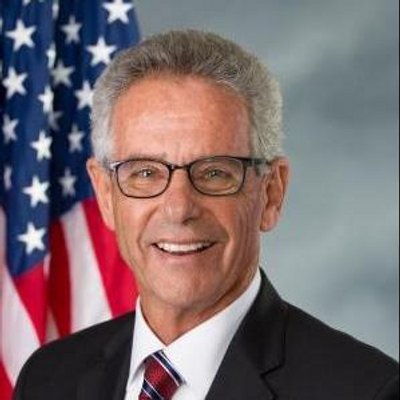
Lowenthal co-sponsor of legislation to protect seabirds

U.S. Congressman Alan Lowenthal (CA-47) and Congressman Brian Fitzpatrick (PA-01), today, joined by 20 House colleagues, introduced legislation to protect imperiled seabirds from international fishing threats while increasing ongoing seabird conservation efforts in the United States and abroad.

The Albatross and Petrel Conservation Act would implement the Agreement on the Conservation of Albatrosses and Petrels (ACAP), an international conservation agreement that has been signed by 13 member countries since 2001 and covers 31 species of albatrosses, petrels and shearwaters. Despite previous calls by President George W. Bush and President Barack Obama to ratify the agreement, the Senate has yet to vote on the agreement.

“This is a critical opportunity for the United States to resume its leadership role in international conservation efforts,” Congressman Lowenthal said. “It is vital that we implement the ACAP to encourage other nations to adopt strong conservation standards and also in order to take steps to ensure that foreign fishing vessels follow international conservation measures that protect endangered seabirds.”

Many albatross and petrel species are listed among the most threatened seabirds in the world because of habitat loss and fisheries bycatch (unwanted fish and other marine creatures caught during commercial fishing for a different species), but the U.S. has been a leader in reducing fisheries bycatch.

“Serving as good stewards of our environment and working to ensure endangered species can be protected and repopulated is something each of us are called to regardless of location, background or political ideology,” Congressman Fitzpatrick said. “This bill will help reduce habitat destruction, minimize marine debris, and slow the spread of invasive species. I’m proud to stand with my colleagues in support of this bipartisan legislation and urge others to join us in the defense of endangered species.”

The Albatross and Petrel Conservation Act ties together existing U.S. laws and statutes without substantially changing current laws in order to implement the international agreement.

The legislation would also authorize the U.S. Fish and Wildlife Service and the National Marine Fisheries Service to implement fisheries conservation measures, increase international fisheries enforcement, restore habitat, reduce non-native species, develop educational programs, and cooperate internationally on conservation efforts.

Congressman Alan Lowenthal represents the cities of Long Beach, Lakewood, Signal Hill, Avalon, Los Alamitos, Rossmoor, Cypress, Westminster, Garden Grove, Buena Park, Anaheim, Midway City and Stanton in California’s 47th Congressional District. He can be followed on Facebook, Twitter, or his website.

Breaking News: Cypress Mayor Pro-Tem resigns from council

Mayor Pro Tem Stacy Berry submitted a letter of resignation to the City Council on June 28, notifying the City Council that she will resign her position effective July 5, 2021 for personal reasons, according to a press release released June 30.

Berry was first elected to the City Council in November 2014 and re-elected in November 2018, her City Council colleagues selected her to serve as Mayor from December 2018 to December 2019.

“I would like to thank Mayor Pro Tem Berry for her years of dedicated service on behalf of Cypress,” said Mayor Jon Peat. “We wish her the best in her new endeavors.”

The Cypress City Council will discuss options to fill the vacant City Council seat at its July 12, 2021 meeting. The Cypress City Charter allows the City Council to appoint a replacement or hold a special election. The City Council must decide how to fill the seat within 60 days of it becoming vacant. In either case, the new Council Member will complete the term of office which ends in November 2022.

The Event News Enterprise will have a follow up story in next week’s edition.


Pandemic restrictions lifted, fireworks displays ready

City of Los Alamitos/City of Seal Beach

The free July 4 event, hosted by the cities of Los Alamitos & Seal Beach will feature live music on the main stage beginning with King Salmon Band followed by the 40th Infantry Division Band.  Food vendors will be available.  The event’s climax begins promptly at 9:00 p.m. with one of the best and longest fireworks displays in Southern California.

Gates will open at 4:00 p.m. via Lexington Drive off Katella Ave and Orangewood Avenue off Los Alamitos Blvd. No pedestrians, walk-ins, or bicycles will be allowed to enter the Joint Forces Training Base.  Reservations are required for all vehicles and can be made at https://losal4thofjulyfireworks.eventbrite.com. Only one ticket per vehicle is required.

Due to heightened security, please provide plenty of time and patience to enter and exit the base.  I.D. checks (over the age of 16) and a health screening is required for everyone in the vehicle. Please have I.D. out and accessible at entry.

Please note that alcohol, fireworks, BBQ’s, RV motor homes/trailers, and pets (except for service animals) are not allowed on the installation. Face coverings are required and participants are requested to stay inside, next to, or in front of their vehicle, only to leave to visit the food vendors and/or restroom units, and immediately returning to their vehicles.

Timeline for the 34th Annual 4th of July Fireworks Spectacular

  • 4:00pm Gates are open and event begins
  • 4:15pm King Salmon Band on the Main Stage
  • 6:15pm 40th Infantry Band on the Main Stage
  • 7:45pm Dignitary speeches
  • 8:00pm             40th Infantry Band resumes
  • 9:00pm Fireworks show begins
  • 9:30pm Event concludes


This event is free to anyone wishing to attend, with reservations, thanks to the generosity of our Premier Community Partner – Republic Services and or Rising Star Sponsors – Rossmoor Community Services District, Sea Air Federal Credit Union, Charles Abbott Associates, Inc., Financial Partners Credit Union, The Shops at Rossmoor, OC Breeze, and the Event-News Enterprise.

For additional information, contact the Los Alamitos Recreation and Community Services Department at (562) 430-1073 or visit www.cityoflosalamitos.org/recreation.


Cypress Salute to America

The City of Cypress is pleased to announce the Salute to America Celebration to be held at Cypress College. This patriotic celebration will feature food trucks, live music from Electric Vinyl, the ultimate rock tribute group, all leading up to a spectacular fireworks display.

City officials say that no registration will be required to attend. It will be festival seating – picnics, families, and lawn chairs are encouraged.

In addition, no motor homes will be allowed, no alcohol, no smoking, no dogs, no BBQs or fireworks.

Officials say state and county health safety guidelines will be followed. The Cypress Salute to America will be held Friday, July 2, from 5:30 until 9:30 p.m. at Cypress College, 9200 Valley View Street.

Event Timeline

5:30pm – Event area opens and food trucks available

7:00pm – Live Music provided by Electric Vinyl

9:00pm – Fireworks Display

About the band: Electric Vinyl perform a diverse repertoire of songs appealing to audiences of all ages. Electric Vinyl use their strong vocal power, melodic four-part harmonies and audience engaging showmanship to authentically recreate the concert experience of Aerosmith, Bon Jovi, Boston, Def Leppard, The Eagles, Fleetwood Mac, Foreigner, Journey, Led Zeppelin, Queen, Rush, Styx, Tom Petty, U2, Van Halen and many others.

A food truck vendor application is available on the city’s website.


Cypress adopts 2021-22 fiscal year budget

According to some, the city of Cypress remains in perhaps the best fiscal position of any of Orange County’s cities, and the budget adopted for 2021-22 this week reflects that growing strength.

And, according to Matt Burton, the city’s Director of Finance and Administration, the American Rescue Plan passed by Congress is a “once in a generation windfall” that will further allow the Council to further invest in the city’s infrastructure.

Burton told the Council this week that the city will apparently receive more than $11 million as part of the plan, approximately $2 million more than previously expected.

“You know this Act (of Congress) is a once in a generation windfall for Cypress,” said Burton, and “we’re in a position to wait and build a multi-year spending plan for these allocations.”

The $1.9 trillion stimulus plan was passed by Congress in March , providing a supplement to American workers, cities and towns to speed the economic recovery.

While the spending parameters (what the city can spend the money on) have not been finalized, Burton said the city can afford to wait it out and develop a plan to invest the money “to maximize long-term benefits to the community.”

Burton did note that all funds from the American Rescue Plan have to be spent by 2024.

Also, the Council approved its current fiscal year budget of $41.7 million, which includes a capital improvements plan of $4.2 million.

Burton said the current budget does not include any of the expected $11 million federal windfall, though other monies from earlier Congressional pandemic funding have been budgeted and spent according to the guidelines connected to them.

While Burton said it was too early to tell, he said the current budget could show a very slim deficit by the end of next year ($100,000), but he said there is a good chance the city’s annual revenue will more than exceed current expectations.

Nevertheless, he said the city is well prepared for the tiny shortfall should it occur.

Burton also presented updates on several other major funds managed by the city, including parks and recreation, among others, saying while the pandemic did have a negative effect on the city, it was “not nearly as severe” as expected.

He concluded his presentation showing long term charts and graphs that illustrated the city’s strong reserves and upward trends, though he said challenges do remain.

“Pensions are still our biggest challenge,” said Burton, “and they haven’t gone away.” He said Cypress will be dealing with CalPERS, the state’s pension investment agency, “for the foreseeable future.”

Burton said while things are very positive and headed in the right direction, Cypress has not totally recaptured the grandeur of revenue growth seen a few years ago.

“We are not back to where we were a few years ago,” he noted.

Following his presentation, several council members, including the mayor, thanked Burton for his financial leadership, as they also paid tribute to Burton’s staff discipline and that of earlier councils that has left the city in a strong financial position.

Because of this, said council member Anne Hertz, Cypress “is in one of the strongest fiscal positions in Orange County.”

In addition to approving the budget, the Council also passed a seven-year capital improvement investment plan of approximately $84 million, which includes the proposed expenditure of nearly $10 million in the next fiscal year alone.

Public Works Director Doug Dancs explained an overview of the detailed plan to the council that includes a vast array of infrastructure investments over the next seven years.

By constantly reinvesting in infrastructure, said Dancs, the city remains such an appealing place to live and work.

Dancs said the infrastructure improvements include such things as parks, recreation, streets and roads, public facilities, traffic improvements, sewer system enhancements, parkways and medians, storm drains, etc.

More detailed financials and investment plans are available for viewing on the city’s web site, they said.

Mayor Jon Peat announced that the council is working with staff to “reopen the city” as quickly as safely possible following the Gov. Gavin Newsom’s lifting of restrictions June 15.

Peat was also excited to announce that the city’s popular “Summer Concerts on the Green” would begin June 25, near the tennis courts at the Cypress Civic center, where they are traditionally held, complete with food trucks and a variety of other attractions.

According to the city’s website, the classic rock group “The Answer” will perform June 25 at the first of the summer concerts.

Also this week, citizens who live near the Christine P. Swain Elementary School in Cypress complained bitterly during the council’s open forum that proposed changes by the Cypress School District will decimate their home values.

Bob Youngsma, and another neighbor, asked the council to step into the fray and protect their neighborhood.

He said residents who live around Swain Elementary “are very upset with the city council and the (Cypress) School district. What they are doing is unacceptable,” he said.

The school district has embarked on a modernization program that, with other major changes, aims to turn Slain into a school bus maintenance facility, which Youngsma said will diminish their property value.

“You’ve got to get into this game,” he told the council. “This is going to get nasty.”

Youngsma said the property on which the school is located is permitted for a school site, “not a 30,000 square foot commercial building.”

Nevertheless, while City manager Peter Grant and city attorney Fred Galante briefly addressed the issue, Galante said the state of California grants wide latitude to school districts in such matters, though they agreed to look into it further.

Another caller, Anthony Folse, took council member Paulo Morales to task for his comments at a recent meeting rejecting the Pride flag in Cypress. “Last meeting, you said the LGTBQ community was already welcome in Cypress, how do you show we are welcome,” he asked? How are you offering help to those of us who are suffering? Comparing the community to Black Lives Matters was “beyond disrespectful,” he said. He thanked council member Frances Marquez for trying to have the month declared Pride Month and told Morales he should “apologize to the LGBTQ community.”

In other action, the council;

  • Thanked Marquez for requesting vaccination clinics in Cypress, saying three had already been held and another is scheduled for July 6 at the Los Alamitos Race Course. No appointments necessary.
  • Accepted the Arterial Rehabilitation, Project 258, in the amount of $735,697.86 and approved the final payment of $36,784.89 to All American Asphalt.
  • Accepted the Citywide Park Enhancements, Project 247, in the amount of $224,189.77 and approved the final payment of $11,209.49 to Speedy Fix, Inc.
  • Accepted the Residential Street Resurfacing Improvements, Project 286, in the amount of $114,202.86 and approve the final payment of $5,710.14 to All American Asphalt.

Rossmoor directors seek to “tone down” rhetoric with RHA

A discussion regarding the establishment of rate increases for use of Rossmoor’s various venues also provided an opportunity for directors to express concern over internal strife between Rossmoor’s leading entities.

While the Rossmoor Community Services District has some governmental powers over the unincorporated community of approximately 10,000 people, the Rossmoor Homeowners Association has a pipeline into every home and has an agenda of its own.

While directors did not say what the internal strife was about, the subject broke into the open during a discussion of pending rate increases and the potential for waiving some fees for nonprofits and organizations like RHA, which perform valuable services.

Director Mark Nitikman said whatever the board decides it is “I do not want retaliation” from RHA, saying he was concerned about the “rhetoric” between the two groups in the last few months.

“I wish we could tone it down a few notches,” he said, noting that the RCSD and RHA “needs to work together whenever possible.”

The issue emerged during a discussion of the pending rate increases and whether RHA could be given a “waiver” on some fees as it apparently has been given in the past.

General Manger Joe Mendoza said while there have been “handshake” deals in the past, there is no formal policy and “we need to treat everyone consistently.”

The RCSD is raising rates on tennis courts, venue rentals, etc., albeit slightly, and they discussed not having a formal policy regarding nonprofits, waivers and the like that request waivers from the fees.

“We don’t have standards,” said Board President Dr. Jeff Barke. “It seems only right to me to treat all these groups consistently, otherwise we will have groups coming to us saying why are you doing this for this group and not that group,” he said.

Board attorney Tarquin Preziosi said while the district charter does allow RCSD to waive fees on projects in which they have strategic partnerships, there is no such governance for crediting the work of nonprofits like RHA and allowing a waiver.

“Before authorizing any waivers, the board shall adopt a resolution that specifies the policies and procedures governing the waiver,” Tarquin recited from the Rossmoor governing code.

Nevertheless, there is nothing preventing the board from creating such a policy that would allow future waivers.

Director Nathan Searles, an attorney, said “I would like to move forward with the idea of creating that resolution to create such a policy.”

Searles said the RHA commits more than 4,000 hours per year in service to the community of Rossmoor “and I think it is completely justifiable that they [RHA] are saving $30 a month for a room we’re not using anyway.”

“There’s no concern that the district is not getting any value from them,” he added.

Moreover, he said the policy could easily be extended to any service group that provides value to the community.

“I don’t think it’s inappropriate at all that any service organization for this community would be able to get a waiver through applying in the same way,” said Searles.

Director Tony DeMarco said he had been there since 2005 and had worked with RHA on “all kinds of stuff.” Yet, he said “something has kind of changed in the past year and certainly lately, they haven’t been working with this board for the betterment of Rossmoor.”

He too suggested the two organizations tone down the rhetoric, especially on social media, saying “it is discouraging.  I’m reacting to a different attitude certain members of RHA have towards this board,” said DeMarco.

“They ask us for the favor, yet they put roadblocks in front of us,” he said. “If they want us to work with them, they have to work with us,” he said.

“So, what I’m hearing is right now, is that we don’t really have an option to enact waiver of fees so we’ll stick with the current fee schedule,” said Barke.

“Clearly, there’s a legal issue to navigate,” said Director Jeffrey Rips.

“I want us to do what’s right and what is right for our community.”

“And if it’s right to have some sort of waiver, whatever that looks like or fee reduction or something for RHA because that’s the right partnership for our community,” said Rips, “and they’re doing what’s right for Rossmore, I think we have to look [into it].”

Barke agreed to work offline with Mendoza, Preziosi and perhaps a couple of board members to develop recommendations on a policy and procedure for the granting of waivers.

The board also agreed at their June meeting to move forward with a modernization of the Rush Park Auditorium where the board meets.

Already, the new board has modernized the facility with an elevated wooden dais and other governmental trappings and has now authorized a technological modernization project valued at $41,000.

Mendoza told the board that Calvary Chapel, which rents the facility, had agreed to fund $16,000 of the cost.
The project will allow for better access by the public and for board members to be able to communicate with community members over Zoom, provide for project presentations with greater clarity and other modern tech improvements.

In other business, the RCSD this month:

  • Approved the new fee schedule, estimated to generate an additional $4500 per year.
  • Approved a three-year contract extension for West Coast Arborists for tree services, noting that the actual contract was not immediately available for signing.
  • Directed Mendoza to develop a database of all existing contracts and to advise the board well in advance of contract due dates. Searles asked for a policy where contracts are given a “first reading” before being approved at the next meeting.
  • Agreed to a one-year extension to the auditing contract of the accounting firm of Rogers, Anderson, Malody and Scott, LLC and will rebid the service next year.
  • Learned that despite COVID, the district had an annual surplus of $136,610.00 which will now go into the reserves.
  • Approved a budget of $1.9 million for the next fiscal year, with estimated expenses to be $1.8 million.

Rossmoor CSD refuses Los Al request for fireworks funding

The Rossmoor Community Services District has refused a request from the city of Los Alamitos to become a major sponsor of its upcoming Independence Day fireworks display, although they did agree to a much smaller amount to show interest in cooperation.

For more than three decades, the city of Los Alamitos has sponsored a professional fireworks festival on July 4, in conjunction with the Joint Forces Training Base, the city of Seal Beach and a host of community organization which ban together to produce the widely known event.

The event generally draws tens of thousands of spectators.

The issue came up again during the June meeting of the RCSD board this week as the board had apparently asked General Manager Joe Mendoza to investigate an earlier request from the city of Los Alamitos for a major sponsorship contribution.

“As you recall, last month,” Mendoza said, “the city of Los Alamitos’ acting recreation director asked the board to consider an $8,000 contribution towards the July 4 Fireworks spectacular.”

Mendoza then gave the report on a list of sponsorships and other particulars about the upcoming event.

“What do we get for eight grand?” RCSD board president Dr. Jeffrey Barke asked Mendoza.

Mendoza gave the board an overview of the entire sponsorship tier, benefits and suggested RSCD would receive signage, a sponsorship listing and stage participation for the major sponsorship.

“But it would seem to me that if they want us to be a partner, financially, that we should be a partner in the event, not just write them a check and one of us go up on stage and wave to the crowd or get a parking spot,” said Barke.

He suggested what Los Alamitos was offering was not a true partnership, like some events they have done with the Rossmoor Homeowners Association. “A true partnership…as opposed to just a bank account for them to offset their own expenses,” he said.

“The question is whether the citizens of Rossmoor would want us to just write a check for $8000,” wondered Barke?

For $8,000, Barke suggested RCSD could put up a stage, hire a band and facilitate an event of their own, though he did admit some Rossmoor residents will likely attend the JFTB fireworks show on the base.

“Although I do want to work with our cities when we can,” said Barke. “I think in the following year, they should come to us, way ahead of time.”

In addition, Barke told the board that if Los Alamitos “wants to really partner with us,” the city’s mayor should either “come see us” or “pick up the phone and try to work something out,” rather than an employee of the city making the ask.

“Perhaps next year,” said Barke, “the city of Los Al can approach RCSD in advance to work out a partnership on behalf of the citizens of Rossmoor. Until then,” he said, “I would hesitate for Rossmoor to write a check for $8,000.”

Director Mark Nitikman said he agreed with Barke, noting that there were many potential uses for the money ($8k) inside Rossmoor.

“I agree with you,” said Nitikman, “I think we can use that money for ourselves.”

Director Jeffrey Rips said while he also felt like Los Alamitos was “coming to us to help offset their deficit… I recommend we don’t go to zero.”

He suggested Rossmoor accept a “Rising Star” partnership for $1,000, so at least RCSD would have a booth and some representation at the event and a logo on the brochure.

“It keeps a little skin in the game,” said Rips, “and acts as some sort of olive branch.”

With a small sponsorship, said Rips, “at least optically, we’re still in partnership with them.”

Directors Nathan Searles and Tony DeMarco both said they agreed with the compromise plan.

Barke then made a motion to authorize the $1,000 partnership expenditure and expressed hopes that the partnership process would start earlier next year and perhaps then, work out a stronger financial relationship for the event.


Musical artist Gregg Young re-releases “Together”

As daily life continues to see more elements of normalcy, one thing is clear: we have persevered through these difficult times by understanding that we all are in this together.

Gregg Young, leader of award-winning Gregg Young & the 2nd Street Band, is set to release the third version of his song, “Together,” this time titled “Together (HK),” on the USA’s birthday July 4. “Together” is the song that started the phrase craze of “we are in this together!”

The first version was simple, with just Young singing and playing his acoustic guitar. It was released on November 4, 2016. He wrote “Together” as a positive and patriotic song, emphasizing peace, love, hope and happiness. It reminds us of our common humanity and asks us to kindly pause and reflect on what it means to “love thy neighbor.”

Young went back into the studio to record the second version called “Together (A).” It has a more robust sound, made up of Cajon, Upright bass, two female vocalists, as well as Young and his acoustic guitar. “Together (A)” was released on September 29, 2017 and was considered in two categories for a Grammy for Best American Roots Song and Best Roots Performance.

The third version, “Together (HK),” was recorded, mixed and mastered at Mambo Sound & Recording in Long Beach. A horn section and keys have been added.

For full details about Gregg Young & the 2nd Street Band, visit their website.

Gregg Young is a guitarist, singer, songwriter, and owner and founder of Shore Records. He is an ASCAP Composer Publisher, Grammy voting member and has been the Music Director at the iconic Dome Arclight Entertainment Center in Hollywood for over a decade, until the pandemic hit. He is a self-established top tier musician in today’s saturated music industry. Young also leads Gregg Young & the 2nd Street Band, the house band, at the Dome Arclight Entertainment Center. The Band has been nominated Best Jazz, Best Pop and Best Latin for the Hollywood Music in Media Awards. Most recently, they have been considered for Grammys for Best Americana/Folk/Acoustic Song and Best American Roots Performance. Gregg and the Band have many more Grammy considerations to their credit. In addition to these nominations and considerations, they have won Best Blues and Best Funk/Groove for the Hollywood Music in Media Awards, as well as Smooth Jazz Artist of the Year for the LA Music Awards. The Band currently has 379,433 spins on Pandora for their award-winning music.

Thoroughbred season begins at Los Alamitos Race Course

Three stakes – including a pair of graded races – highlight the 2021 Summer Thoroughbred Festival at Los Alamitos.

The seven-day season will begin Friday, June 25 and continue through Monday, July 5. Racing will be conducted Friday-Sunday the first week (June 25-27) and Friday-Monday (July 2-5) the final four days. Post time will be 1 p.m.

The final Saturday (July 3) of the meet will feature the Grade III, $150,000-guaranteed Los Alamitos Derby while the main event on closing day (Monday, July 5) is the Grade II, $200,000 Great Lady M. Stakes.

Captured a year ago by 7-1 shot Sneaking Out, the Great Lady M. is for fillies and mares – 3-year-olds & up – at 6 ½ furlongs.

Won by the Bob Baffert—trained Uncle Chuck in 2020, the Los Alamitos Derby for 3-year-olds will be contested at 1 1/8 miles.

The other stakes race to be offered during the meet is the $100,000 Bertrando for 3-year-olds & up bred or sired in California. The one-mile race will be run Saturday, June 26.

Grandstand admission is $3 and $2 for seniors 62 and older. Clubhouse admission is $5 and Vessels Club is $10. Tickets can also be purchased online at http://losalamitos.com/. Los Alamitos offers free general parking. Preferred parking is $5.

The wagering menu includes a pair of $1 Pick 4’s on races 2-5 and the final four races along with a $2 Pick Six as well as the popular Players’ Pick 5 – a 50-cent minimum bet with a reduced takeout rate of 14% rate – on the first five races.

The Pick Six will have the standard 70-30 split with 70% of the pool going to those tickets with six winners with the remaining 30% going to tickets with five of six winners.

There will also be a handicapping contest Sunday, July 4 and the Los Alamitos Racing Association will offer a cash prize and a pair of berths in the 2022 National Thoroughbred Racing Association Handicapping Championship in Las Vegas.

Cost to enter is $500. Of that amount, $100 will be placed in the contest prize pool with the remaining $400 going towards a live money wagering card.

Tournament races will include the entire card at Los Alamitos with permitted wagers including win, place, show, exactas, trifectas and daily doubles. Each entry must bet at least $50 on a minimum of five races that day, but there is no wagering limit.

The player with the highest bankroll at the end of the day will be declared the winner and the player with the second highest bankroll will be the runner-up.

The winner will receive 50% of the prize pool. The remaining payoffs: 20% (2nd place), 15% (3rd place), 7.5 % (4th place) and 7.5% (Most Money Wagered).

Entries for opening day of the Summer Thoroughbred Festival will be taken Tuesday, June 22.

Courtesy photo

Rossmoor presents Family Foodie Fest, Featuring music, sunshine and fun

Rossmoor is creating community and spirit coming out of the pandemic. If the success of Rossmoor’s past events is any indication of future success, then this year’s outstanding summer program is bound to be a hit!

“This year we are teaming with Elite Special Events for the first ever Family Foodie Festival at Rush Park,” announced General Manager Joe Mendoza. “We are bringing the top entertainment, gourmet food trucks and crafters in the OC to Rossmoor for an outstanding summer program that can’t be missed. Mark your calendars for June 19, July 11, August 14, and September 11, 2021, 2:00 p.m. to 8:00 p.m. Admission is free!”

Ted Holcomb, with Elite Special Events added, “We really wanted to bring our program to Rossmoor, because the Rossmoor Community Services District has a reputation for hosting events that are well run and well attended. You’re going to love the live bands, creative craft vendors, kid’s carnival area…Oh, and did I mention that we will have 10 of the top food trucks in the OC?!”

Presented by our title sponsor MemorialCare Miller Children’s & Women’s Hospital Long Beach, the Family Foodie Festival Headline Bands include: June 19 – Stone Soul, July 17 – King Salmon Band, August 14 – The Emperors, September 11 – Gregg Young Band. RCSD would also like to thank the following sponsors: Friday Night Lights

Attendees are encouraged to walk and ride bikes to the event. Bring picnic basket and blankets. For information call or text – 310-560-9122 in**@****************ts.com

Students should have no influence in curriculum

Dear Editor,

This is in response to “Ethnic Studies: From a student perspective” that was published Wednesday, June 16, 2021.

With all due respect to the various “students” that wrote their opinions, you have little wisdom, experience, or perspective on educational curriculum or pedagogy. After all, you are only 14 – 18 years old. Your opinions should not influence what curriculum you should be learning. In the 1960’s we allowed college students to overrun their colleges and demand changes to the curriculum. Chants such as “hey hey, ho ho, western civ has got to go” were heard at many colleges. Allowing students to determine what curriculum should be taught makes about as much sense as allowing a patient to determine what surgery should be performed or allowing a child to set their own bedtime.

Now let us address some facts. Despite what Superintendent Pulver or the Los Al School board claims, the approved ethnic studies elective at Los Alamitos High School is based on a framework of Critical Race Theory (CRT). To prove this, you simply need to look at the PowerPoint presentations that were presented to various community groups in bringing this course forward. One such slide is presented below. Many slides in this presentation showed that the material was coming from two primary sources:

  • Christine E. Sleeter, a far-left CRT activist
  • The Ethnic Studies Model Curriculum Guidelines from the CA Dept. of Ed, which worked with The Southern Poverty Law Center in creating the guidelines. The Southern Poverty Law Center is another far-left CRT supporting organization.

Other approved district wide initiatives are “social justice standards” and “culturally responsive instruction.”  Both efforts are neo-Marxist as they view our schools and curriculum through the lens of the oppressed and oppressors. This is anti-American and has no place in our schools.

To suggest that racism, sexism, xenophobia, homophobia, or transphobia is a significant issue in the LAUSD is simply a lie. One student writes: “…ethnic minorities within the district continue to experience racism and all manner of xenophobia on a daily basis.” Both my children attended Los Al schools, I served as an elected school board member for the Los Alamitos Unified School Board for 12 years, and I am very close to parents with school-age children that currently attend Los Al schools – this narrative is simply a lie that keeps getting repeated.

While there will always be some level of bigotry in our society, the Los Al Unified community including Seal Beach, Rossmoor, and Los Alamitos is a welcoming and inclusive community. To the extent that a rare student experiences bigotry, we should work hard to prevent this but not at the expense of dismantling an otherwise high-quality institution. Meanwhile, we are failing our kids in learning the basics. For example, the 2016 California Assessment of Student Performance and Progress (caaspp) scores show that 46% of Los Alamitos High School students were below grade level in math and in 2018, 42% were below grade level. This is simply unacceptable!

Regarding the educational forum on CRT scheduled for July 27 and August 24 at the Rush Park Auditorium in Rossmoor. This is one in a series of educational forums that the Orange County Board of Education has held over the years including forums on: Common Core, The CA Healthy Youth Act, and Reopening school guidelines during COVID-19. Unlike meetings and forums held by the Los Al School Board where decisions were being made on whether to approve curriculum, the County Board of Education forums are solely educational and will include a panel of bipartisan academic experts from various fields.

As President of the Rossmoor Community Services District, I welcome the educational forums and look forward to hearing from the distinguished experts.

Jeffrey I. Barke, M.D.

President, Rossmoor Community Services District


OCBE should be allowed to present information

Dear Editor,

There are two simultaneous issues that the West Orange County community is focused on:

  • Orange County Board of Education (OCBE) holding two critical race theory expert panel discussions at the conveniently located Rush Park Auditorium.
  • Teaching critical race theory (i.e., ethnic studies, social justice, and whatever other name liberals give the program, so they don’t have to call it critical race theory).

The United States of America is a melting pot of ethnicities and races. Who can argue with the benefits of having students better understand their neighbors who might have different customs and religions? It’s WHAT they are being taught under the guise of “ethnic studies” that concerns many people.

Is the critical race theory ethnic studies program teaching students that White people are bad and that America is a racist country? Why was the curriculum developed by anti-Christian, anti-Semitic, anti-America individuals and organizations (such as Southern Poverty Law Center)?

Let’s find out the answers to these and many other questions at the Orange County Board of Education critical race theory expert panel discussion! There will be time for people from both sides of the issue to ask questions.

With Independence Day around the corner, let’s reflect on the United States of America being the best nation on earth. America strives to be a perfect nation and diligently works hard to correct past mistakes. Almost every group (religion, race, gender, sexual orientation, etc.) intimately knows where America has failed, but that group also knows that America has apologized and corrected past mistakes. Why else do people from all over the world want to come to the United States?

Let’s welcome and attend the Orange County Board of Education critical race theory panel discussions and hear what the experts have to say about this important topic.

Sincerely,

Eleanor Howard

Los Alamitos