

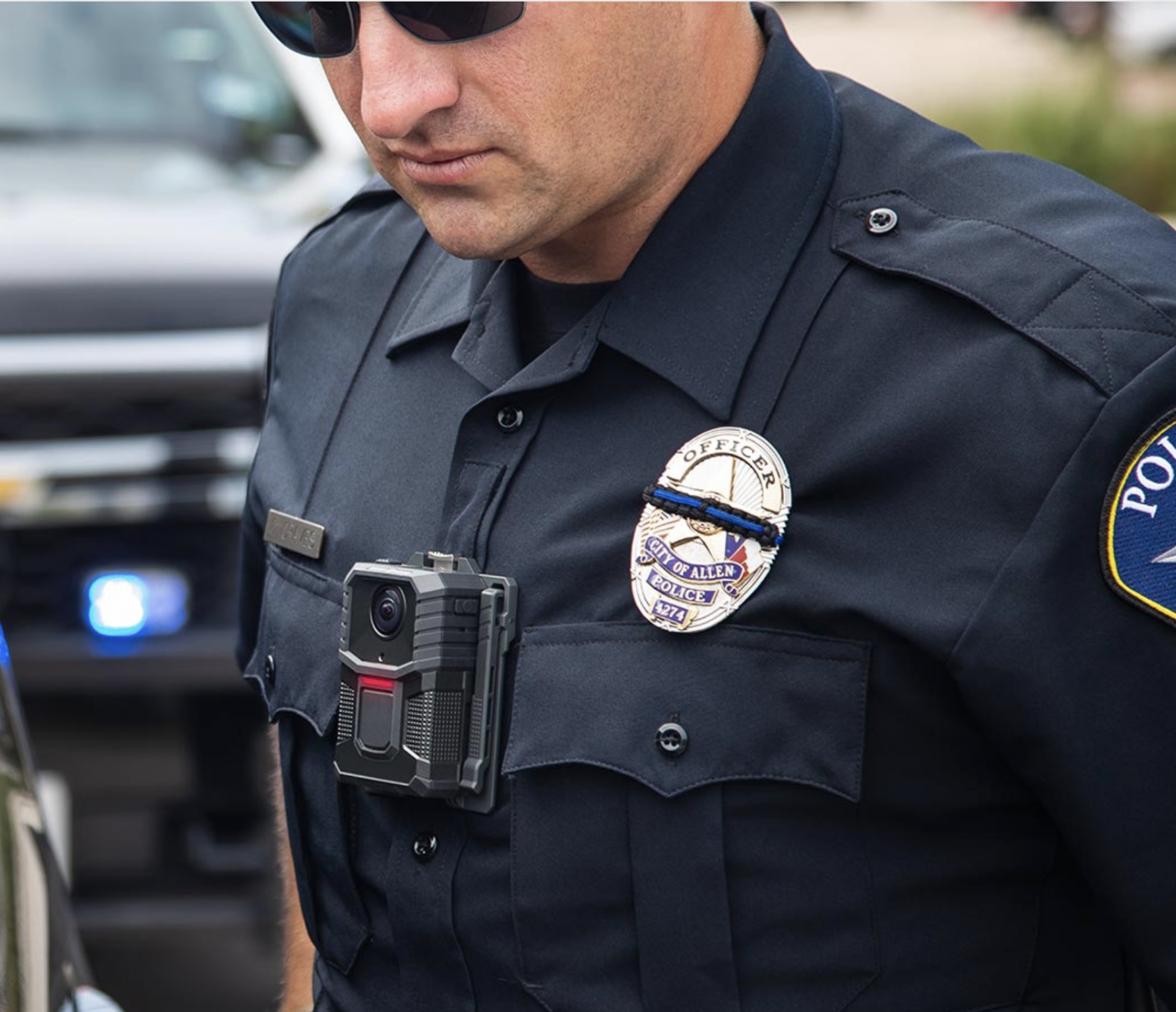
In an increasingly competitive market for new technology, the La Palma City Council voted unanimously to terminate its contract with the current provider after a spokesman for the city’s police department testified that officers are dissatisfied with their current provider.
Just last year, the city voted to spend $63,000 as part of a five-year deal worth approximately $300,000 with Lenslock, following a memo written by then-Chief of Police Ron Wilkerson and approved by then-City Manager Conal McNamara.
“The proposed system manufactured by Lenslock is an all-inclusive system that provides the Department with body-worn and in-car camera systems and includes all necessary hardware and components,” wrote Wilkerson in a June 4, 2004 memo to the Council.
Further, he said the system is supported by an evidence management system, which allows staff to easily manage and store all digital evidence entered into the system. The system also includes redaction software and case management features to allow for easy interaction with court discovery requests for digital evidence,” Wilkerson said in the memo.
“These features are web-based and can be accessed via a desktop computer, the Officer’s Mobile Data Computer (MDC), or from an app on a handheld device such as a cell phone or tablet,” it said.
The Council approved the recommendation and authorized the first payment of $63,442 on a five-year, $291,000 contract to Lenslock, records show.
Once in the field, the new technology was underwhelming, according to La Palma Police Captain Jesse Amend, who asked the Council to terminate the contract.
Amend said the department implemented the Lenslock system, which included body-worn cameras, in-car video, and other software and technology features that theoretically integrated the entire system.
Overall, Amend said the La Palma Police Department has been effectively utilizing body-worn cameras for the past two decades, but they’ve simply had too many issues with the new system.
“Our current vendor, Lenslock, has fallen short of our expectations in several critical areas that are either non-functional or significantly limited,” Amend told the Council.
“I’ll give you some examples of some of the issues that we’re having,” Amend said.
“So the body cameras have a new feature. Our expectation was that the officer could momentarily disarm the body camera (audio) if we’re talking about something confidential, such as tactics or things like that surface,” he told the Council.
When officers let go of the mute button, the Lenslock cameras stayed muted, said Amend, “which can be problematic.”
Another issue we’re having is the tagging of videos,” he said, explaining in detail the process of associating videos together in the field.
Amend said officers on the street were expecting to have an ability to have at least one minute to “capture critical incidents,” but once implemented the Lenslock system would allow only 30-second report capability with no options for more time.”
Amend went on to detail other problems, such as trying to use the system in the interview room. etc.
Mayor Pro-Tem Nitesh Patel asked Amend about the due diligence the department had done before recommending the system last year and whether they had done due diligence on Motorola’s “Watch Guard” system, which the department was requesting now to acquire.
”So to get here, I wanted to ask, did we not go out and actually, you did site visits on this one, and you’ve actually tested the equipment of the new the contractor you’re asking for, correct and previously, we didn’t do that with the other system, right? No. How come we didn’t do that,” he asked?
“I guess I could say as a management team at the time, I think we thought that we were doing our best at due diligence. We thought we were getting a good product. A lot of the things that we were told would be there just turned out not be there,” said Amend.
“I guess the sales pitch process, so definitely a valuable lesson we learned as a team and knowing the proper questions to ask and all the proper things to do,” he added.
With those lessons, Amend said the department has gone out to look at Motorola’s new system in depth before coming back to the Council. “We knew exactly what to do,” said Amend.
During the process of discovery of the “Watch Guard” product, Amend said police found out that it was the same product being used by a major OC agency that uses the same dispatch system as the city and records management system so they saw, first hand, how the Motorola product will work in La Palma.
“We got to see how all those systems integrate together,” he said, detailing the many advantages of the proposed new system.
In addition, Amend told the Council that overall, the new five-year agreement with Motorola will save the Council more than what was spent on the first year with Lenslock.
“This is a big win for the department,” said Amend.
Patel questioned Amend and the City Attorney Agit Thind about terminating the Lenslock contract, with both acknowledging there is a provision in the agreement allowing the city to terminate with owithout cause.
There will be no further payments due Lenslock upon cancellation, Patel was assured.
With that as a pretext, the Council approved 4-0 a new, five-year agreement with Motorola to provide the “Watch Guard” package of body-worn cameras, in-unit video and other features to the La Palma Police Department.
Council member Janet Keo Conklin was not present.
City officials said the five-year Motorola agreement of $232,796 is approximately $58,000 less than the now-canceled $291,208 Lenslock agreement.
Just to be sure, however, Patel wanted to make sure the Motorola agreement with the Police Department would include the same, with or without cause termination clause in their agreement.