

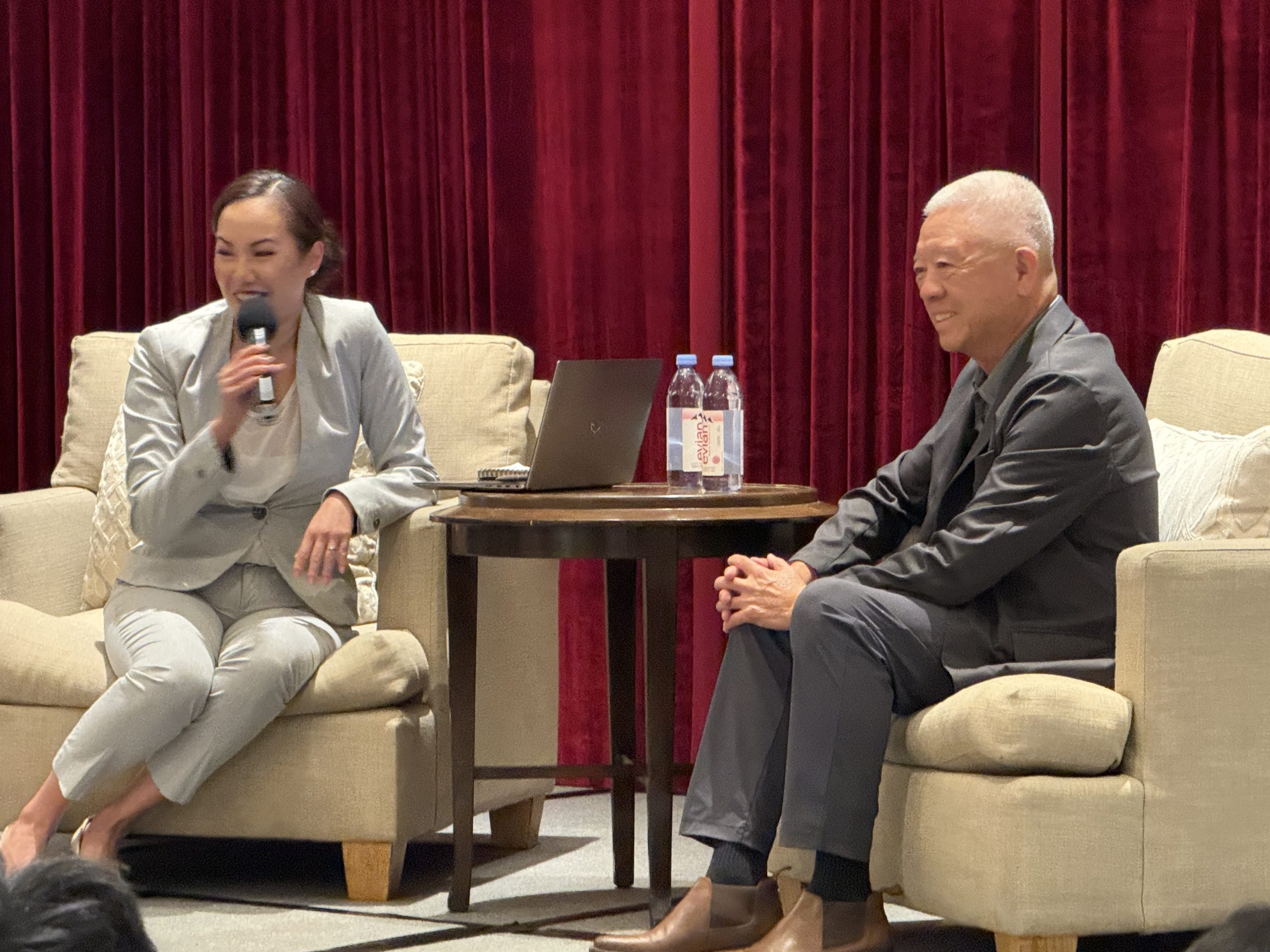
It’s not often that students get the chance to speak frankly with the builder of a billion-dollar business, but on Saturday near Anaheim, 100 scholarship recipients did just that.
Andrew Cherng, who co-founded Panda Express with his wife Peggy more than five decades ago, was in Orange County this week to speak to students and their families.
Philanthropist Kitty Lo, the founder of MHG (Manhattan Hotel Group) Charitable Foundation, said the group has provided hundreds of scholarships through the company’s work in India, Taiwan and the USA.
“We are humbly committed to supporting and guiding students,” she said, “and we have provided scholarships, mentorships and encouragement,” said Lo.
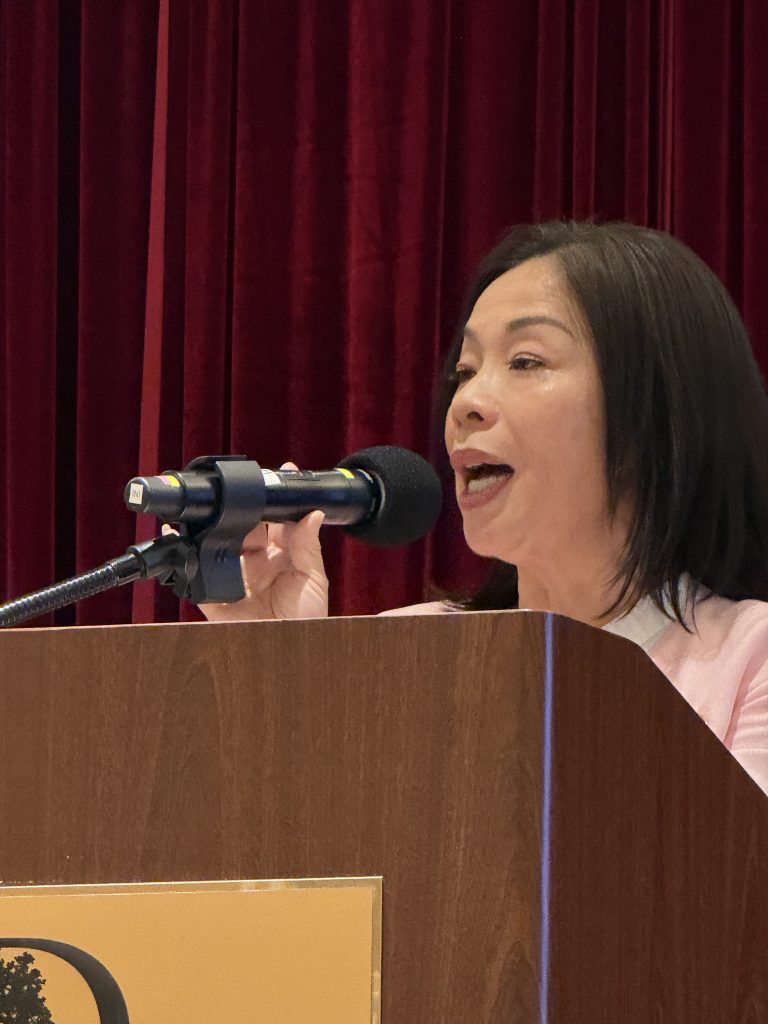
In addition to Cherng, the students heard noted molecular biologist Wen-Hwa Lee, Ph.D., whom Lo said was a four-time Nobel Prize nominee.
While exact amounts for each scholarship were not disclosed, the 100 student recipients were guaranteed awards ranging from $800 to $2,000, said George Chou, Director of the Foundation.
The students attended high schools from Orange and other counties, and are headed to various colleges and universities around the nation.
Lo said Cherng has been a mentor to her in life and in her charitable giving. Throughout the afternoon, it became clear that Cherng is a man unchanged by wealth, taking hard questions from students that always evoked frank answers that gently evolved into hard work, humility and giving back.
Following the more formal speeches and welcome, Cherng left the podium with a microphone and headed into the crowded room, as pre-selected students began asking him any question they wanted.
Cherng acknowledged his journey from “poverty to prosperity.” He told the students his own story. He speaks slowly, yet firmly.
He and Peggy remain Co-chairs, founders and CEOs of the Panda Restaurant Group, a company now with more than 2,600 restaurants nationwide and 60,000 associates (employees).
Cherng lauded the MHG Scholarships, saying he and Lo have worked well together as he explained his own company’s charitable giving.
Tina Hsing, Director of Panda Cares, explained that in 1999, the national restaurant chain began its practice of putting the donation box for loose change at the checkout counter, pledging 100 percent of the donations would go back into the community.
To their surprise, the chain raised $1 million in the first year, $3 million the second, $7 million the third, and by the pandemic, the company was raising $50 million annually for scholarships and community givebacks.
The charitable giving of MHG and Panda Cares underscored Cherng’s overall mission of cooperation and communication.
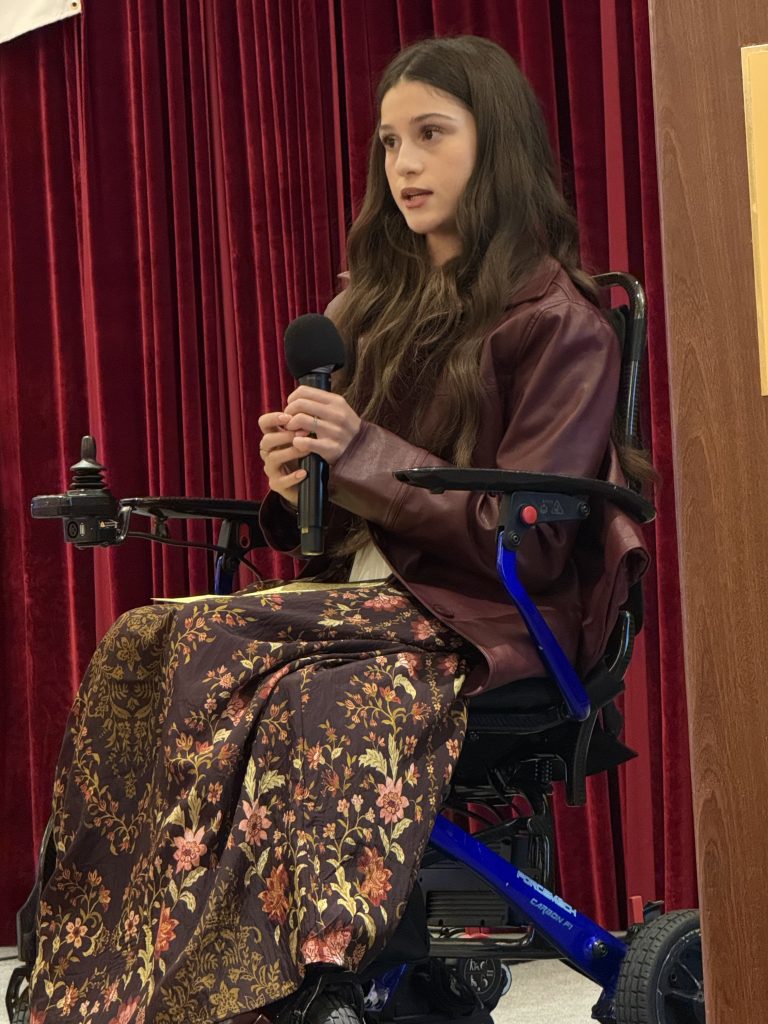
Photo by David N. Young
“Our people are willing to do this because they know where the money is going,” Cherng told the students. “When you have a purpose to do something and if that purpose is very clear in everybody’s mind, the work is done very easily,” he said.
More than that, Cherng said to focus on the multitude of small tasks everyone has in their lives and make them work smoothly and together.
“You want to do the small things exceptionally well,” he said, urging the students to “be mindful of the little things and keep the interest of others in mind.”
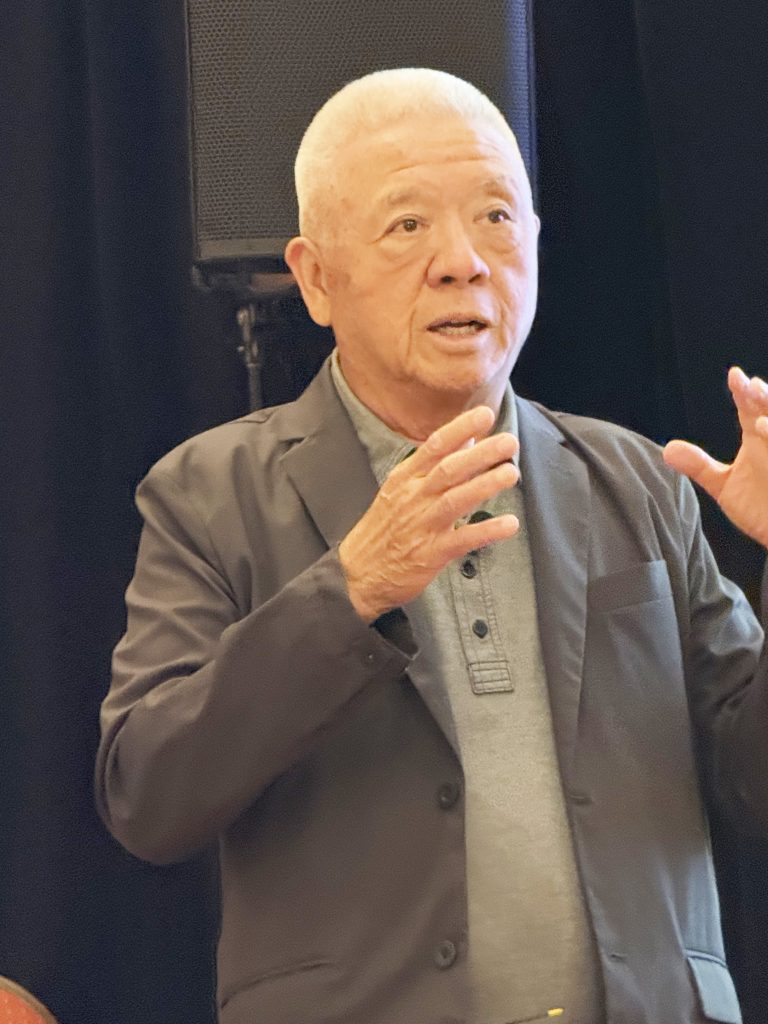
Photo by David N. Young
“You have to get things done through other people, so we must do things in such a way that others are more than happy to cooperate and because also, it is in their interest to work together,” he said.
“I mean it’s really great that you have the scholarship,” said Cherng, “but in life you actually can do a lot for yourselves,” suggesting that, where possible, students get part-time jobs to start saving for the future.
“We can all do better,” said Cherng to the students. “I feel we can help other people, even with the way of thinking that we’re all walking into some challenging situations,” he said.
It became clear that Cherng is proud of his own rags-to-riches story (he calls it poverty to prosperity). Born to modest means in China, he only managed to get his first bicycle as a gift from a cousin moving away, and from it learned a valuable life lesson that he shared with students.
I just started to ride it for hours. I was exhausted, but happy, happy, happy. So the idea of being able to get what you want, early on, became important to me,” said Cherng.
Several decades later, he and Peggy are worth north of $12 billion, according to Forbes, yet he still drives a Prius. He spends most of his time making sure his associates learn how to be good at the small stuff, make life easier for others.
He advised the incoming freshmen to get a part-time job, learn the value of money and to “never be afraid of money because the opportunity is plentiful.”
Cherng is a living lesson to the students that they too can have it all, and have it in such a beautiful way if they learn the system of prosperity that includes helping others. Sometimes, he said, “the impact of your own actions is not enough.”
“Sometimes in our store, when we all show up in a way to work well together, we have a much better chance of being successful. Maybe there is no chance we will fail. There’s no way I am going to fail because I will overcome what the challenge is.”
“It is not the idea itself, but those ideas must be well communicated with the people we work with, so the execution becomes easier,” he said. “I am helping people to see what’s possible so that they do well for themselves.”
“Some of you are doing really well, but you don’t participate,” he said. “We should do it together because collectively, we can make more of an impact,” said Cherng. “It takes all of us,” he said.
“When you treat people well, the good things tend to come to you,” he said.
“We are so blessed,” said Cherng, “and I would not want to live any place else.”
“Only in America,” he said, “only in America.”
“Every day I do what I can to learn what more I can do to participate,” said Cherng. “I’m not sitting here and waiting for other people to help me.”
“This is America,” he told them. “There is opportunity everywhere.”