

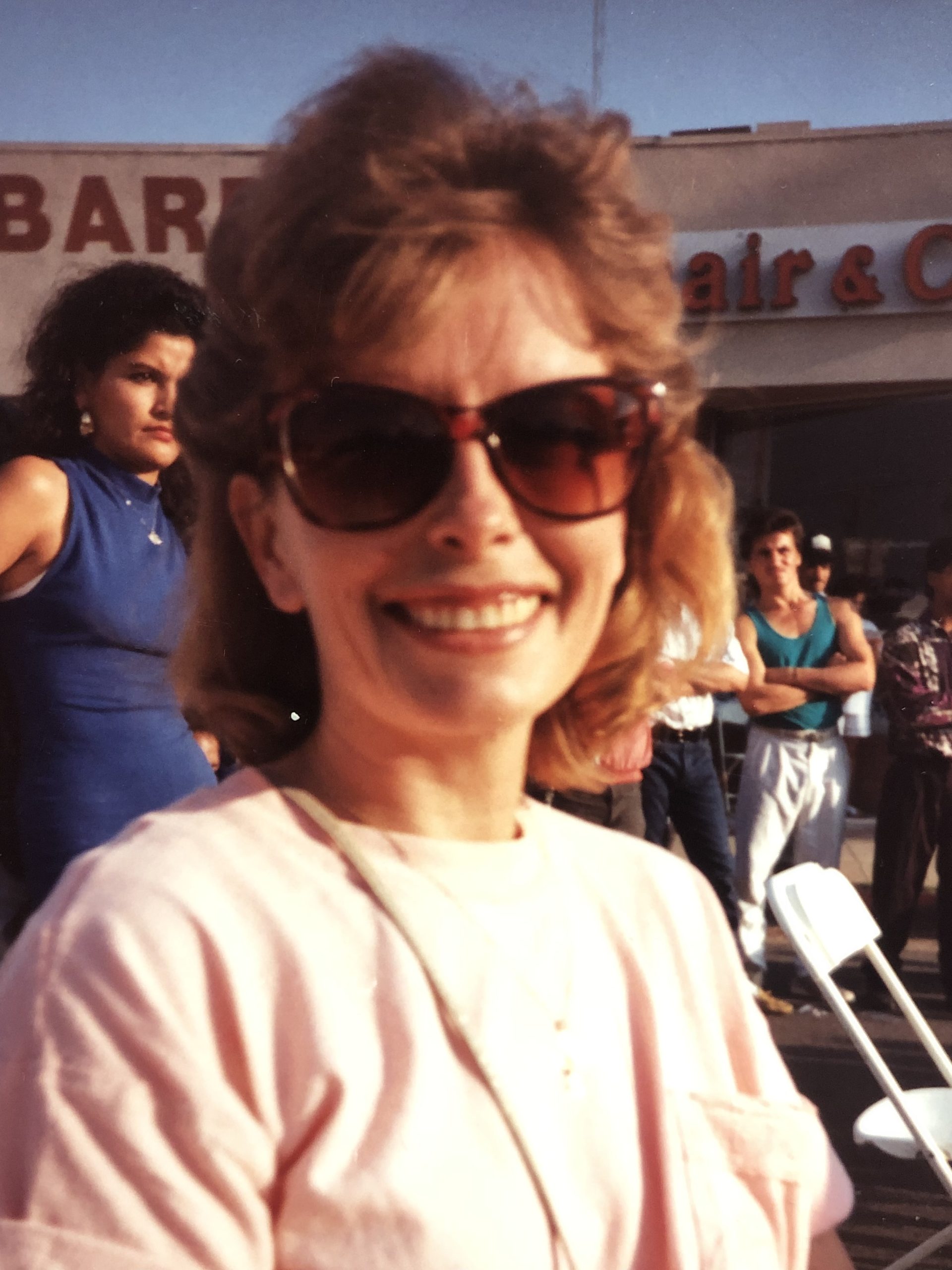
In past pages of this publication and elsewhere over the years I have celebrated the lives and honored the passing of many notable people. Most had already achieved notoriety on some local or world stage. Some were thrust into the limelight by their own acts of heroism. Some acclaimed for their artistic talents, others who distinguished themselves in public service, and even local community figures for a legacies of giving of their time and treasure to a cause. But heroes come in less obvious packages too. Sometimes the heroes among us cast a small but intense light that shines only for those immediatey around them.
These unrecognized heroes are around us every day performing heroic acts for which they rarely achieve public acclaim. Such a hero was Sharon Loveless who in her 74 years on this earth, over 30 of them in the Los Alamitos community of Carrier Row, loved and was loved as a day care giver first to her own grand children and their immediate friends, and then to a growing flock of neighborhood kids who’s parents had observed Sharon with her well managed brood on their daily marches to the candy store with sometimes 6 or 7 kids in tow. It was a well beaten path the whole neighborhood came out to greet and often stopped to chat with Sharon who became know as the “Mema” of Midway Drive.
But the life of this quiet hero extended far beyond her affinity for children and the adoration she earned from them. This universal attraction to her by generations of children had previously served her well as a counselor in field of detention ministry. Even as a degenerative spinal condition began to erode her career of 20 years in the dental field she sought other ways of serving, offering her loving touch as a volunteer counselor with the Religious Sisters of Charity, an order of Catholic nuns conducting one of the most difficult ministries of teaching bible studies to minors detained at the Los Padrinos Juvenile Hall in Downey. She served in this role alongside the sisters for almost a decade.
As her spinal condition worsened, restricting even her ability to drive a car, Sharon was determined to seek medical solutions that would keep her vital and able to serve others. She participated in an experimental pain management trial at one of UCI’s university based medical clinics in a new program utilizing Methadone in measured dosages to control pain. This ground breaking pain management study was successful enough to afford her a new lease on life. She poured her newfound energy into advocacy for the mysterious malady of the 1980s called Chronic Fatigue Syndrome, which traditional medicine was denying as real, but which she as one of millions who suffered in relentless chronic pain know, is as real as it is debilitating.
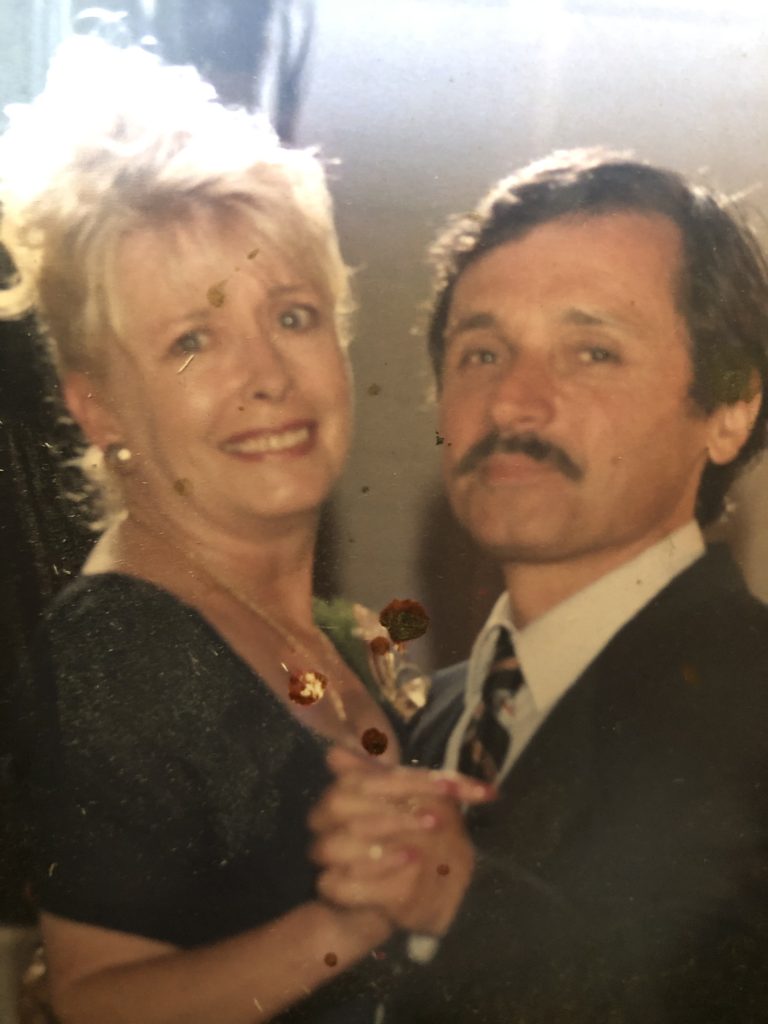
John Underwood and his wife Sharon enjoy a quiet moment on the dance floor during a community fundraiser. Sharon was a hero for many reasons.
Not willing to just sit back and let others carry the burden of proof to the medical boards and the insurance companies, Sharon accepted an offer to joined a contingency of UC doctors and scientists going to Washington D.C. testifying before Congress as to the validity of this syndrome and the need for treatment of chronic pain’s long term affects on the body, with Sharon offering her lived experience testimony of this crippling syndrome, and how she overcame it.
Ultimately their lobbying efforts were able to establish recognition of CFIDS as a chronic pain aggravated auto immune disorder, diagnosable, treatable and insurable under present day disease codes thanks to the compassionate physicians who championed the diagnosis and the fearless testimony of outspoken sufferers like Sharon who showed that quality of life could be restored with sustained pain management medication.
But Sharon’s quality of life would be placed in jeopardy and her very life challenged once again when in 2009 she was diagnosed with esophageal cancer and told only surgical intervention could save her. And again, only UCI and its Comprehensive Digestive Disease Center and its thoracic team of surgeons and followup specialists were equipped to address such an invasive procedure that would require almost all of her esophageal canal to be removed and replaced by the stomach itself, pulled up and attached to the remaining esophagus.
The procedure ( known as a gastric pull-through) would utilize a new form of laproscopic or robotic arm assisted surgery, and again Sharon was fearless in embracing the technology and the promise of yet another lease on life. The seven hour surgery and post-op made for a brutal and slow recovery, but the procedure itself was so successful that no further chemo or radiation were required. This come-back kid was back!
In subsequent years Sharon would need to return to the operating table for even newer and ever evolving adjustments to the new gastric replacement canal (the stomach pulled up) devised and modified by UCI’s Digestive Disease Center head Dr. Kenneth Chang, who told Sharon on many occasions that she is their “star patient” and valued participant in these essentially experimental procedures they were exploring in the field of post-esophagectomy care, outliving the average survival rate of most patients by decades.
As was Sharon’s impusle in all things, she began reaching out to others struggling with esophagectomy recovery, sharing unflinchingly her own post-op limitations and adjustments to such a radical surgical intervention. “My plumbing has no instruction manual,” she used to tell others in the support groups she frequented. “They are writing the manual as we go.” In all the years of her post-op struggles to adjust she was a treasure trove of tips and techniques to others in various support chatrooms on how to live without an esophagus. And occasionally to laugh about it. That’s just who she was.
I should know. I was her husband for 33 years. And childhood sweethearts years before that. Even then I called her “sunshine” because she brought her beautiful smile and a positive vibe into every room she entered even as a young girl which drew me and others immediatey to her. And she brought the irrepressible optimism behind that smile to every challenge life tossed at her.
That is the definition of a hero to me. Not an easy thing to pull off when life is serving up liberal doses of chronic pain, auto immune disease, and cancer. But that’s what heroes do. They take a bad situation and make the best of it. I am deeply grateful to have shared the best of Sharon, and all the rest of her challenged life. Her simple attitude of optimism was my North star that always led me back home to her smiling face, even in the midst of her suffering. I also know the world, and our increasing medical knowledge of it, is a better place for her courage to embrace its cutting edge and sometimes experimental breakthroughs.
But every a hero’s journey must come to an end sometime. That end came for Sharon on September 3, 2026 with a short and sudden pulmonary embolism that crashed her already compromised heart. A heart that gave and gave until it had no more to give. Still, even in death, Sharon is giving back to others in the form of her long established participation in the UCI Willed Body Program originally urged by her UCI surgeon Dr. Ninh Nguyen who says he is anxious to assess “what we obviously got right with patient Sharon.”
He will no doubt assess and learn from Sharon’s final act of giving over her body to research. He will note his technical handiwork that kept her alive for almost two decades after her surgery. But he will have no way to measure the most important factor in Sharon’s longevity, the value of a hero’s heart, that love for life that gave her the courage to look into the face of death, time and again, and smile.
My Sharon must be smiling now, pain free at last and probably already with one foot in heaven, no doubt. I’m just hoping she is looking back right now and holding the gates open for me with her other foot because she probably knows that’s the only way I will make it up there to be with her once again. That’s what a hero does.
Sharon Loveless
June 25, 1951-September3, 2026