
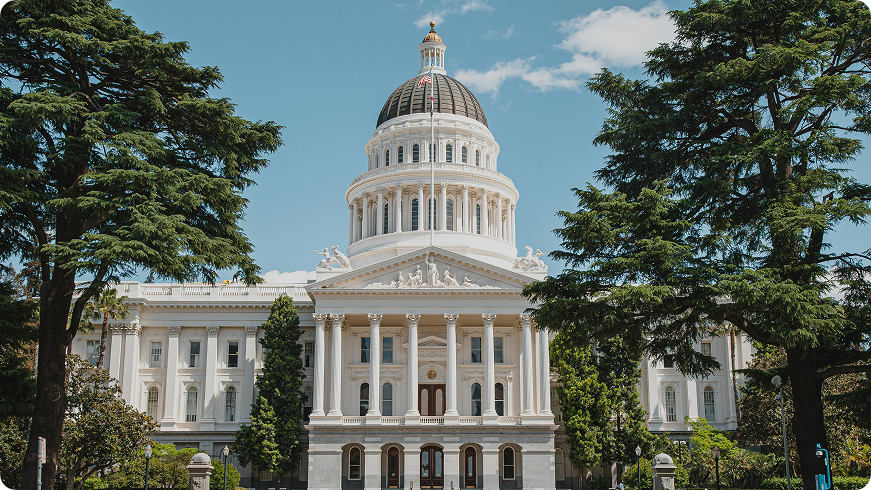
Just when you thought you had seen all the new laws for 2026 (or at least the important ones) coming at you across your various news platforms, from new laws regulating antisemitism in schools to new requirements on artificial intelligence (AI) companies, here are some more from state and local legislators you may not have caught first time around, but could have a real world impact in your life.
Now leading the nation in AI restrictions, the California legislators have gone beyond cyber safeguards and personal controls for users with AB 2013 requiring AI developers to disclose all the source data used to train their AI models. Giving working journalists and other content creators a window into how their own contributions to the information highway might be getting hijacked by AI. The idea here is that transparency should be the first step toward accountability.
AB 325 (Algorithm Pricing) amends our nations antitrust laws to stop “competitors” from colluding to use algorithms to coordinate and ultimately inflate pricing, essentially price fixing. Think AI assisted Real Page, a property management software now the subject of a number of antitrust lawsuits that have allowed the housing rental industry to collectively set the highest possible rents in a given market.
SB 243 the “Companion Chatbot Act” requires companies to clearly disclose when an interactive user is talking to an AI generated chatbot rather than a actual human. The notification must be “conspicuous, explicit and with frequent reminders” during the conversation.The law applies to any AI assisted entity offering services in California. Enforcement allows for anyone to sue for damages up to $1,000 and receive injunctive relief from receiving such future calls.
E-bike safety laws have been slowly expanding across the state as studies have shown time and again that E-bike accidents are increasing per capita faster than any other common form of transportation, with resulting injuries tending to be more sever than traditional bike accidents. New laws for 2026 include battery safeguards, speed restrictions, tailight requirements, helmut safety and parental responsibility.
SB 127 lays out stricter testing requirements for battery standards in an attempt to cut down on all too frequent incidences of battery combustion while operating or at rest. with clear labeling requiring batteries have been UL tested and are state labeling compliant emblams easily identified.
AB 544, parents or guardians be advised, you can be cited, fined, and required to attend safety education courses for E-bike violations committed by your kids, whether in the operating of the E-bike or in the modification of the vehicle.
AB 382, allows local jurisdictions to lower school zone speeds to 20 miles per hour in areas of high traffic area “where children are present” or by the use of flashing signage, and may extend for 500 feet.
I checked in with Los Alamitos Police Depaertment’s Public Information Officer Robert Acosta regarding enforcement these new laws and those created in 2025 under the City’s year old Electric conveyance & Education ordinance. Acosta told me 2025 was a predominently a year of education, and certification of E-bike users in collaboration with the school district. 2026 would be a year of enforcement. “In 2026 we are enforcing 100%. we went through a period of education and coordinated safety classes. Today we will stop kids on the street and we will issue citations.” As for citing the parents of errant E-bikers, Acosta would only say “we may get there.”
SB 720, another traffic related law going into effect in 2026, otherwise known as The Safer Streets Act, for the first time in California allows cities and counties to install automated red light cameras that identify a red light violator not by traditional facial recognition photoggraphy but by capturing a photo of the license plate and ultimately citing the owner of the vehicle. They are calling it an “administrative infraction” subject to a civil fine, capped at $100, with no DMV point consequences. The City of Los Alamitos, heavily invested in its red light cameras, say they have “no plans at this time” to switch or add these vehicle owner citations to their camera enforcement toolbox. But Long Beach, several South County cities and CalTrans have plans to do so.
AB 1777, finally, allows law enforcement to cite and make immediate contact with remote autonamous vehicle operators when their driverless cars are involved in an accident or go rogue on the road as we have seen of late. Effective July 1, 2026, beyond the ability to cite the remote owner operator of a driverless car for moving vehicle infractions, the manufacturer must provide in each vehicle “a two way voice communication device” connected to a remote human operator who can disable the car, allow on-site manual control of the car, or remotely take control of the errant driverless vehicle. In addition, the manufacturer must maintain continuous monitoring of every one of its driverless cars on the public roads and provide staff that can respond (within 30 seconds) to a first responder report of vehicle malfunction.
SB 634 overriddes local ordinances in California that seek to criminalize those who would render aid to the homeless. This bill, effective January 1, 2026, originally sought to decriminalize the “act” of being homeless in a public place in California. After much political pushback from local jurisdictions, it was reduced to making it illegal for cities and their law enforcement arm to prohibit ( often by ordinance) the rendering of aid to the unhoused on the streets and in public places by individuals, food assistance groups, social and religious outreach agencies, medical professionals, and other nonprofits seeking to assist the “basic survival needs” of the unhoused.
Moving from the roadways and the streets of California some new laws impacting the halls of local government and our courts are coming in 2026. Some of these laws are going into effect this year with little notice to the public, but could have a profoud impact in our lives.
SB 707 is a long needed upgrade to the original Ralph M. Brown Act which specifies that all meetings by legislative bodies (state to local jurisdictions) are open to the public. In the pre-tech 1950s when the act was created that mght have meant tie your horse to the hitching post, and find a chair in the public gallery until it was your turn at the microphone. But in today’s world of instant access via zoom and other remote platforms, this law recognizes advancements in technology should extend your right to be in the room without being in the room. Beginning July 1, 2026 all open public meetings of a government body in this state must include an opportunity for the public to attend public meetings via 2-way telephonc service or 2-way audio-visual platform, and that the legislative body conducting the meeting be required to properly notice the public how to participate in the meeting, including the live public comment period, remotely.
AB 246 became law on January 1 2026 out of a recognized and urgent need to protect particularly elderly folks who live on a fixed Social Security income in California who through no fault of their own, their monthly SS checks have been terminated, delayed, misplaced by administrative error, or by fraud has resulted in eviction action against them. Unlawful detainers under such circumstances can be suspended by the court until the SS recipient’s entitlement can be reinstated.
AB 416 adds another layer of professional eyes on the controversial practice of placing involuntary holds on an individual in so called “mental health crisis” into a psychiatric facility. The use of involuntary commitment and so called “5150 holds” on an individual appearing to be under a new definition of “unable to manage their own medical well being” are on the rise. The unhoused are particularly vulnerable to these involuntary holds. This law responds to that trend by requiring counties and cities to to include an emergency physician as one of the practicing disciplines authorized to cause a person to be taken into custody involuntarily.
SB 255 which became law on January 1 with a 1-year implementation phase, seeks to protect real estate assets from fraudulent title theft that can transfer your property into unscrupulous hands by the relatively simple act of someone recording a quitclaim, motgage or deed of trust transfer through the process of recordation with the county recorders office. Under SB 255 every California county is required to establish a county recorder program that will notify the current title holder by mail (within 30 days) if a mortgage modification or deed transfer has been recorded. It may be difficult for a title thief to prevail in the fraudulent transfer of your property ( if detected), but you’ll most likely need a lawyer to fight the fraudster,and in the meantime they may be able to use your property to secure a loan using your property as collaterol. Several counties, including Orange, are supposed to have courtesy policies of notifying a change in real estate documents. But I can tell you from personal experience in Orange County don’t count on it. This new law requires it.
And speaking of lawyers, finally, and none too soon, SB 37 became law on January 1 creating a legal recourse and right of action to enforce violations against misleading attorney advertisements, attorney solicitations, using false or deceptive words or phrases by a lawyer or a law firm as to their skills, experience or success rates. This bill allows, in addition to civil action, a provision for injunctive relief requiring that the false or deceptive advertisement be taken down within 72 hours of a court finding of violation. This law is a direct response to the prolforation of aggressive attotney advertisements netting large numbers of clients into multiple plaintiff or even class action siuts that largely benefit the lawfirms and their wall street backers. There might well be a lawyer for every complaint in California, but this bill at least may turn the dial down a bit on the rhetoric and the wild guarantees of recovery some of these lawyers engage in and are the biggest beneficiaries of. Its not the solution for lawyers Shakespeare had in mind. But it’s a start.
For a complete list of all 792 new laws passed for 2026 see the below official state website at: leginfo.legislature.ca.gov.