

By Emily Henderson
In the throes of a blistering summer’s day, where the air smells like the tranquilness of sage and the sharpness of wine, deep in the nature-filled valley, live “The Greats.”
These “greats,” are not unknowns. Hundreds of adoring fans endlessly wander the corridors and caverns of people who are trying all they can to be like one of Them. It is labyrinthian, messing with the senses to the point where one does not know their way from left and right. But then, a chime— the ringing of the bell. It is time to bear witness. The hundreds make the short pilgrimage to their seats, thankful for the cooling night, the stars lighting their way from the heavens. The stage is set, nestled in the lively green hills of Laguna Beach. Birds soar through the setting sun, wondering at the madness down below.
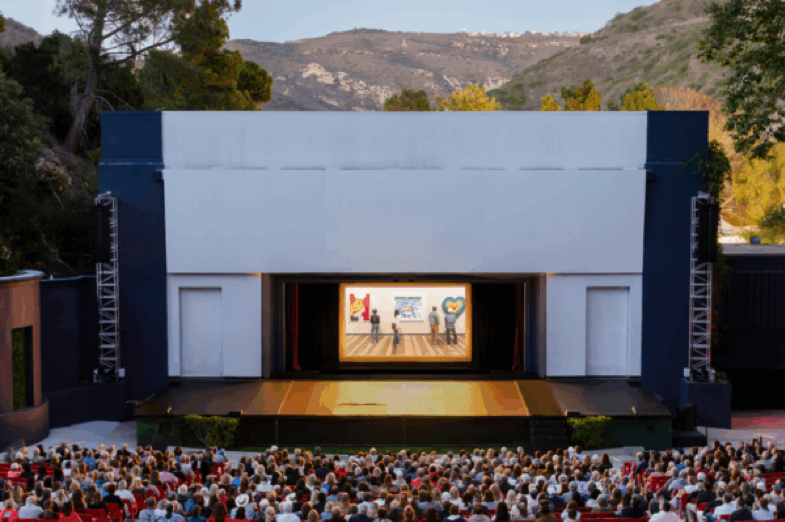
The Greats will soon present themselves. Showtime. The 2026 Pageant of the Masters is about to begin.
The Pageant of the Masters at the Festival of the Arts in Laguna Beach is an annual mixed-media celebration of the world of art. The theatre experience brings some of the works of the most recognizable artists in the world to life, using the real tricks of the theatre trade.
This year’s theme is entitled “Greatest of All Time” or “G.O.A.T;” a popular acronym used in youth culture. Director Diane Challis Davy and her team understood the challenge this quite expansive title can be to tackle. She explains that while it is an attention-getter, they are “taking the task of determining the greatest artists of all time quite seriously.”
She continues saying that their “goal is that the artists included in our program will be known to most people in our audience.”
Utilizing actors, precision costuming, and set pieces, along with intricate lighting and other theatre magic, the Greats come alive for the audience to see. These artists include: “Leonardo da Vinci, Vincent van Gogh, Pablo Picasso, Michelangelo, Claude Monet, Frida Kahlo, Rembrandt, Norman Rockwell, Winslow Homer, and John Singer Sargent,” along with many others.
While the show revolves around the strict content of actual artists and their actual work, the show makes the audience think about the abstract qualities that art reckons with on a daily basis. Namely, how commerce has dominated the way we view the “successful-ness” of art in the capitalistic society that controls the day to day. Namely, the cool, uncaring tone of Andy Warhol voices the idea that his art is more valuable due to how much it sold for at auction. The passionate Leonardo Di Vinci disagrees, saying that art is more about the feelings and ideas it insinuates within a person, or a society.
The audience is very clearly supposed to agree with Da Vinci. He is seen as the “true artist,” the romantic creator that understands his ideas can transcend through time and space. Warhol is seen as the “villian” of the narrative. The audience sees only a snippet of Warhol’s work towards the end, joking about how his version of “The Last Supper” is lesser, because of its blatant copying of Da Vinci’s famous painting. But, is there no merit in Warhol’s work? Did Warhol not shape the way modern art is seen? Is he not the father of pop art as we know it today?
Take his famous Campbell Soup paintings. The use of repetition with different color combinations encompasses the monotonous life of capitalism. The audience is used to seeing this household object day in and day out, yet Warhol changes the perception. He is encompassing these seemingly “nothing” objects into the world of art by making them art, blending the lines between reality and creation—thus revolutionizing the pop art movement.
There is… a lot wrong with Andy Warhol, I will be the first to admit it (Namely, the way he treated his “Superstars” at the Factory). But discrediting his art for the sake of a joke feels discouraging coming from a show and an institution that is trying to understand what the canon of great artists is.
Speaking of the canon, it is obviously hard to grasp all the greats that influenced art as it is known, in time, forever. That is an impossible feat, especially to put in a two hour show. There are the names everyone knows that they are expecting— Picasso, Renoir, Da Vinci, etc.— along with modern artists like Rockwell to Hockney. Yet, showcasing a canon always comes with its problems. All canons have problems, because society’s implicit bias comes out. Most of the artists shown are straight, white men— simple as that.
There are some notable exceptions, specifically with Mexican artist Frida Kahlo. But when she is the only woman presented not in a passing way (Picasso is seen with his many lovers and while they explain how those women had careers of their own, it is not expanded upon), it feels like she is “thrown” into the mix because the production “needed a woman,” to put it bluntly.
Picasso gets a giant “end of Act One” parade, where is Kahlo’s? Or where are any of the other women that changed art forever? Where is Georgia O’Keefe? Yayoi Kusama? Clementine Hunter? Men are not the only people changing art history. The Pageant should reflect that.
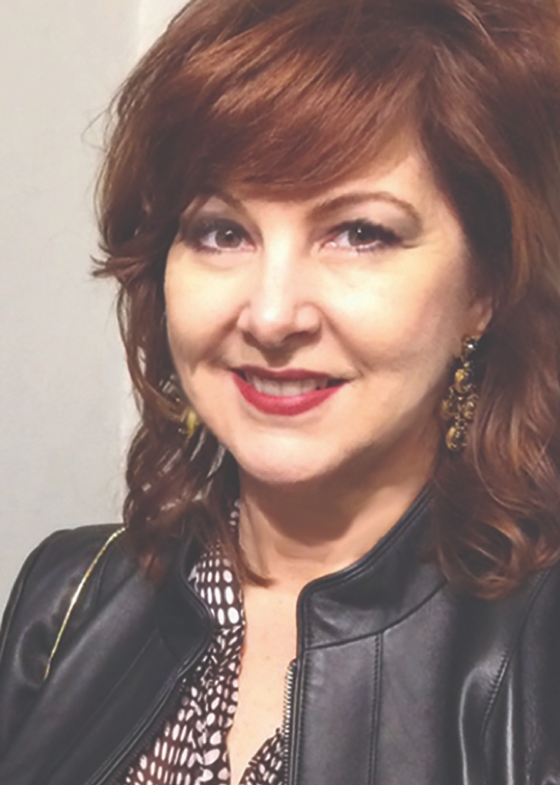
While the actual Pageant may not echo the contemporary ideas of women being forces of nature in the art world, the actual Festival does. Particularly, with artist Wendy Wirth.
Walking into the cacophony of exhibits, painters, sculptors, photographers and all artists alike congregate. A hub of creativity blooming from every corner. In the maze of wares, a dark yet inviting wall beckons an audience. The showcase is a deep brown, with dark wood accents everywhere. A small teak credenza sits next to the artist’s chair. A director’s chair, her own brought in, cushioned with a sleek cream design. But all of this just surrounds what is most important— the paintings.
Born in Ontario, Canada then trekked down to Cal State Fullerton for a Fine Arts degree, Wirth is an acrylic and oil painter, focusing mainly on the beautiful coasts of Southern California. She completed a “20-year career in illustration and graphic arts,” before moving onto the fine arts. Wirth is also the current Chapter Co-Chair of the California Art Club, and an Artist Member of Laguna Plein Arts Painters Association. She also is the President of the non-profit “The Artist’s Fund,” which “helps past or present festival exhibitors that experience financial hardship.”
Living just four miles away from where her current work is displayed in Laguna Hills, this is Wirth’s 15th year at the Festival, and she keeps coming back time and time again. “This is one of the best festivals in the United States. For artists, it is a rare opportunity to be up for that long— it is two months. It is really hard to get in,” she explains, a huge smile painted across her face. Wirth continues, saying that the best part of being in the Festival is seeing all her fellow artists and friends. “It is like summer camp.”
Wirth specializes in landscapes and scenery, specifically Laguna and Newport. The blues, greens, and natural splendor of the locations keep her imagination flowing— in miniature form. For her 15th year, Wirth decided ‘mini’ was the way to go. “I wanted to make my art accessible to anybody and everybody that enters my booth. The human experience can be tough. Art makes it better.”
Walking through the corridors, one will see the new age of artists, a wake-up call to a canon of time’s past. The next greats are already here. Vincent Van Gogh was under-appreciated in his time, but only now does he get the recognition he deserves. Who is being sidelined right now? Who are we forgetting in the canon in order to represent by-gone eras?
The Pageant is a great production each and every year, no doubt about it. But, if we are going to have conversations in place about who the “greats” are, it is time to move forward. One can understand how the past helps us, while also understanding the future is here and now. It is time for institutions like the Pageant of the Masters to wake up and smell the contemporary.