

He might be a little late for the Norman Rockwell era, yet the life of Dr. Robert A. Kaplan does indeed sound like a painting from a wonderful life.
And in a world sometimes full of gloomy news, this is a story of humble glory, reminding us all that, yes, the American Dream does still exist.
As a pediatrician for more than half a century, the physical and mental health of his patients is the testament of his life’s work.
Hard to imagine, but for 52 of America’s 250 years, he has made kids and their families feel better.
Even so, a khaki-dressed “Dr. Bob” bobblehead, a gift from an office mate, Dr. Vivi Tran, on his 80th birthday, is the highlight of his sparse Los Alamitos office.
“I’ve always loved kids,” he told ENE this week. “I’ve always enjoyed doing this kind of stuff and being around children. It’s been a very happy practice for me, and I retired at the right time.”
The baseball aficionado used a Willie Mays fable to explain that he knew it was time to go (Mays, he said, dropped the last fly ball before his retirement). “I wanted to go out catching the last fly ball,” he said.
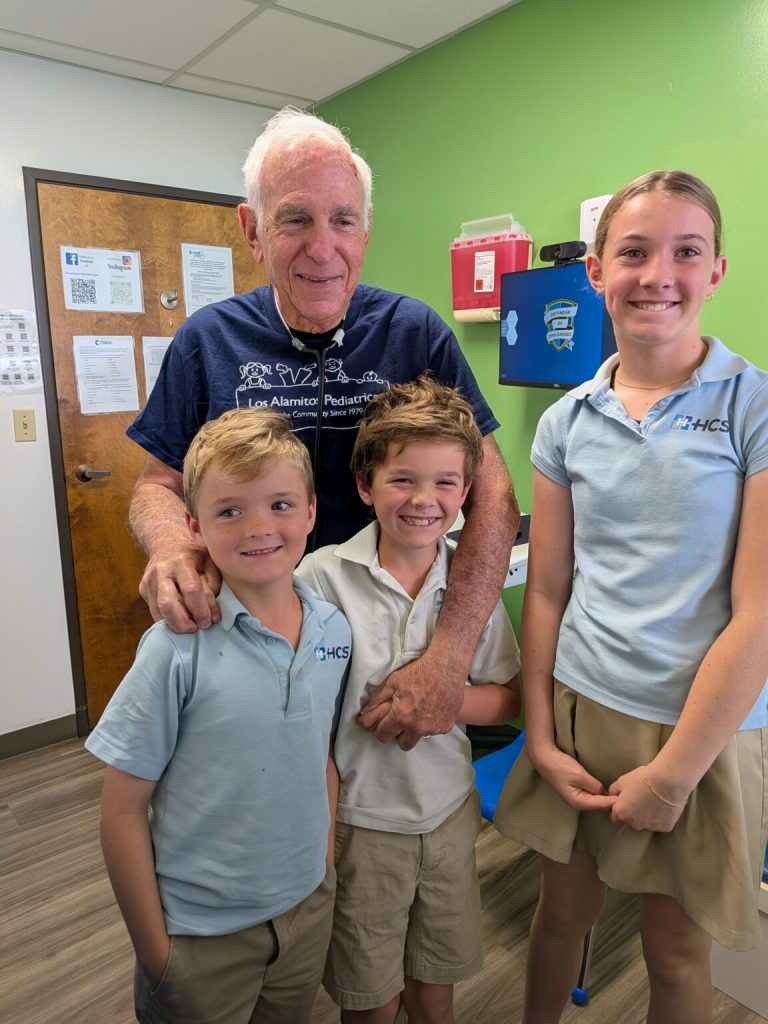
Dr. Bob, as old-school a doctor as you’ll ever meet, took his final at bat in May, with an office party and patient tours, and a sendoff with his large circle of colleagues, friends, and loved ones at a waterfront restaurant in Long Beach, his office said in a statement.
After treating kids, grandkids, and great-grandkids in over 40,000 local families, which experts say translates to about 100,000 patients during his career, but who’s counting?
“It feels embarrassing, heartwarming, and it feels rewarding,” he said, yet “it also feels like validation.”
Kaplan grew up in New York, attended Penn State University for his undergraduate degree, and graduated from NY Medical College in 1971. He completed his Pediatric Internship in New York.
In 1972, he and his wife, Ronni, moved to California, where he completed his Pediatric Residency at the University of California, Irvine. He became Board Certified in Pediatrics in 1976 and remained board certified throughout his career.
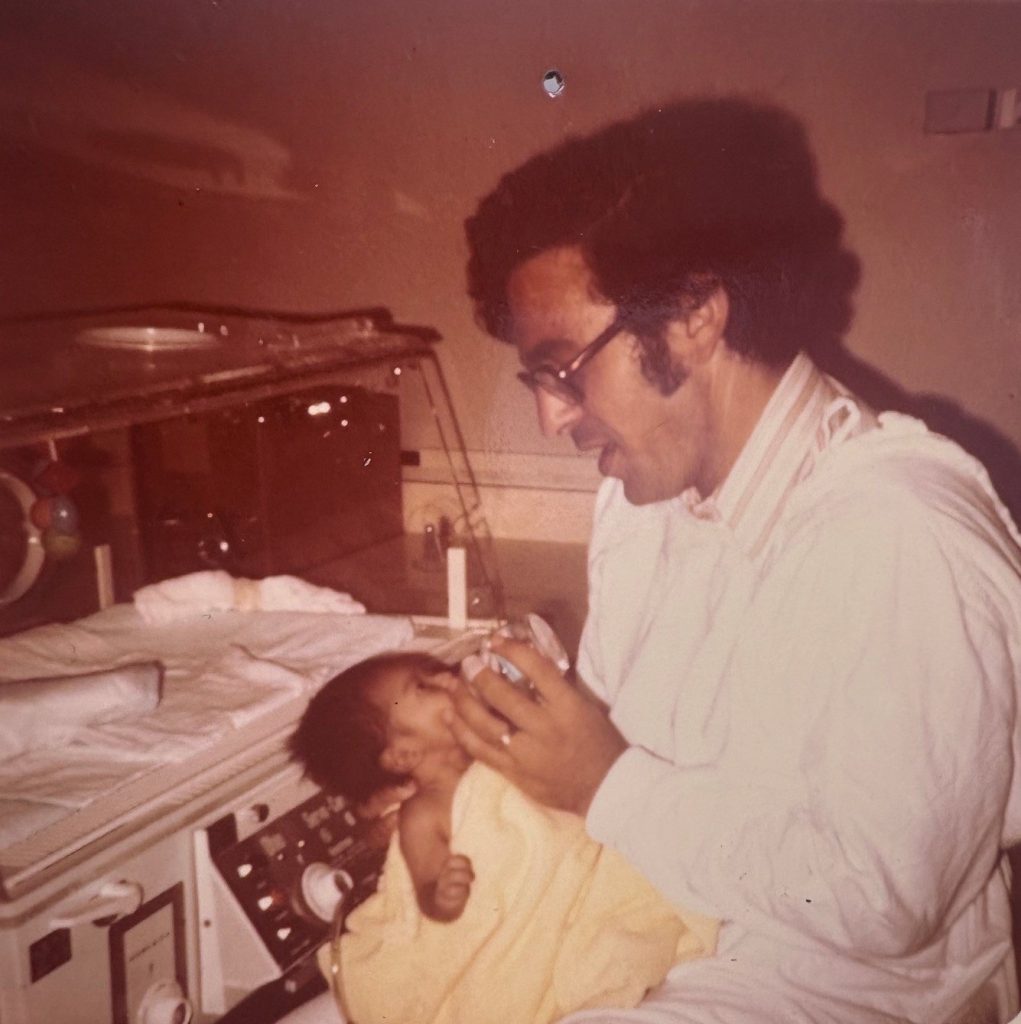
Kaplan and his long-time collaborator and friend, Dr. Joel Widelitz, founded their practice in Cerritos in 1979 and later moved to Los Alamitos in 1997. He served as a Clinical Professor of Pediatrics at the University of California, Irvine, and he taught medical students and Pediatric Residents both in his office and at Miller Children’s Hospital in Long Beach.
Back in the day, he said, running a private pediatrics practice was vastly different from what it is now.
“Those early years were incredibly nerve-racking and busy,” said Kaplan. “Besides seeing patients from all over, we had to find staff and make sure that they had our philosophy and work ethic,” Kaplan remembered.
“Our clinic was too far away from a hospital to send sick patients to without first stabilizing them. We needed to have supplies and a place to handle any emergency for any child,” he said.
“We had a room in the office dedicated to emergencies for critically ill children,” said Kaplan.
He said it was before many vaccines, “so we regularly diagnosed, tapped, started IVs, intubated, and treated children with meningitis, sepsis, and illnesses, and then would have one of our staff call the children’s hospitals to come pick up the child to be admitted to either CHOC or Miller’s Children’s Hospital.”
“I’m so thankful that we don’t see those illnesses anymore, all due to immunizations.”
“We were on staff at four hospitals caring for newborns, seeing consults throughout the area, and admitting sick children to Miller Children’s Hospital, where one of us visited them every single day.”
For Kaplan, however, it’s been a lifetime labor of love.
“I fell in love early with pediatrics,” he said, “and had a great teacher and mentor.” I have never second-guessed my career choice,” he added. “I guess I’m pretty lucky.”
Luck, it seems, belonged to the tens of thousands of children who received his care over the past half-century.
To his staff, his patients, and to other doctors, Kaplan has emerged as an excellent example of medical ethics and professionalism.
He remembers the thousands of success stories, including his groundbreaking treatment of a neurodivergent child, now 20 and enrolled in Cal State University.
Life and medicine have not always been sunny side up for Dr. Kaplan.
“I remember the parents brought in a four-month-old baby that looked pale, so we sent them to the hospital. He died that night,” says Kaplan. “We decided then and there that if a baby were that sick, we would begin treatment, start antibiotics, then send them to the hospital,” he said.
Also, he remembers a teen who died of a heroin overdose. “I still wonder what I could have done differently.”
It is, however, with that personal and individual concern for every patient that observers say Dr. Kaplan successfully treated more than 100,000 patients over his illustrious career.
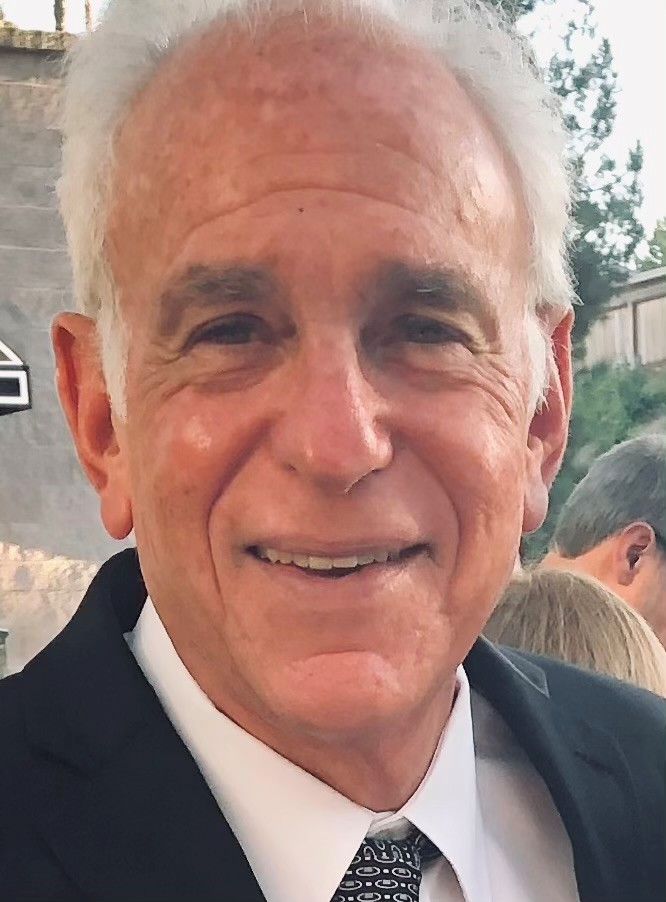
Kaplan became a pioneer in mental health and addiction treatment for kids and teens, two standard areas that yet remain in huge demand at pediatric healthcare systems today.
Other physicians have noticed.
“Bob has made a lasting impact through not just his work but also through the people like me that he’s guided, supported, and inspired,” says Dr. Andrea Kallah, a colleague in Dr. Kaplan’s clinic.
Another associate, Dr. Anjalee Galion, a pediatric neurologist, said it is obvious that the “mindset” of the community is within him.
“He came in with the mindset that he’s an extension of the community. That’s a deep core value for him,” she said. “He’s a very mission-oriented physician. For him, it’s not just about making money; he’s embedded in the fabric of Los Alamitos.”
Dr. Michael Weiss, VP of Population Health and the Clavis Foundation Chair for Wellness at RCH, said in a statement that he has known about Dr. Kaplan’s reputation for decades.
“Dr. Kaplan was a pioneer in mental health and addiction treatment for kids and teens – two areas that are standard at pediatric healthcare systems today. And he has mentored scores of residents,” said Weiss.
Kaplan has endured and overcome personal loss along the way. “I was shocked,” he said,” when his long-time partner, Dr. Widelitz died, somewhat unexpectedly, following a hospital procedure in 2012.
“His loss was emotionally and operationally difficult for me,” said Kaplan, admitting a low ebb during this period. “The staff was devastated, yet the office stayed open.”
He and Widelitz were best friends and shared the duties of running the office, said Kaplan. “Luckily, we were great friends, and we knew what each other did,” he said.
“I sought additional support,” said Kaplan, which landed him an affiliation with Children’s Hospital of Orange County (now Rady Children’s Health).
In addition to spending part of his residency at CHOC in 1972-74, Dr. Kaplan’s longtime practice, Los Alamitos Pediatric Medical Group, has since 2018 been part of the primary care network at CHOC.
Kaplan refused “buckets of money” to avoid a path taken by other firms, many of whom sold their practices to larger firms. The move allowed Dr. Kaplan’s office to remain open.
Thus began an association with CHOC that “has allowed me to continue practicing pediatrics the way I always wanted to, surrounded by people who truly care about children and families,” said Kaplan.
Kaplan’s longevity has been matched by the loyalty of his dedicated staff.
“I was a little intimidated by him at first,” says Registered Nurse Laurie Moffitt. She has worked with Dr. Kaplan for more than 35 years.
“I learned so much from him that impacted me as a nurse and as a mom. Even after all these years, he still manages to teach me something new. He is one-of-a-kind and irreplaceable, and he will truly be missed,” said Moffitt.
Traci Aaron, a Cerritos native whose parents took her to see Dr. Kaplan, said she had a rough time saying goodbye to him at her recent appointment. Now, it seems, the pediatrician is taking care of her three children, two boys and a girl.
“I remember him being so easy to talk to when I was a child; he’s so kind, caring, and attentive,” she said. “And I love the way he speaks to my kids. He’ll ask my boys, ‘Are you having big poops?’ They think he is hilarious.”
Kaplan said his long career has taught him that, in many cases, a pediatrician treats the parent as much as the kids.
“A lot of what I did is more taking care of the parent than the kids,” he said. “I mean, you have to be able to listen to children, listen to the parents, believe them,” he said.
Vaccines have eliminated most of the diseases that he once discussed with parents, said Kaplan, and now issues most faced by pediatricians are psychosocial issues and the behavioral stuff,” said Kaplan.
“That is much more difficult,” he adds, “as you can imagine.”
Kaplan, now 81, bemoaned the loss of traditions long gone, like paper charts, when you could write stuff down. “Now,” he said, “it is all automated. It takes a long time to do a chart when it’s electronic, rather than just writing things down,” said Dr. Kaplan.
He admits, however, that technology has been a two-way street. “As a doctor, there have been some great technological changes as well. We have better dictation systems, some with artificial intelligence in them, which made my notes a lot better,” he said.
“Once the door is closed,” he said, “technology is not that important,” he said. “It can be helpful.”
A pediatrician’s office, said Kaplan, was almost like a confession booth. “Good people tell you stuff that they would normally not tell you, which is very nice,” he said.
His parents’ stories are hilarious, even though the kids he treated now have kids, even grandkids, and a few great-grandkids of their own.
“I would have to tell some parents, ‘your child is my patient, not you, so you have to quit picking on them and yelling at them to eat their vegetables and don’t make them eat fruit,’” he says.
“They’re going to grow,” he remembers telling many of them.
“You have to learn to pick your battles,” said Kaplan, “understanding full well in your heart that you’re not going to win every one of them, and that’s fine with me.”
Kaplan and his wife Ronni have lived in Rossmoor, College Park East, and now reside in Cypress. His wife is a retired special education teacher from the Long Beach School District.
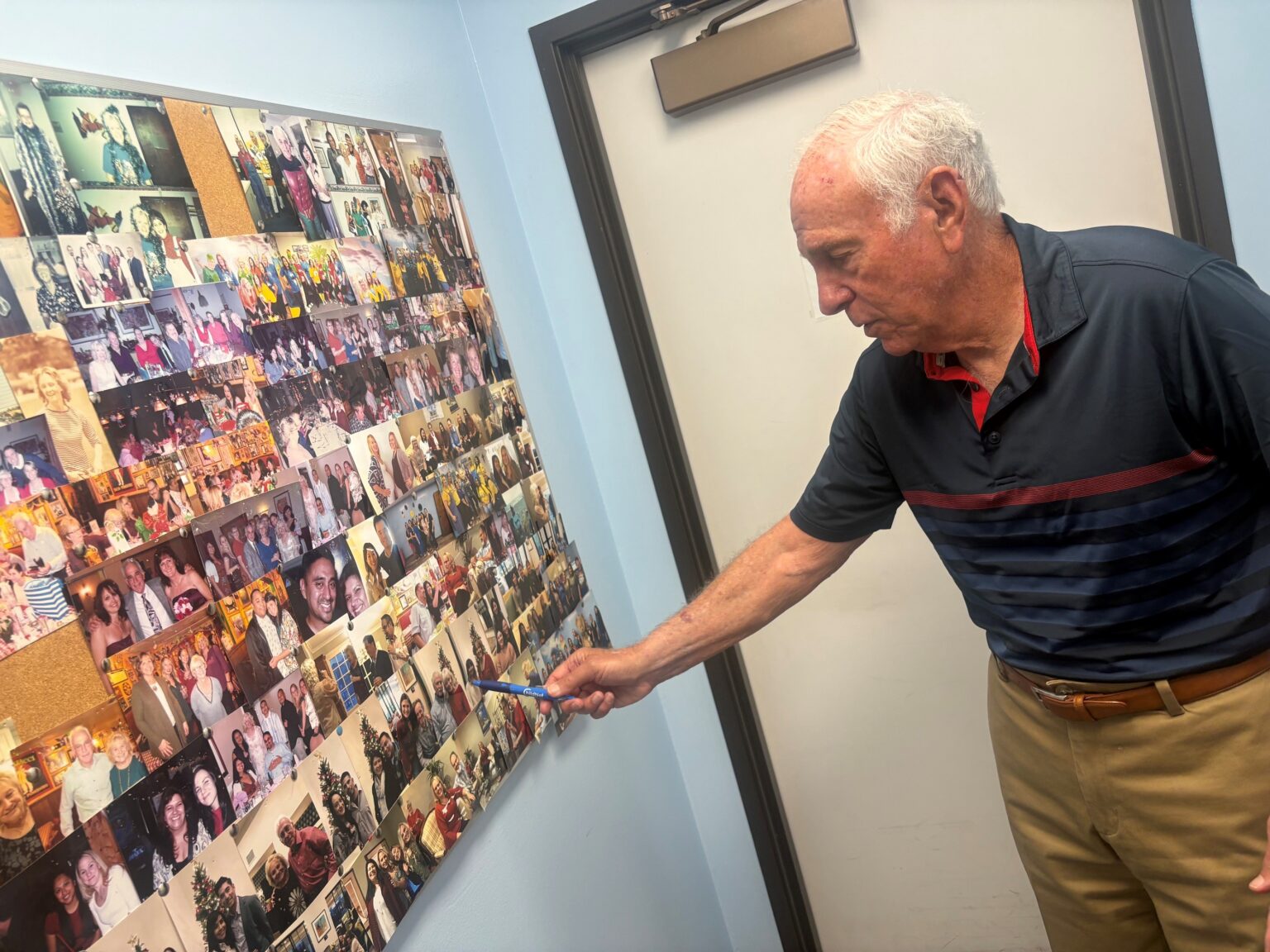
Now, wherever he goes, he inevitably runs into families eager to show Dr. Kaplan photos of the kids he once treated that are now, all grown-up, healthy, and with families of their own.
“I’ve been pretty lucky,” he admits, “and lived a pretty good life. We still have a lot of the friends here from when we first came here to practice,” said Kaplan.
Kaplan obviously has never been the subject of any famous painting, but given his history and well-earned success, his story does paint its own picture of a well-lived life.