

The multi-million-dollar deficit in the Cypress Elementary School District budget has blown open the district’s complicated funding mechanisms, prompting the board to ask for a complete accounting for all its commercial properties and income.
The Board is now grappling with a somewhat unexpected deficit of more than $3 million as they held another special meeting this past week to consider cuts or other means to balance the budget.
The board has until May 15 to choose whatever means it deems necessary to balance the budget, including furloughs, layoffs, or other reductions.
In another special meeting this past week, the board approved two resolutions listing dozens of employee positions within the district that will be considered eligible for layoff, furlough, or reduction.
In a dramatic meeting last week, the board rejected the two resolutions because, according to the board, the list did not include enough top administrative staff for layoffs.
After making some final adjustments to the two resolutions, the board unanimously approved them.
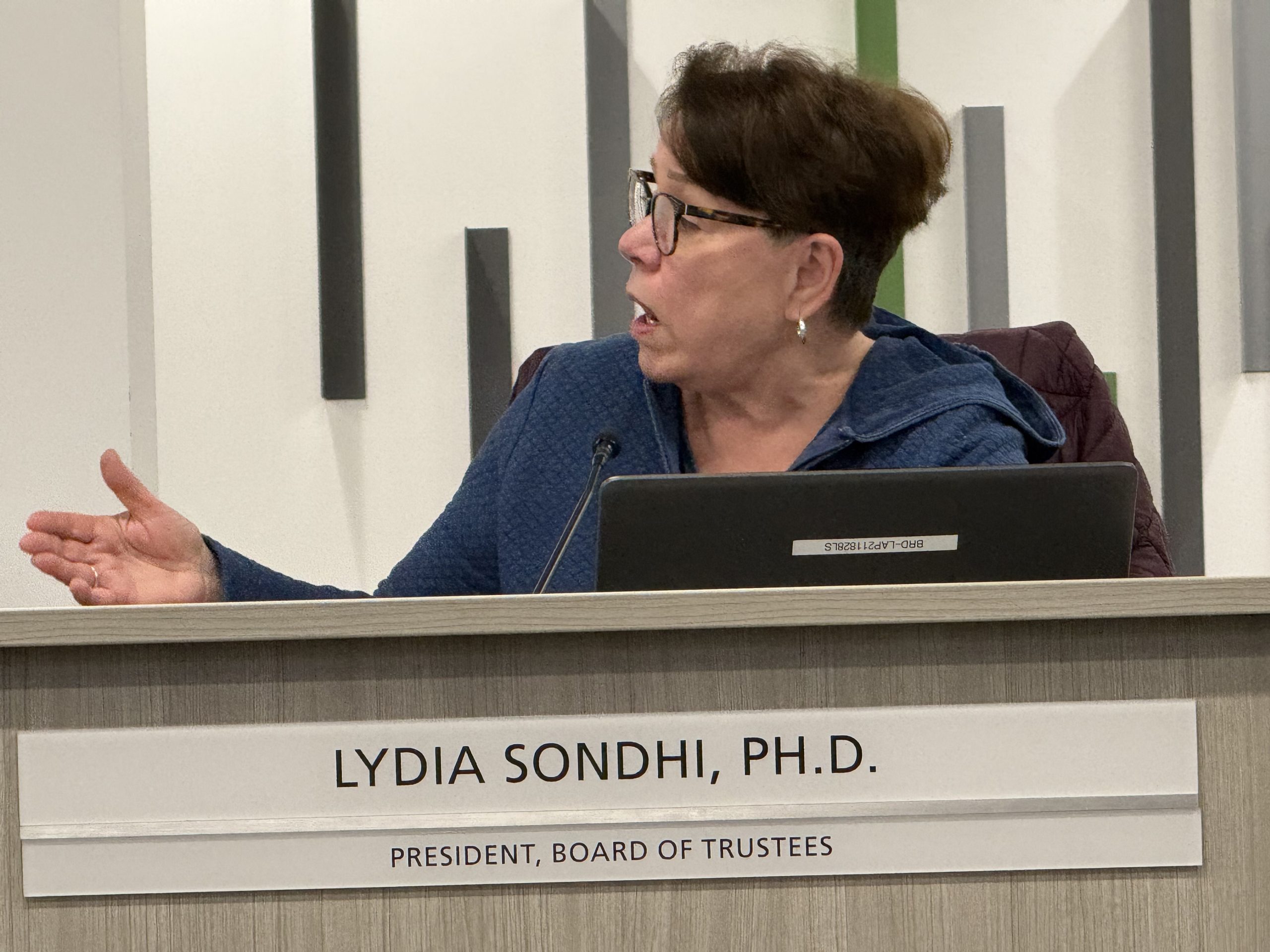
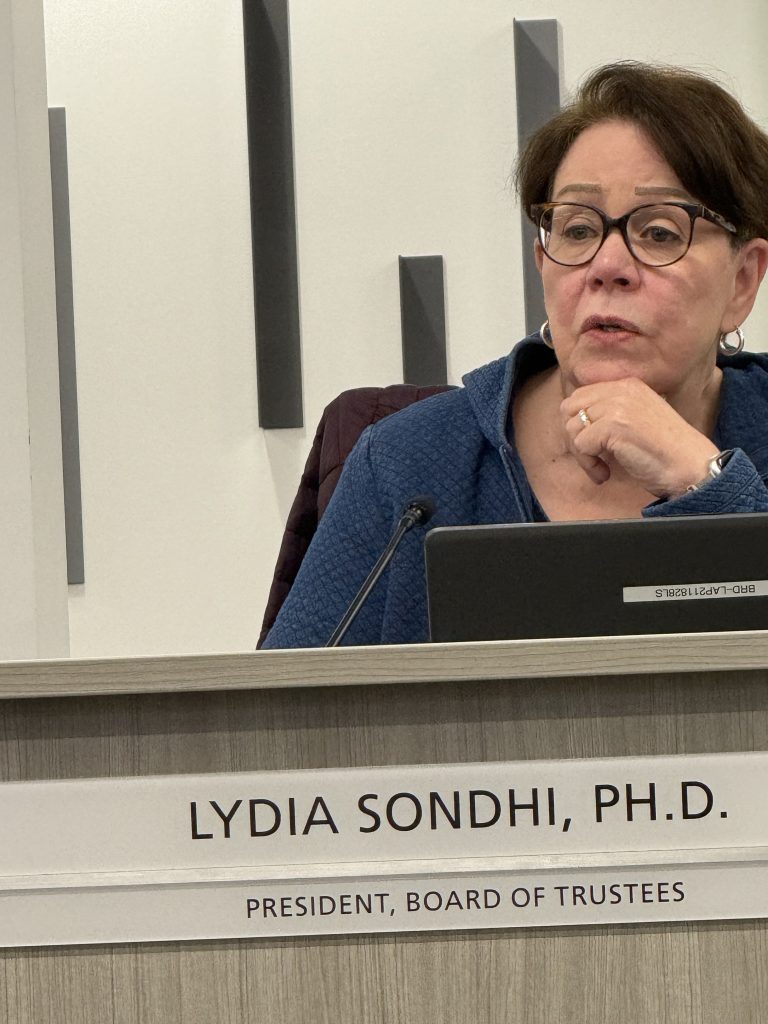
“As we move forward between now and May,” said Board President Lydia Sondhi, Ph.D., “when final decisions have to be made in terms of who has to be laid off, or not, be assured that we will be very strategic in terms of looking and working with our partners,” she said.
Sondhi said the board will include the opinions of all stakeholders before making any final decisions. “I know that the impact on anybody who’s going to be potentially laid off is not something any of us want,” said Sondhi.
dny photo
“We know that we’re going to have to make tough cuts and make tough decisions about certain things, and I am going to put my faith in all of you and all of our administrators to be working together with us to make the best decision we can make,” the board president said.
In addition, Sondhi, as well as other board members, repeatedly suggested that the staff was capable of bringing better solutions to the board for consideration.
Trustee Meghna Parikh, who at the last meeting said bluntly she had requested information four times and still did not have it, urged the staff to be more “helpful.”
“It would be helpful if you would work together to bring us some new ideas as far as how we can recoup funds, and about properties and things like that. I think that would be really helpful,” said Parikh.
In addition, the board demanded a full accounting of the district’s real estate and other commercial ventures.
Cypress, like other school districts, is experiencing falling enrollment. As people leave the state or find other options for their children’s education, there are fewer students in the system and thus, less reimbursement from the state.
While public school financing also includes a smattering of federal funds, special purpose funds, and local donations, the bulk of its funding comes from state reimbursement awarded on a per student basis.
Cypress School District operates on a budget of about $56 million annually, with slightly more than 3200 students. While the district finds itself embroiled in funding controversy, it’s not the first time.
George Pardon, a co-founder of Citizens for Responsible Development, questioned the district’s modernization bond program as early as 2008.

“I started raising concerns about financial actions being taken by the Cypress School District when they sold bonds to renovate the schools in 2008-9,” said Pardon, who attended the special meeting this week.
Ultimately, after its founding in 1895, the Cypress Elementary School District system eventually grew to 10 elementary schools but had only nine schools when the bonded indebtedness was undertaken in 2009.
From nine elementary schools, the system eventually closed three schools, selling the property around one of them outright and leasing the other two, which operate today under contract as private schools.
According to an Orange County Grand Jury Report issued in 2014, property taxpayers in Cypress are now on the hook for the bonding and will pay back seven dollars for every dollar in bonds, apparently because of the types of bonding instruments used.
The voters approved a bond measure authorizing the district to borrow up to $53, 600,000 for school renovations in Nov., 2008. The district issued $17 million in Series A bonds in May of 2009, the majority of which were CIBs (Current Interest Bonds).
The district also issued Bond Anticipation Notes in aggregate of approximately $7 million the same month (a bond anticipation note is essentially a promissory note for a term no longer than five years that promises to pay the proceeds of the note with a future bond issue that has already been approved by voters).
The district then issued Series B-1 and B-2 bonds in April 2011 in the aggregate amounts of $20.1 million and $4.53 million respectively. The Series B-2 bond was a qualified school construction bond (QSCB). The bonds were mostly CIB’s, but did include some CAB’s (Capital Appreciation bonds), according to the Grand Jury.
In 2012, the district found itself in a situation where matching funds were insufficient to complete the construction, so they issued $7.3 million in Certificates of Participation. A COP is not a bond, but similar, and is an instrument that allows the purchaser to a pro-rata share of a specific pledged revenue stream, so the district created the Cypress School District Public Financing Corp., and pledged it to the school and grounds connected to Juliet Morris Elementary School with the lease payments going to a financial trustee to redistribute payments to the COP owners.
The Grand Jury said there is “nothing unusual” about the transaction.
In fact, the Grand Jury said it “applauds” CSD for trying to fully utilize all available facilitites and said it was “very impressed” with the renovations that were completed with the bond money.
Regardless, that total indebtedness is now a tax on property owners, and while the district received the funds, they are not responsible for paying them back.
The Grand Jury report estimated that the $41 million in CSD bonded indebtedness will cost property owners $210 million by the time the bonds are paid off in 2050.
Pardon said “while I am saddened and disappointed by the budget crisis the district is currently dealing with, and especially the lives it is impacting, I am not surprised by what is happening,” he said.
“My only surprise is that it has taken so long,” he added.
In addition, the OC Grand Jury in 2013 suggested that Cypress merge with three other small, non-unified districts, Magnolia, Centralia, and Savannah, so that one Superintendent and administrative team could manage the elementary districts instead of each small system having its own financial burden of top-heavy administrative salaries.
If the smaller districts had been merged into one unified district, the Grand Jury report inferred as much as $80 million annually (in today’s dollars) could have utilized to provide instruction rather than have separate superintendents and top staff at each of of these small districts.
Capistrano Unified, by contrast, serves more than 54,000 students.
Apparently, as the Cypress School District closed schools, they system chose to acquire investment properties and lease properties over other options.
Accordingly, the district owns an apartment complex in Costa Mesa, an apartment complex in Redondo Beach, and two school sites that have been leased to private schools, among other assets.
In 2021, the Board of Trustees agreed to sell its acreage and office building on Moody Street and purchase a glitzy corporate office building on Corporate Blvd. in Cypress for $7.7 million, which has since lost value and for which tenants are now hard to find, according to district officials.
The district did receive $9 million for the Moody Street property and incentives up to an additional $1.2 million after houses were built on the property, a six-acre parcel they sold to Melia Homes.
In short, while the board passed the prospective employee layoff resolutions, they also made it clear to the administration in their most recent meeting that they wanted a complete accounting of all of the properties, funds, rents, etc. associated with Fund 40.

Parikh continued to express frustration about a lack of information, asking Assistant Supt. of Business Services, Larry Ferchaw, to explain “the funds that come from our properties, the assets we have, like the apartments, would you speak to where those funds go and how they are redirected?”
He said the funds from the apartments, school sites, and other commercial ventures of the district all go into a special fund called “Fund 40.”
He said the value of the commercial structure has gone down and they are having problems finding long-term tenants for the building because of a “soft” market.
The District still has three tenants in its commercial building, he added.
“Those funds from the rental income are deposited into Fund 40, which is the district’s capital, a special reserve for capital outlay and that is something the district has been depositing those proceeds into since the asset management program began,” he said.
For one thing, Ferchaw told the board the district needed to dip into the fund this year to the tune of $750,000 to keep the district “solvent” in the current fiscal year.
“Since our first interim presentation in December, there has been an identification of that to ensure that we meet the minimum reserve for economic uncertainty in the current fiscal year,” he said, “that we would make a one-time allocation of $750,000 from Fund 40,” Ferchaw told the board.
“We’re continuing to evaluate for the current and future fiscal years,” he added.
While the $750,000 transfer has yet to be made from Fund 40, Ferchaw told Parikh that an additional $6 million from Fund 40 was used as a cash borrowing tool to handle any low cash periods that we have as a district.”
Sondhi then floated the idea of using a one-time allocation of $3 million from Fund 40 to balance the budget.
“I’m not necessarily suggesting this is what we do, but we could actually save the full $3 million or whatever we’re supposed to be cutting this year by doing an actual transfer from Fund 40 right now,” she said.
“And we wouldn’t have to change a damn thing,” she added, drawing a big hand from a packed meeting room.
Officials estimated that Fund 40 is worth approximately $12 million now.
Trustee Troy Tanaka grew a bit frustrated when Supt. Anne Silavs suggested they would have to order appraisals and could not provide a ballpark estimate of value.
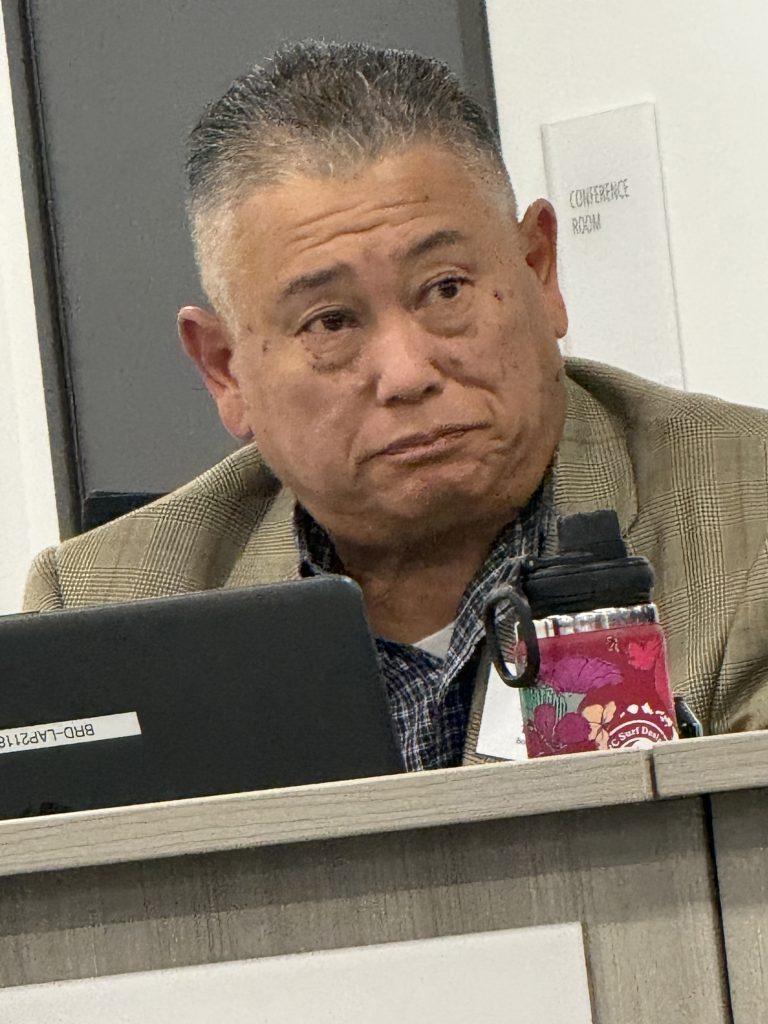
“Do we even know,” said Tanaka, “we don’t even have continuous appraisals of where our properties are and what they’re worth?”
“At least we know where we are with this office (Corporate Blvd.),” he said. “I know we bought it at probably the worst time to buy it, because commercial real estate is going down, but maybe it’s time for us to cut our losses and move on,” he suggested.
Tanaka threw out several options, including even putting “bungalows” on property owned by the district, then perhaps renting or selling the district office building.
While executives now have single offices within the existing corporate structure, Tanaka said “cubicles” would be enough for school officials to get their jobs done.
“We don’t need offices,” he said.
While it is apparently legal for school districts to own real estate, the two complexes purchased by the Cypress School District could have, and should have, grown in value. Unlike commercial buildings, experts say the residential market has exploded in value since the pandemic.
Sources say the two apartment complexes owned by the district could now be worth between $25-45 million.
Even so, Ferchaw said Fund 40 revenues are governed by complex state laws that restrict the use of funds from outside investments.
Nevertheless, the board has now demanded a complete accounting of the district’s “Fund 40” ecosystem and may know more soon.
Throughout the debate, Tanaka has continued to stress that the district’s funding priority should be focused on teachers and administrators with the closest proximity to and responsibility for educating students.
Trustee Jaime Needham asked for continued public support as the district works through what will surely be difficult choices in the days and months ahead.
“Three of the five of us up here have children who are directly impacted by our decisions,” she said, “and the five of us are up here because we all care about how our decisions impact all children,” said Needham.
“This has a direct impact on our families and on the children in our community, so please continue to reach out to us and continue to help us problem solve,” said Needham. “Please work with us and know that we are calling these meetings because we have questions to ask and we want to make the most informed decisions that we possibly can make,” she said.